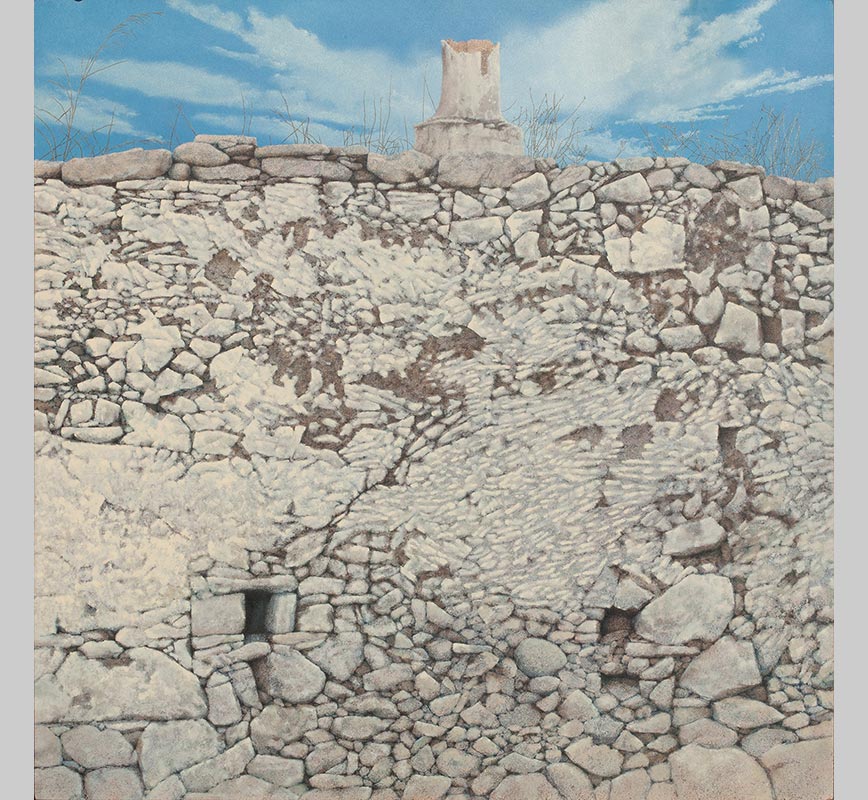
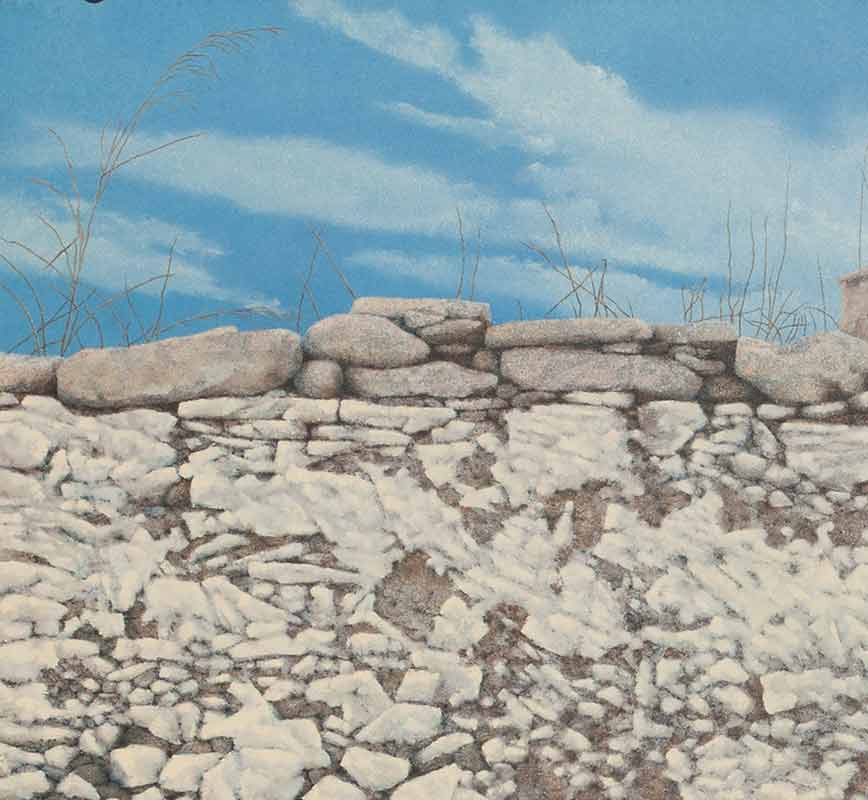
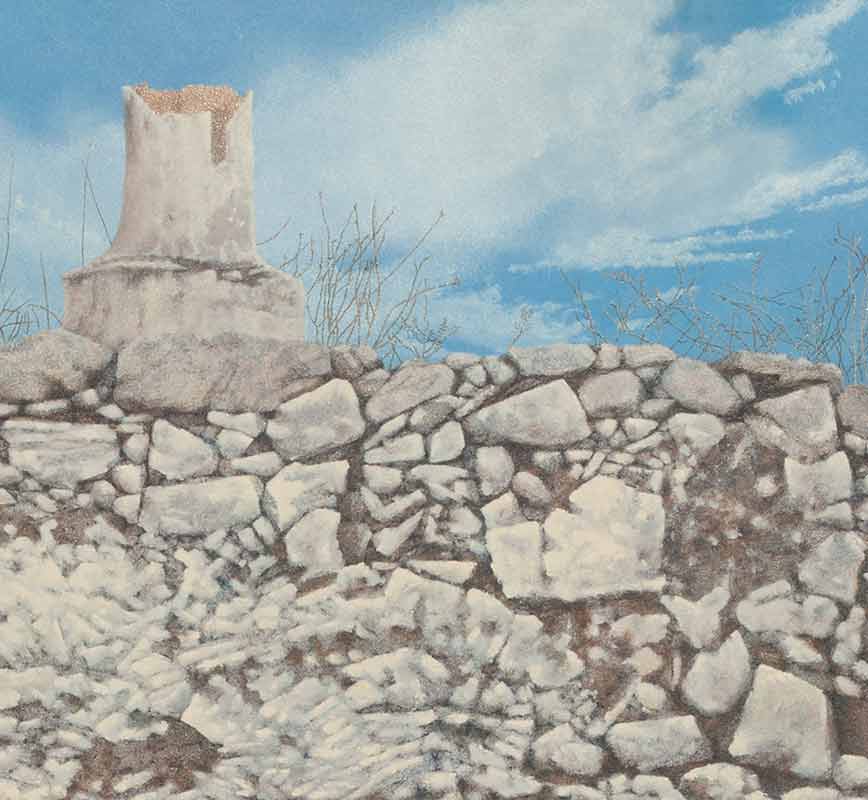
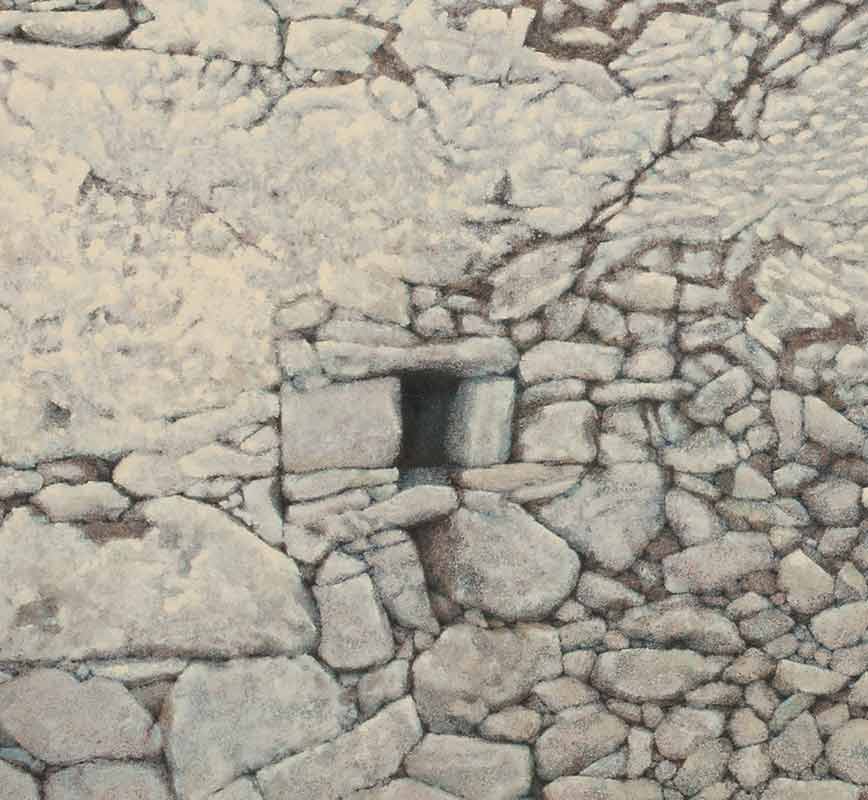
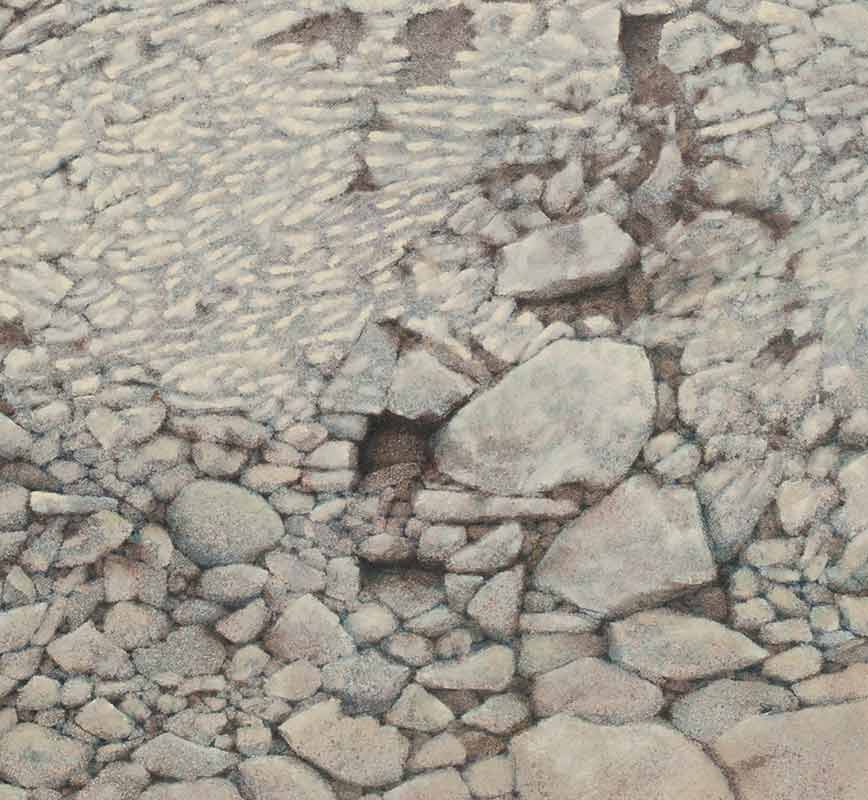
The wall at Paliochora is reduced here to its essentials: rough-cut stone, a gap that frames a circle of sky, the ground it stands on just visible at the lower edge. The blue inside the gap is the only other presence, the clear summer sky of Kythera visible through an opening that might once have been a window, might have been a gate, might have been a section of wall that simply gave way and left its absence framed by what remained.
The wall at Paliochora is reduced here to its essentials: rough-cut stone, a gap that frames a circle of sky, the ground it stands on just visible at the lower edge. The blue inside the gap is the only other presence, the clear summer sky of Kythera visible through an opening that might once have been a window, might have been a gate, might have been a section of wall that simply gave way and left its absence framed by what remained.
Giorgio Morandi spent decades painting arrangements of bottles and vessels on a table, the same objects rearranged, the same light falling on them from the left, the exercise in looking never exhausted by repetition. Tzannes's relationship to the walls and ruins of Kythera has something of the same discipline: not documentation but devotion, the subject returned to again and again because it keeps yielding something new. This small wall is not a grand subject. It is a fragment, and Tzannes treats it like the shard of pottery you find in a field, something that rewards close attention not because of its scale but because of what it carries.
The gap in the wall is the composition's center of gravity. Everything radiates from it: the warm tones of the stone frame it, the sky beyond it is the deepest color in the picture, and the ground anchors it from below.