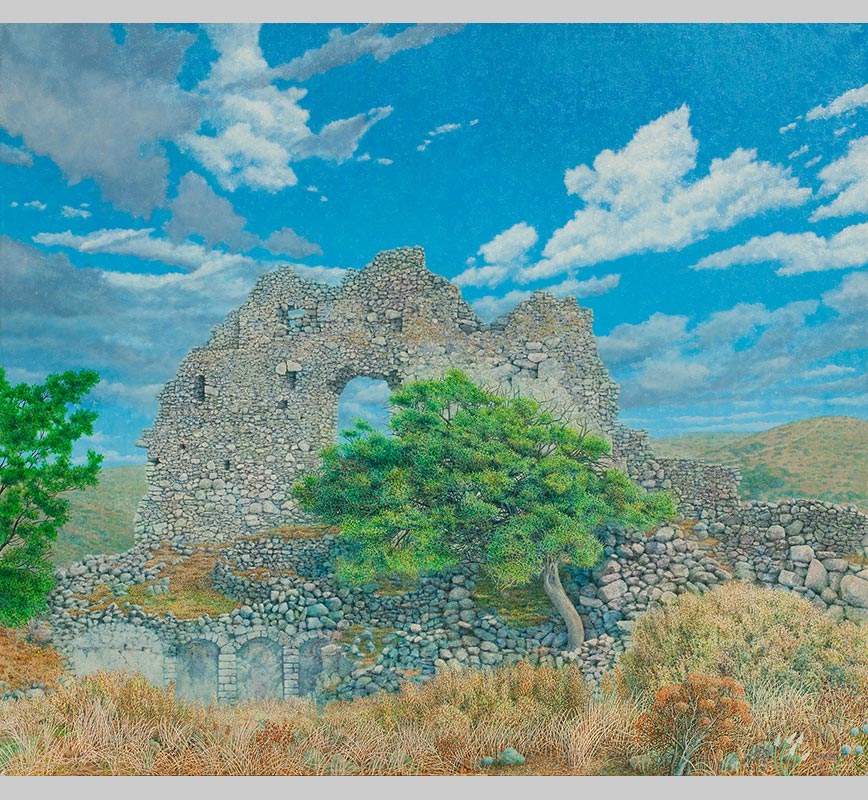
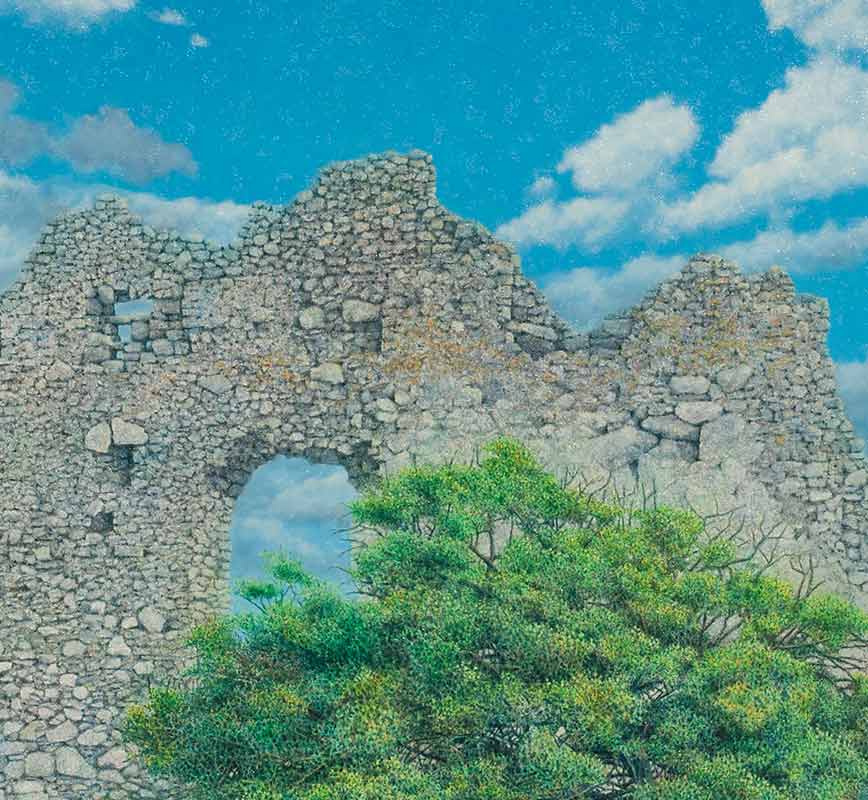
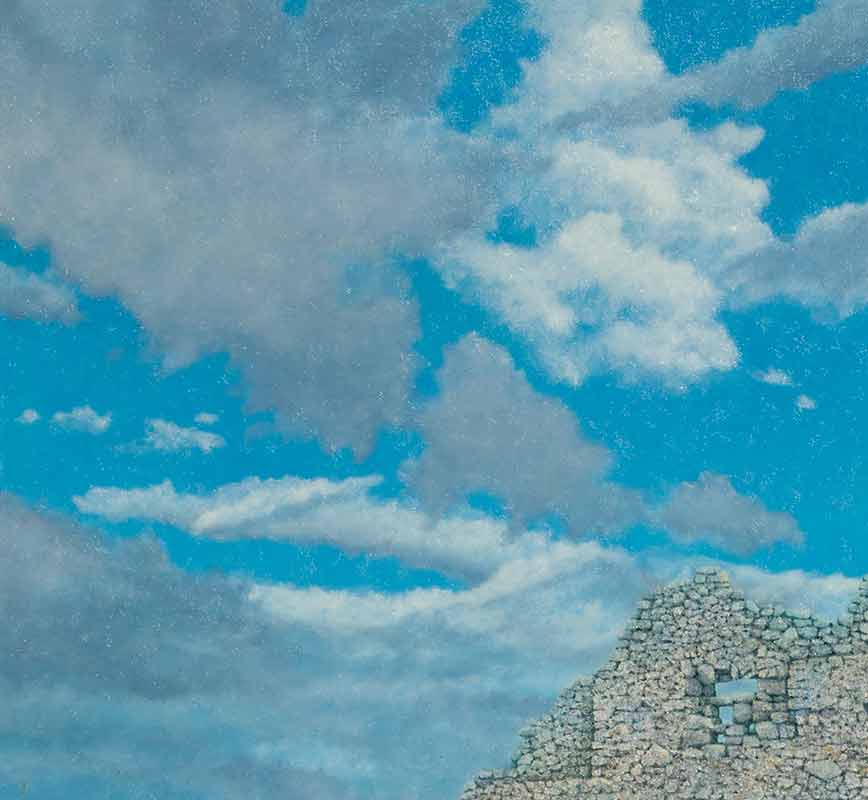
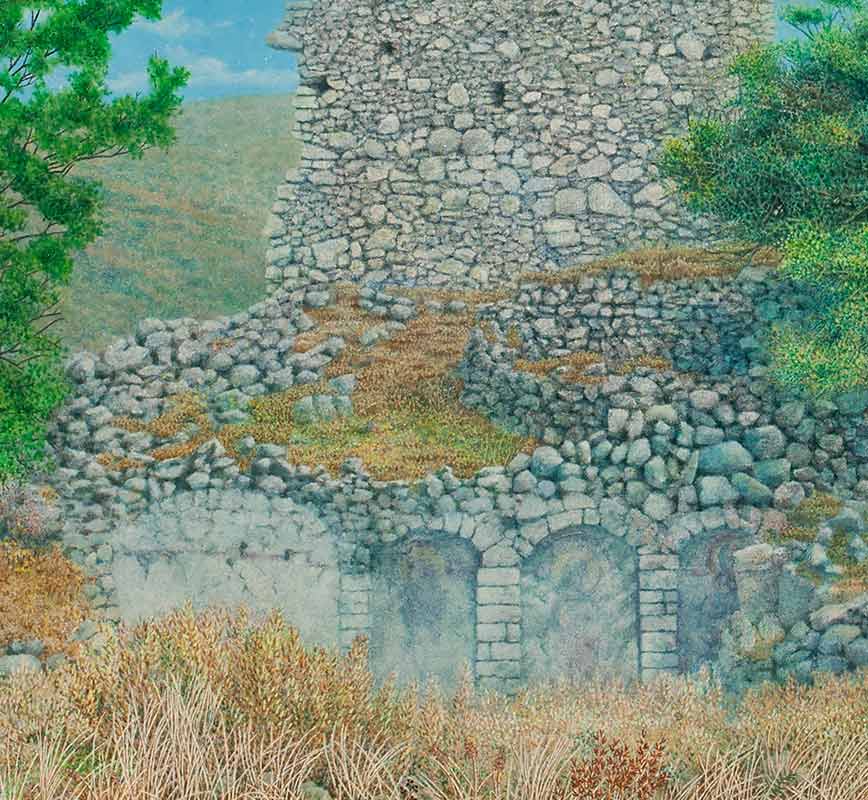
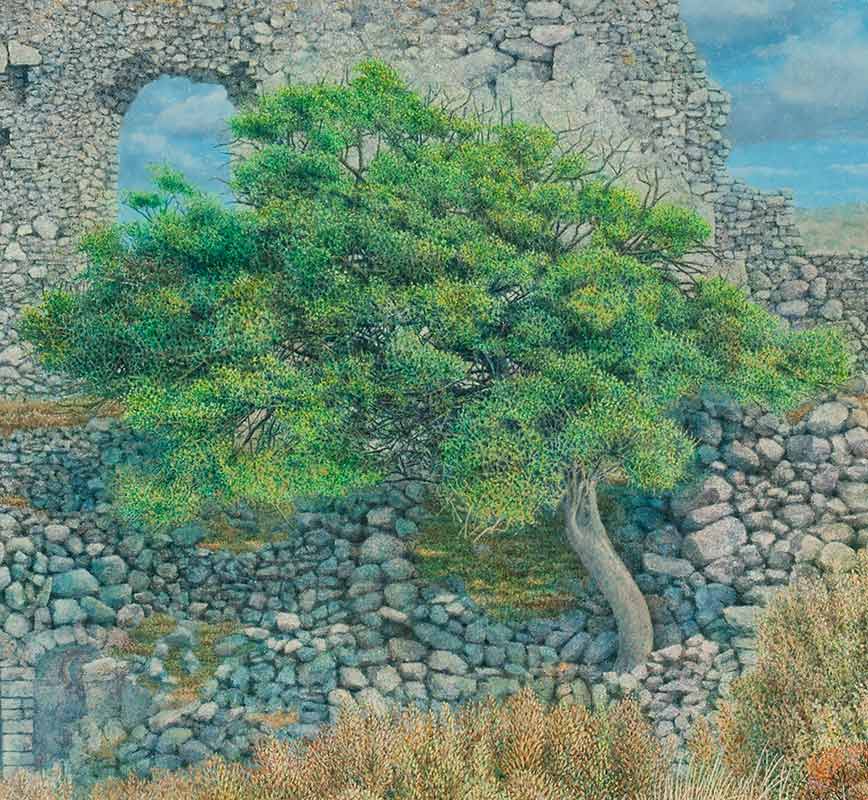
A tree grows through the ruins of Paliochora's medieval wall, its branches reaching through the openings in the masonry as if the architecture had been designed to receive it. Tzannes painted this in 1982, working in oil on a large canvas with a chromatic intensity unusual in his practice: a Kytheran summer blue, vivid greens against warm grey stone, the whole composition pressing with a vitality that most of his architectural work deliberately holds in check.
A tree grows through the ruins of Paliochora's medieval wall, its branches reaching through the openings in the masonry as if the architecture had been designed to receive it. Tzannes painted this in 1982, working in oil on a large canvas with a chromatic intensity unusual in his practice: a Kytheran summer blue, vivid greens against warm grey stone, the whole composition pressing with a vitality that most of his architectural work deliberately holds in check.
This is the dialectic that runs through the ruins of Kythera's abandoned settlements: the human structure and the natural growth in a long negotiation, the stone containing the tree for a time, the roots eventually widening the cracks, the branches eventually filling the openings. Tzannes does not take a position in this negotiation. He renders it with precision and lets it stand. What the painting gives you is not a lesson about nature triumphing over culture; it is a specific tree in a specific wall on a specific summer day.
Paliochora was Kythera's medieval capital, abandoned and left to the landscape in the early nineteenth century. The ruins have not been restored; they persist as they were left, in active negotiation with the vegetation around them. The photorealist tradition Tzannes worked within at OK Harris specialized in the surfaces of contemporary American life. He applied the same visual discipline to ruins that were already eight centuries old.