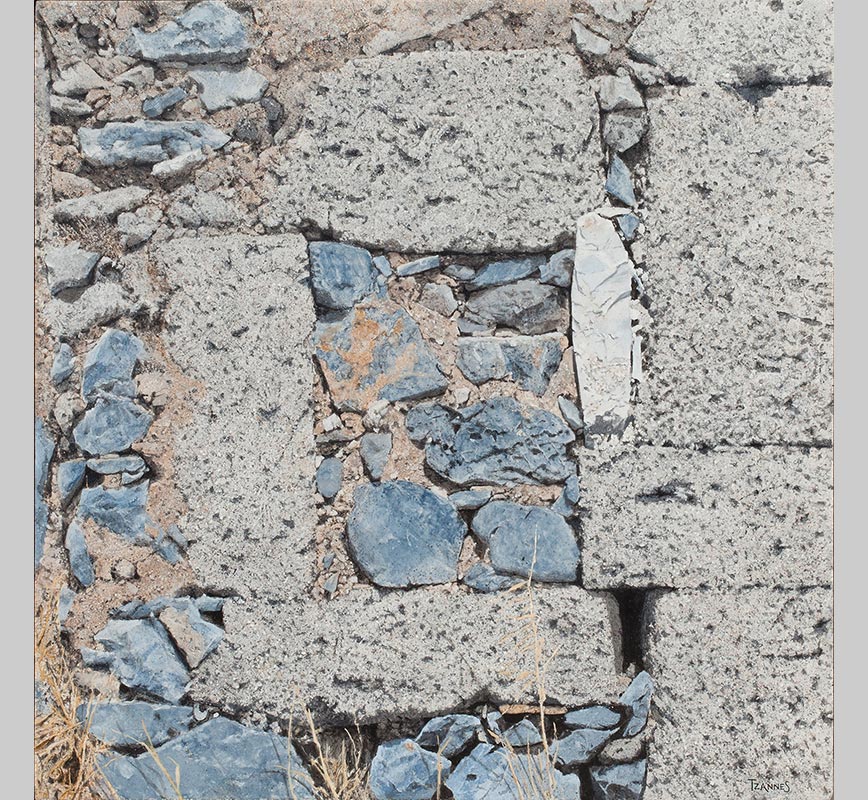
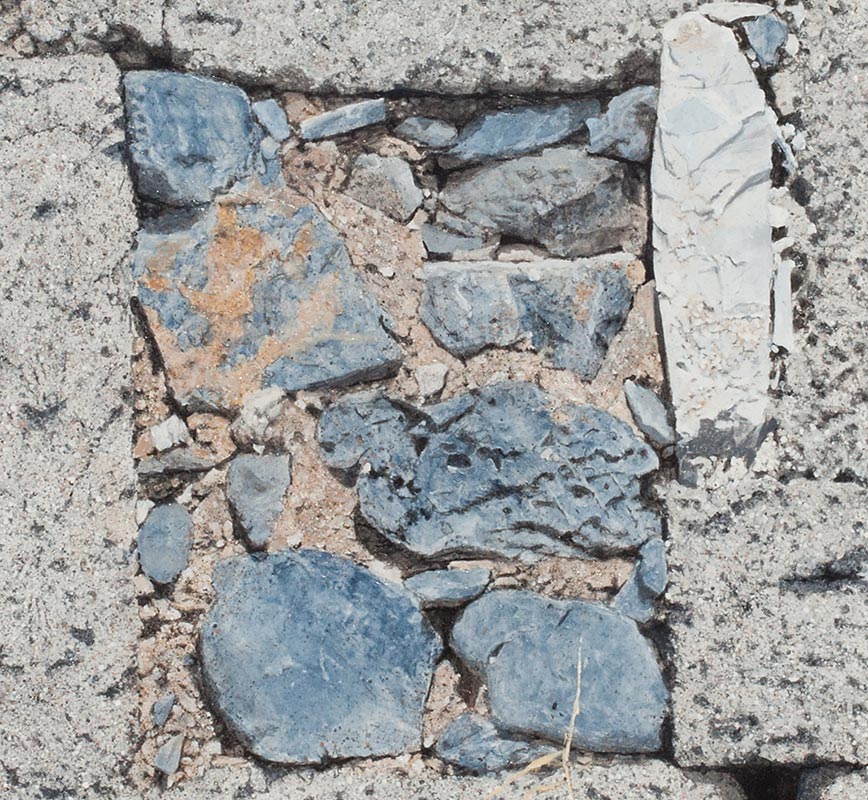
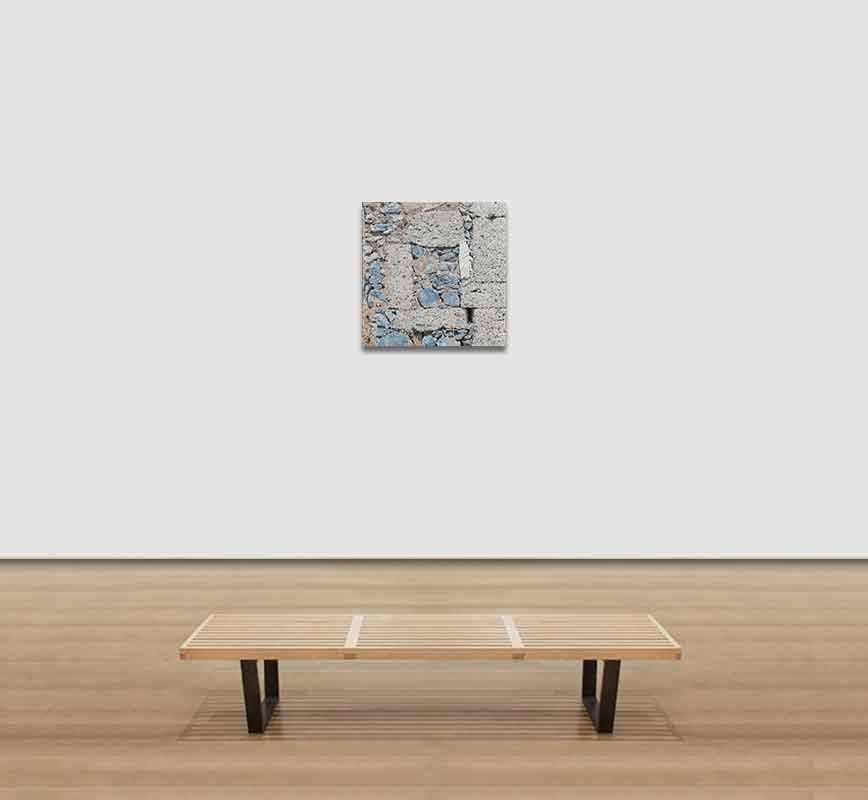
The stones that fill this window are a different color from the wall that holds them: blue-grey against warm grey, the infill visually distinct from the structure it completes. Tzannes locks in on that detail, rendering the blocked opening in acrylic on board with patient intensity. Every stone in the infill is individually described; together they form a composition that feels at once deliberate and geological, shaped by a hand and then reclaimed by time.
The stones that fill this window are a different color from the wall that holds them: blue-grey against warm grey, the infill visually distinct from the structure it completes. Tzannes locks in on that detail, rendering the blocked opening in acrylic on board with patient intensity. Every stone in the infill is individually described; together they form a composition that feels at once deliberate and geological, shaped by a hand and then reclaimed by time.
A filled window is a more complex form than either a void or a solid. It is a void that has been answered, an opening that someone decided to close, and the decision is still legible in the material: these particular stones, arranged in this particular way, fitted into this frame. Tzannes is consistently drawn to this kind of evidence, to the places in Kythera's built environment where a human act has left a trace in stone that outlasted the person who made it.
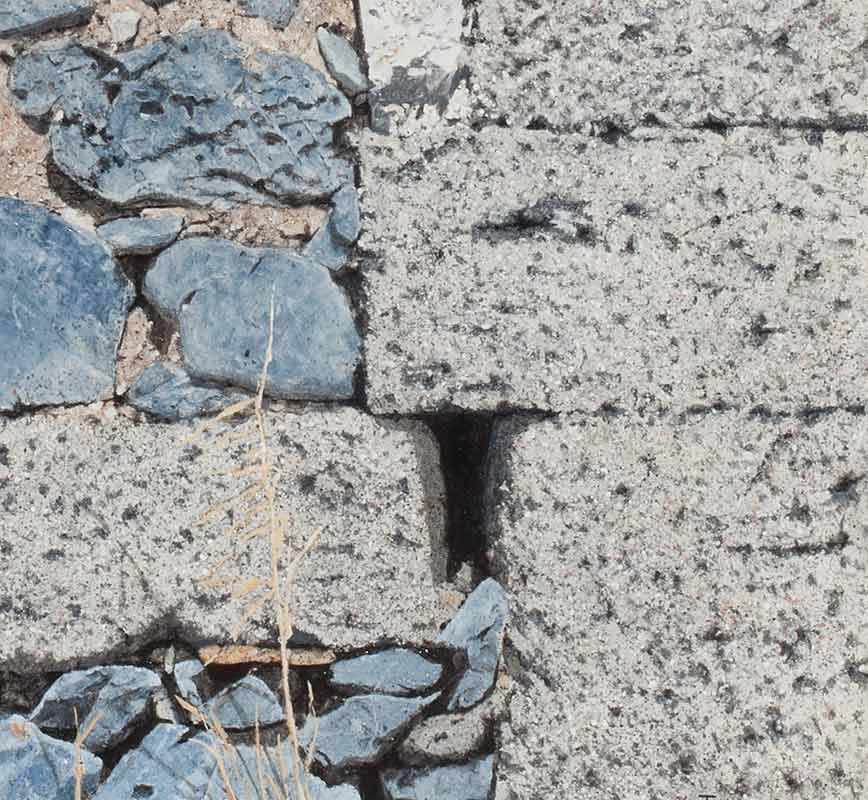
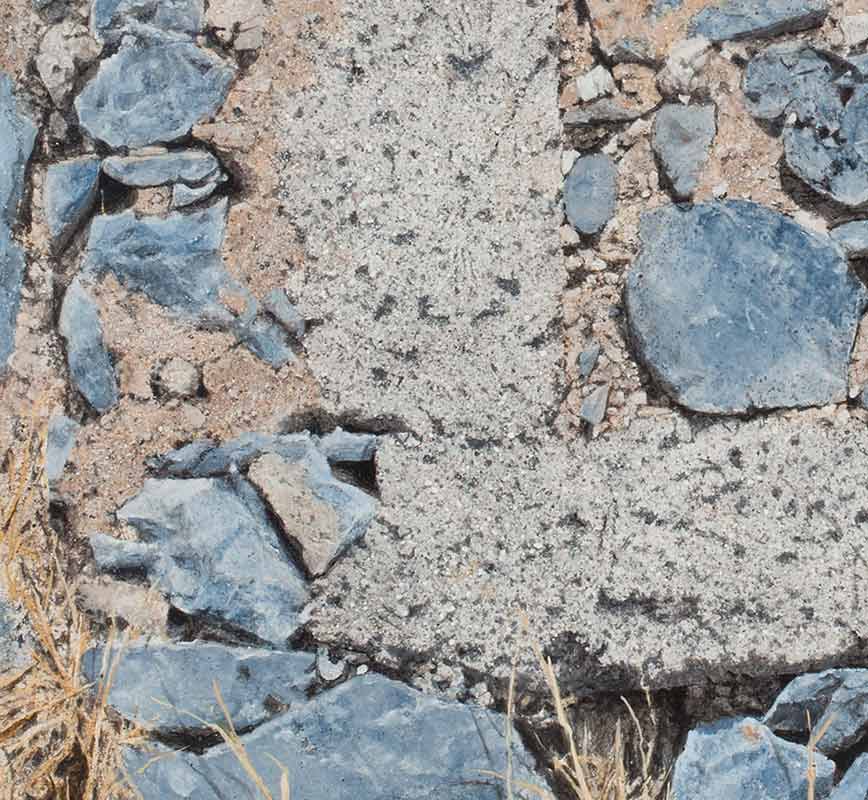
The large format of this work gives the wall a monumental weight. You are looking at it at close range, not from a distance, and the precision of Tzannes's rendering rewards that proximity: the slight roughness of the cement, the individual character of each stone in the infill, the way the mortar holds them in place with a quiet permanence. The wall endures. The person who closed this window is gone.