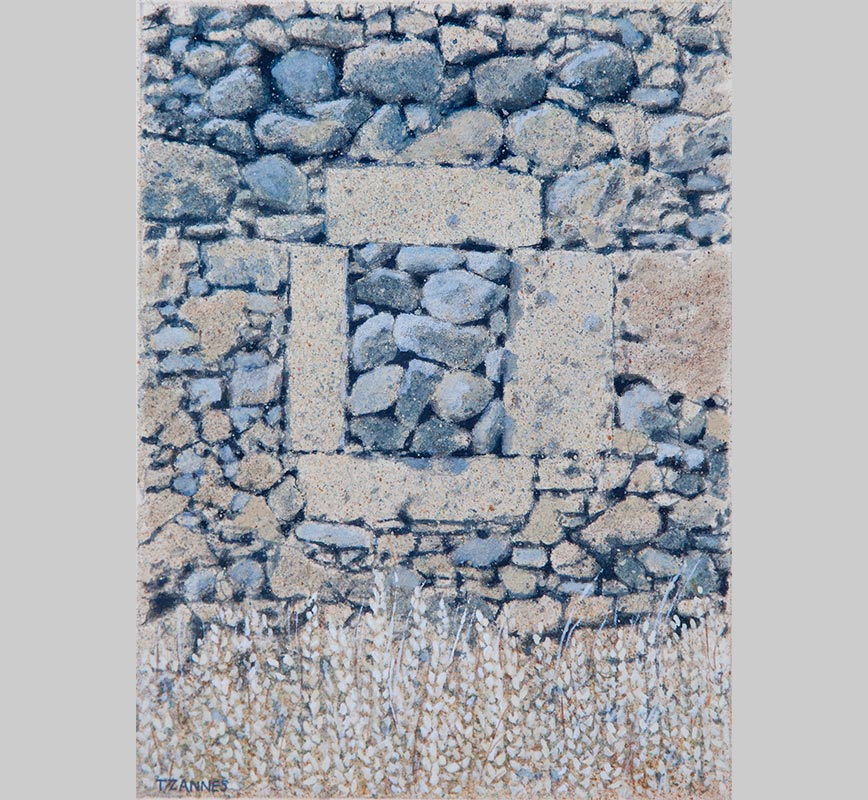
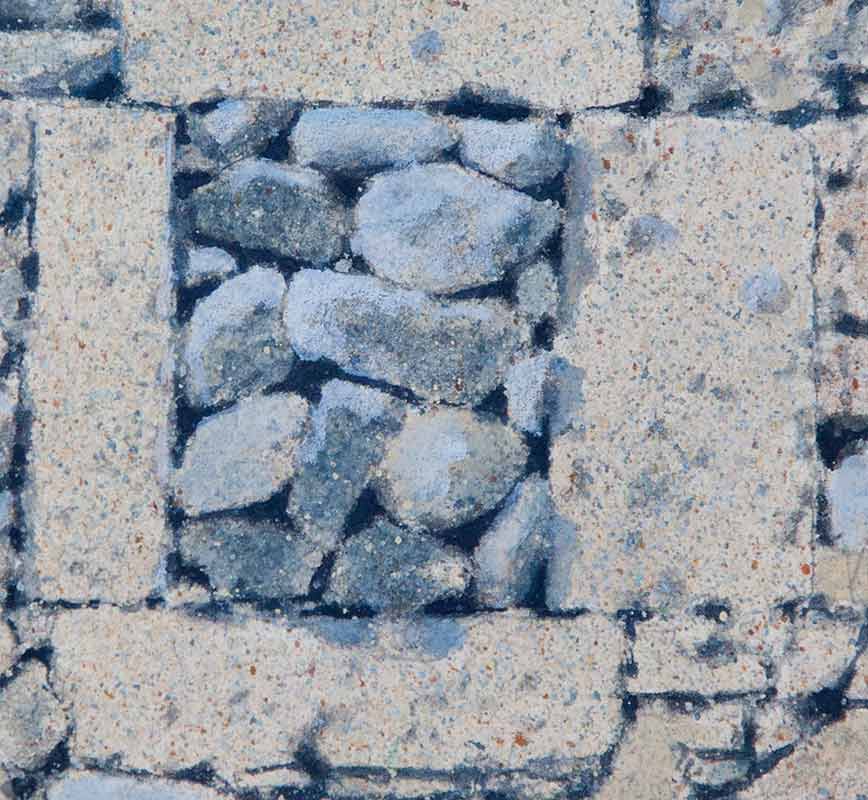
The window is open, framed by coursed stone on all four sides, its interior shadow absolute against the warm buff of the wall. A teal-painted wooden frame lines the opening, a human note of color in an otherwise geological surface: someone chose that paint, applied it, and the choice survived them. Tzannes renders the wall in oil on board, the stones acquiring an almost flesh-like quality, soft and dense at once, as if the wall were a living thing holding its threshold open.
The window is open, framed by coursed stone on all four sides, its interior shadow absolute against the warm buff of the wall. A teal-painted wooden frame lines the opening, a human note of color in an otherwise geological surface: someone chose that paint, applied it, and the choice survived them. Tzannes renders the wall in oil on board, the stones acquiring an almost flesh-like quality, soft and dense at once, as if the wall were a living thing holding its threshold open.
The window in Tzannes's practice is a recurring structure, a void that organizes everything around it, the dark interior against which the lit stone becomes legible. Here the opening is whole: no stones fill it, no boards cover it. It simply leads through to whatever is beyond, and the painting does not follow. The darkness is not the end of the picture but a depth within it, a space the eye enters without arriving anywhere.
The scale of this work matters: the window is close to life-size, the wall pressing up against the viewer's own body. Tzannes's intention is that the viewer becomes a participant in the subject, not a spectator before it. Standing in front of this painting is close to standing in front of the actual wall, close to lifting your hand toward that teal frame, close to stepping through.