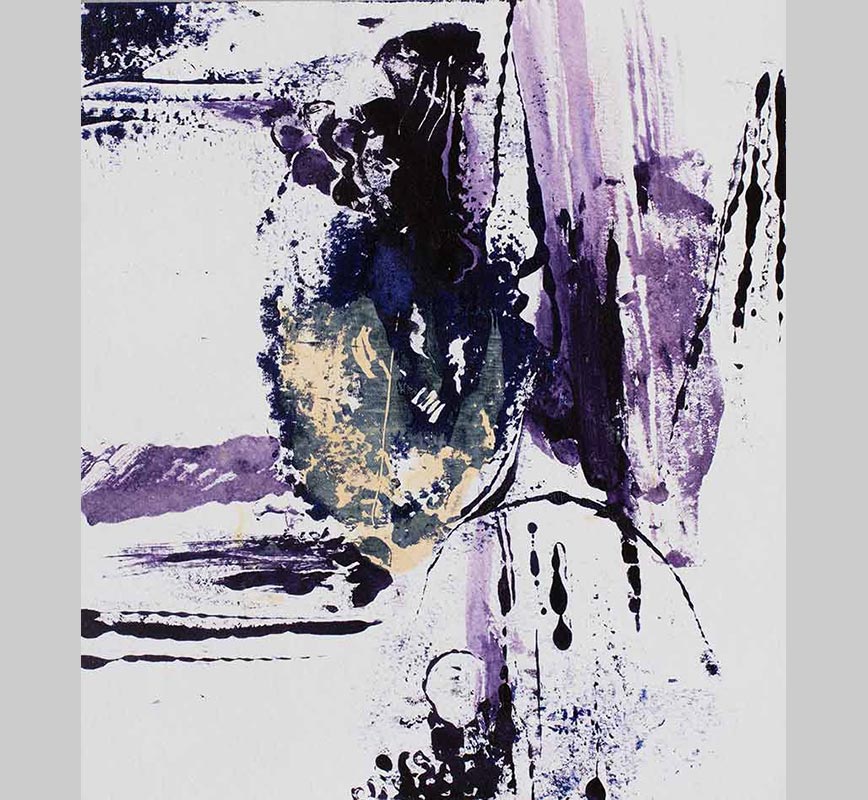
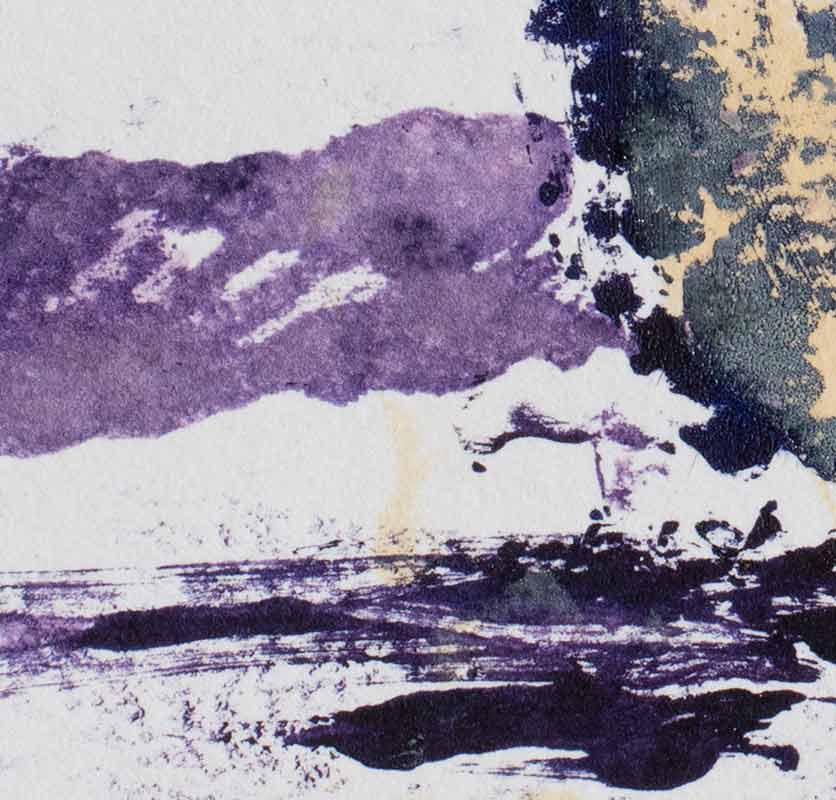
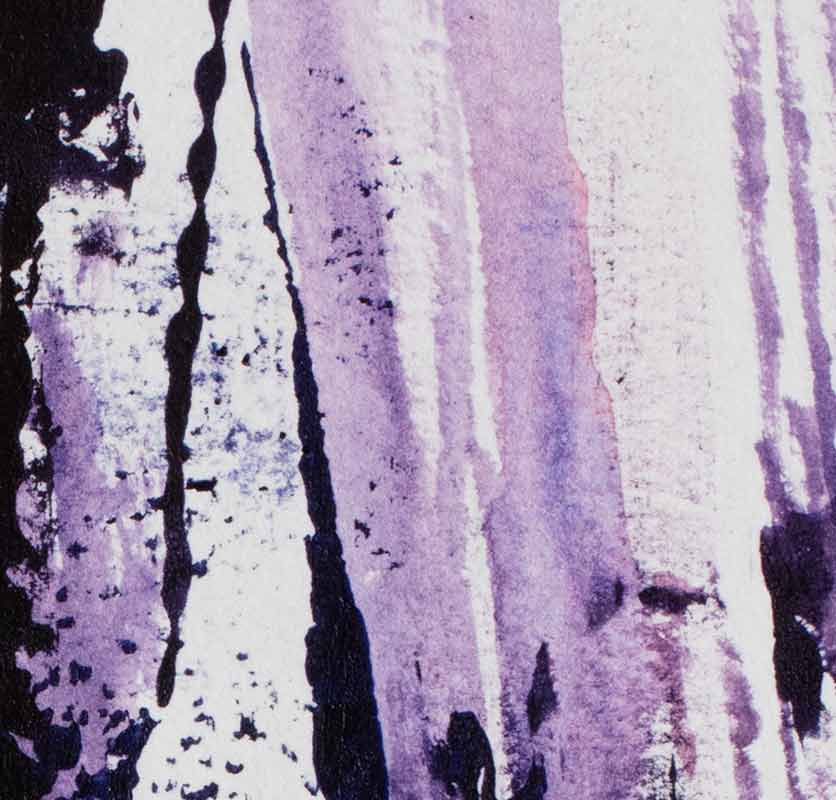
The watercolor in Tropical Thunder moves the way light moves through canopy: diffuse, shifting, never quite landing. Oranges and greens and yellows pool and overlap across the paper, the watercolor’s transparency doing what oil glazes do in Petrov’s larger works, building luminosity by layering rather than mixing. Against this fluidity, the pastel lines hold: precise, almost calligraphic, asserting the structural incident that the watercolor continually wants to dissolve.
The watercolor in Tropical Thunder moves the way light moves through canopy: diffuse, shifting, never quite landing. Oranges and greens and yellows pool and overlap across the paper, the watercolor’s transparency doing what oil glazes do in Petrov’s larger works, building luminosity by layering rather than mixing. Against this fluidity, the pastel lines hold: precise, almost calligraphic, asserting the structural incident that the watercolor continually wants to dissolve.
In Tropical Thunder, Petrov honors the autonomy of fluid paint, directing its tendencies rather than overcoming them, a principle Paul Jenkins made central to his practice. The tropical palette runs hotter than anything in Jenkins: oranges pressing against cool greens, the acrylic holding the intensity that pure watercolor would diffuse. The title promises storm; the painting delivers heat.
The pastel component prevents the work from becoming pure atmospheric field: the linear marks introduce edges and directions, slowing the chromatic dispersal and giving the eye a path through the color rather than a field to inhabit. This material dialectic, transparency against texture, fluidity against precision, is the generative tension that runs through Petrov’s works on paper and distinguishes them from his oil practice, where the same tension is embedded within a single medium through layering.