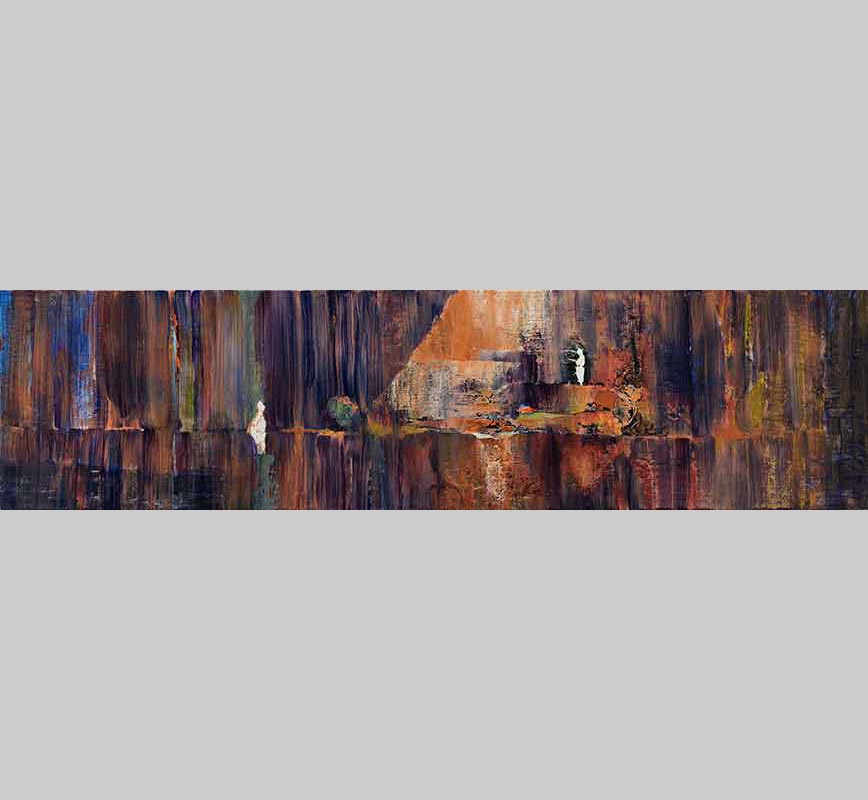
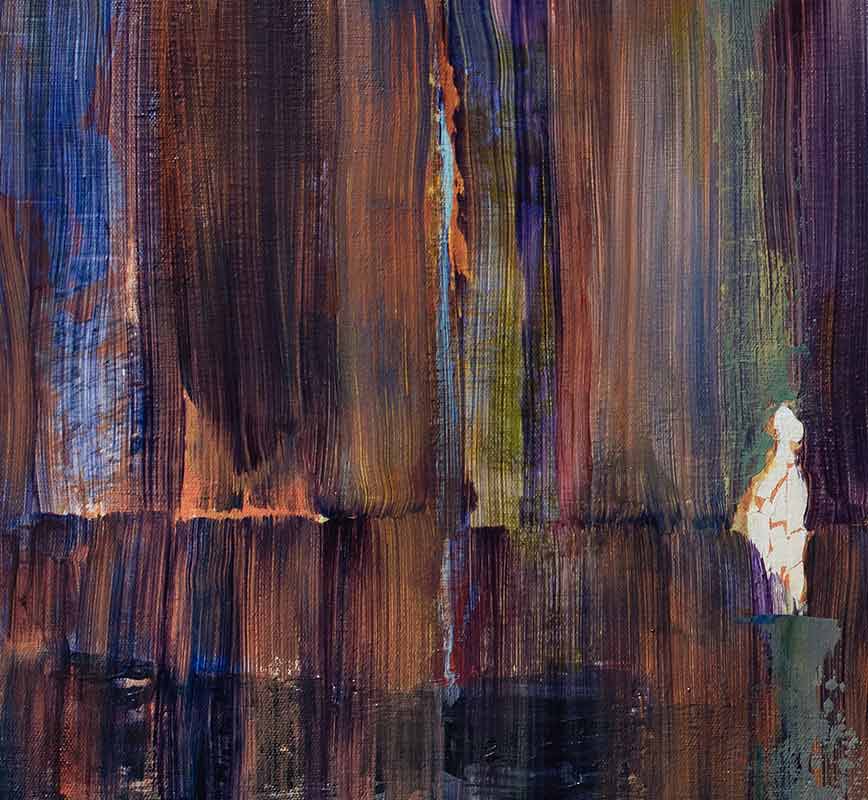
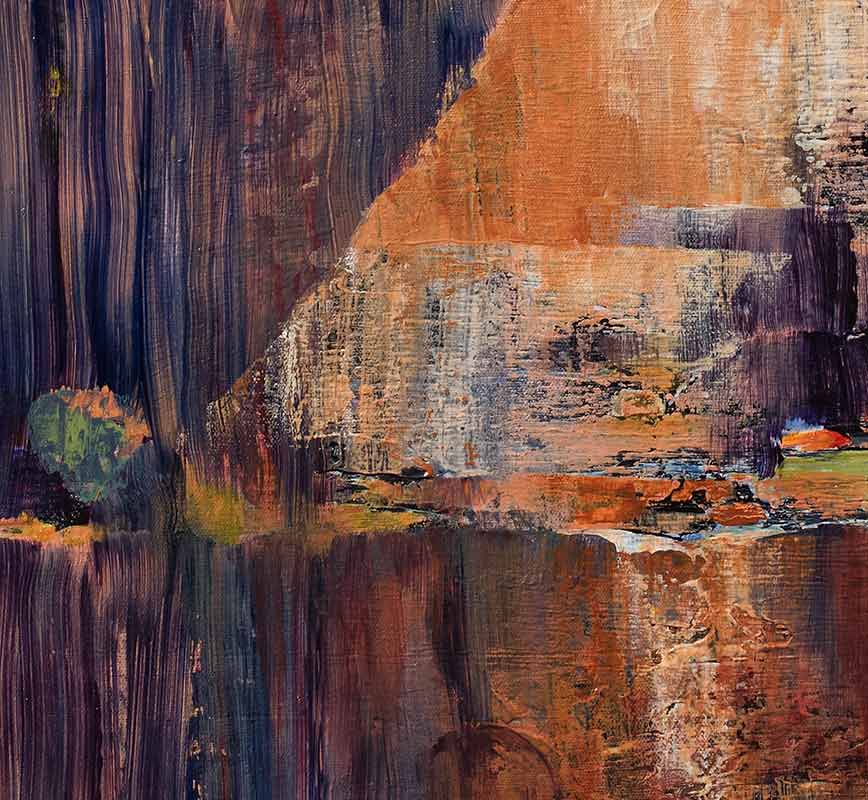
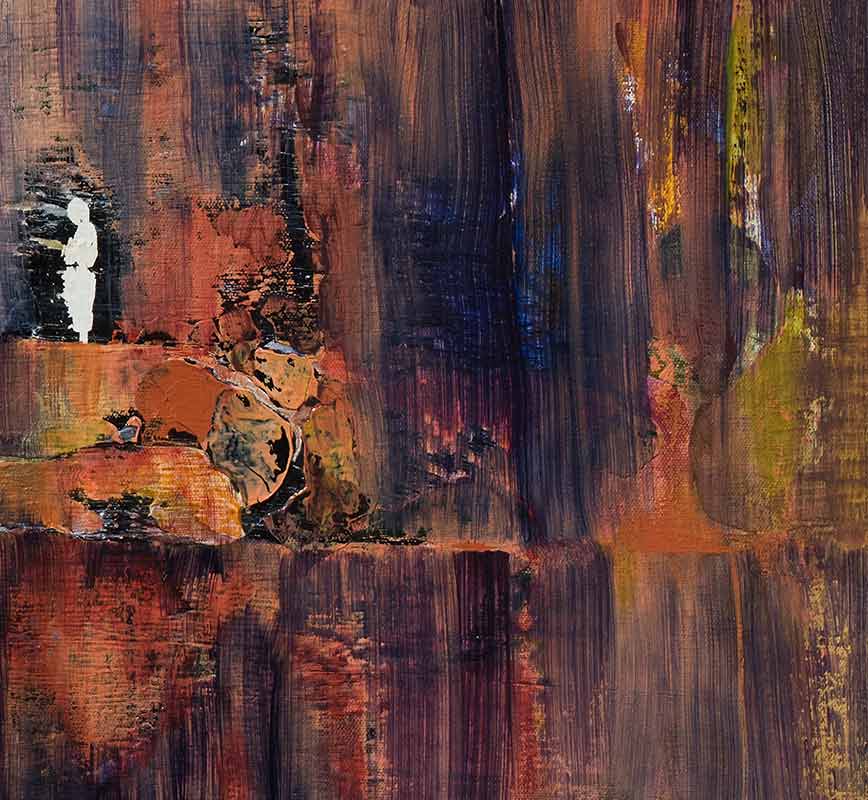
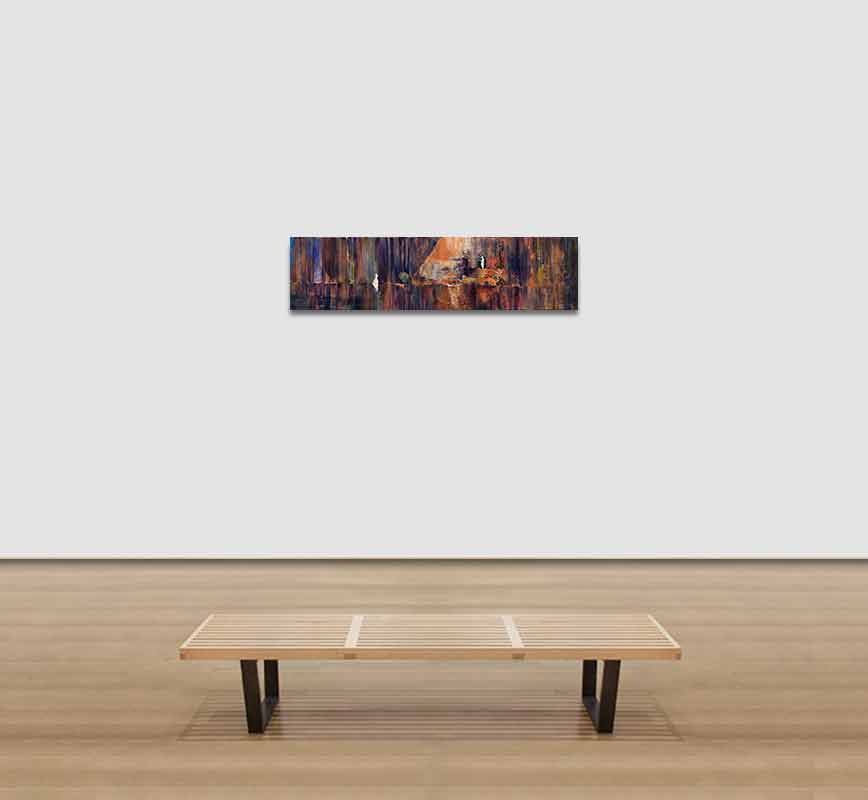
Early Arrival works near the limits of chromatic reduction: pale blues and whites wash the canvas to near-silence, with only a faint warm bloom near the lower center offering any thermal relief. The layered surface reads not as fog so much as the first photons before fog has decided to lift: a delicacy of atmospheric state so provisional that looking at it feels like a trespass on some private moment of the day.
Early Arrival works near the limits of chromatic reduction: pale blues and whites wash the canvas to near-silence, with only a faint warm bloom near the lower center offering any thermal relief. The layered surface reads not as fog so much as the first photons before fog has decided to lift: a delicacy of atmospheric state so provisional that looking at it feels like a trespass on some private moment of the day.
The tradition Petrov is working in here is the atmospheric sublime, with J.M.W. Turner as its most extreme practitioner: the point at which light ceases to illuminate a subject and becomes the subject itself, and the canvas becomes an exercise in the phenomenology of vision. Turner’s most radical late canvases achieve this through paint at the edge of material dissolution; Petrov arrives through patient layering, the glazes building a surface simultaneously substantial and weightless.
The warm bloom at lower center is important precisely because of its restraint: barely there, a suggestion of orange and rose within the blue-white field, read at first as warmth within the light and only secondarily as a specific passage of paint. This is Early Arrival’s particular economy: light at its most tentative, seduction through almost-nothing.