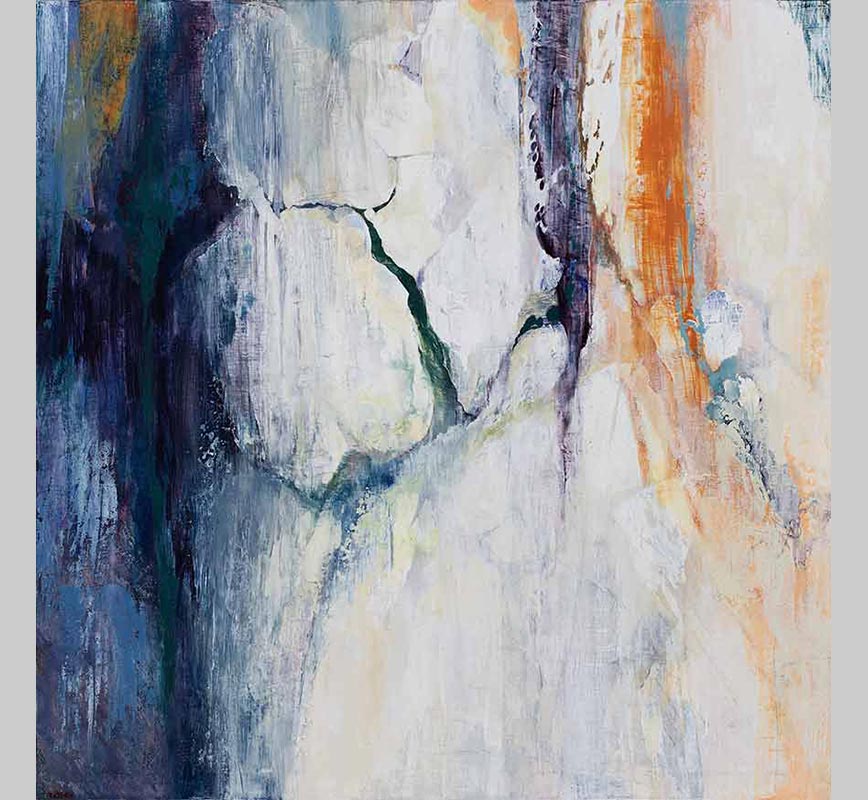
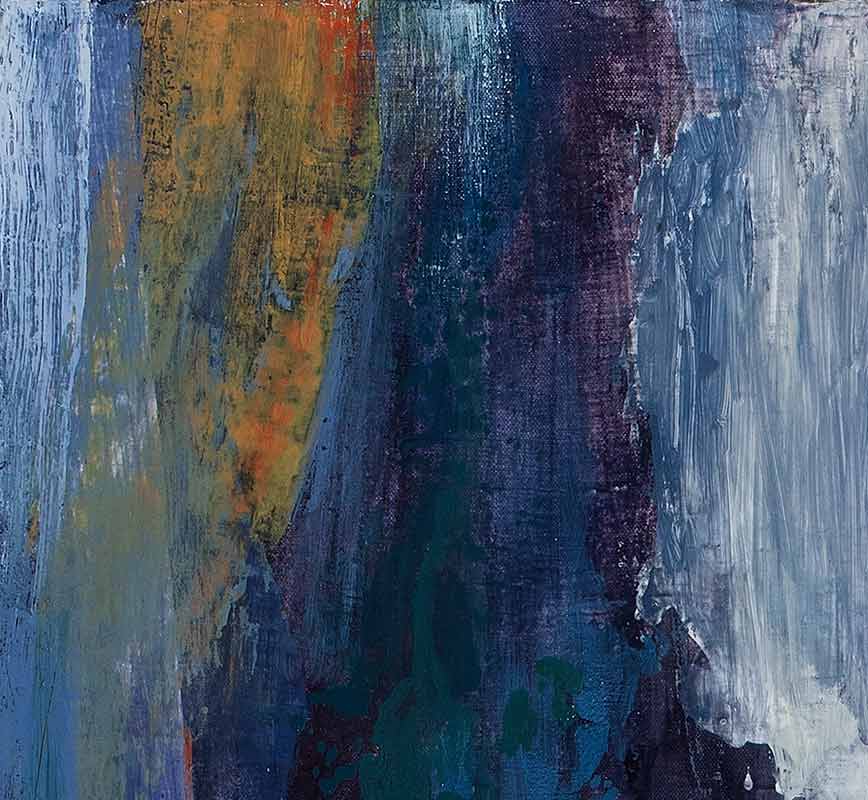
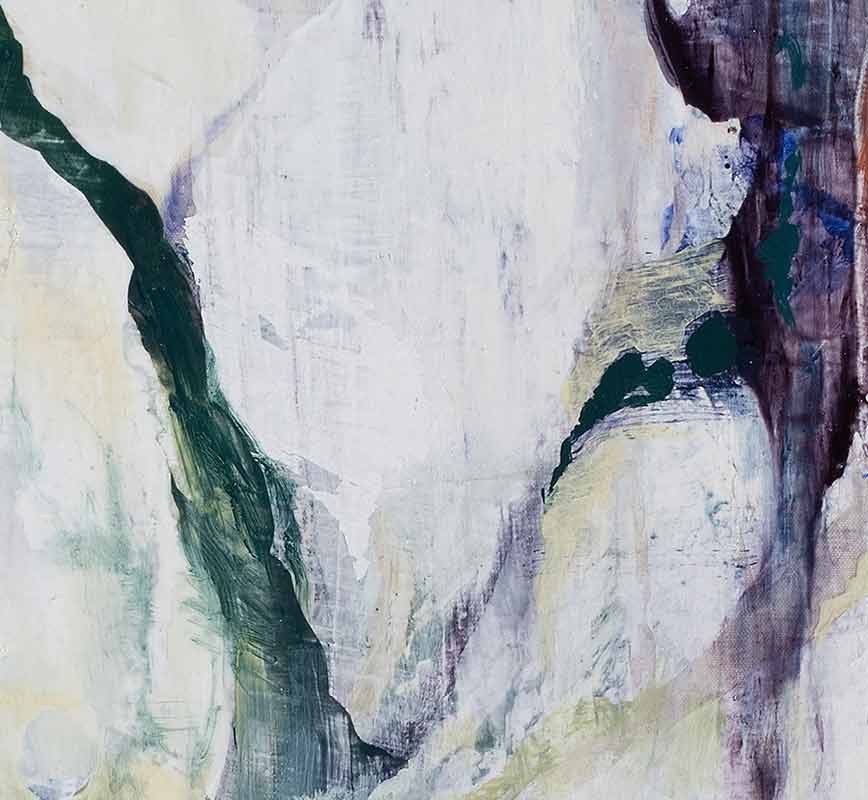
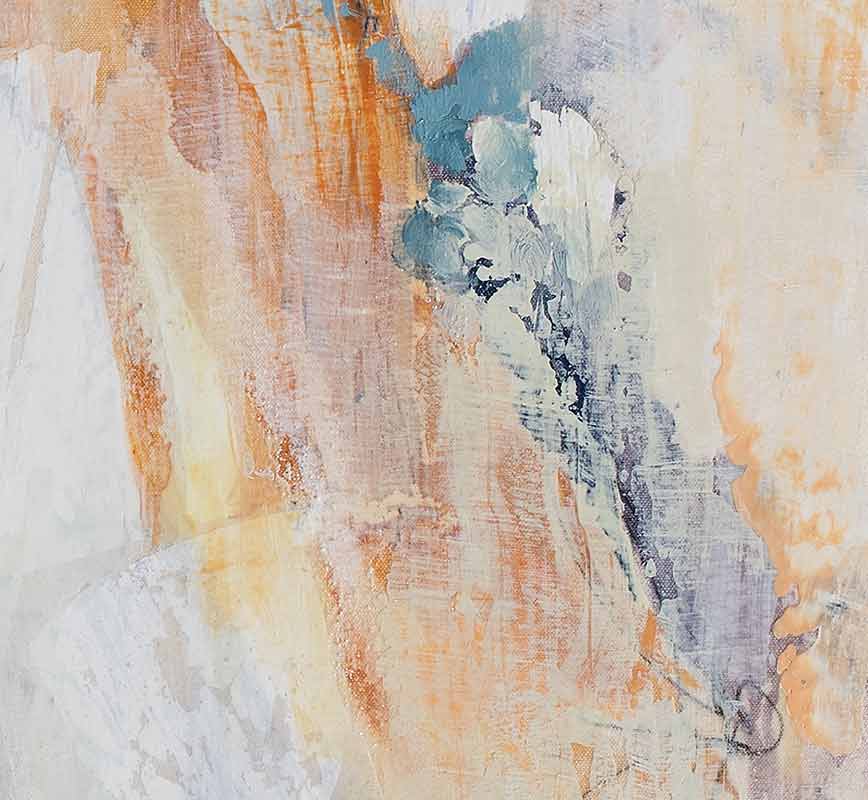
Forensic Trail opens on an opalescent field: pale yellows and whites pooling light inward, cool blue passages cutting through like shadow across water, and beneath it all the sense of something in motion, stilled. Petrov builds surfaces in stages, laying down gesture and partially obscuring it, so that the bold marks emerging near the center and lower edge feel less like applications to a surface than like evidence of what lies beneath.
Forensic Trail opens on an opalescent field: pale yellows and whites pooling light inward, cool blue passages cutting through like shadow across water, and beneath it all the sense of something in motion, stilled. Petrov builds surfaces in stages, laying down gesture and partially obscuring it, so that the bold marks emerging near the center and lower edge feel less like applications to a surface than like evidence of what lies beneath.
The painting belongs to a tradition of American light painting that predates the Abstract Expressionist energy it also carries: the luminism of Martin Johnson Heade and John Frederick Kensett, where atmosphere is built by almost imperceptible tonal gradients and light seems to emanate from within the canvas rather than to fall across it. Petrov inherits this quality through the glaze structure: his surfaces hold light in suspension, the way amber holds what it preserves. The Pollock-inflected gestural passages, visible in the linear marks and the thick strokes at the composition’s lower center, create the counterpressure: impulse against accumulation, speed against sediment.
Petrov’s own account of the work describes “two roads”: the Hudson River path of light and drama, and the muscular surface of Abstract Expressionism. In Forensic Trail those roads converge visually, the gestural energy embedded deep within the atmospheric field so that the painting cannot be assigned to either mode. The title is telling: this is not landscape or abstraction but investigation, a surface that rewards sustained looking with the sense of something not fully surfaced.