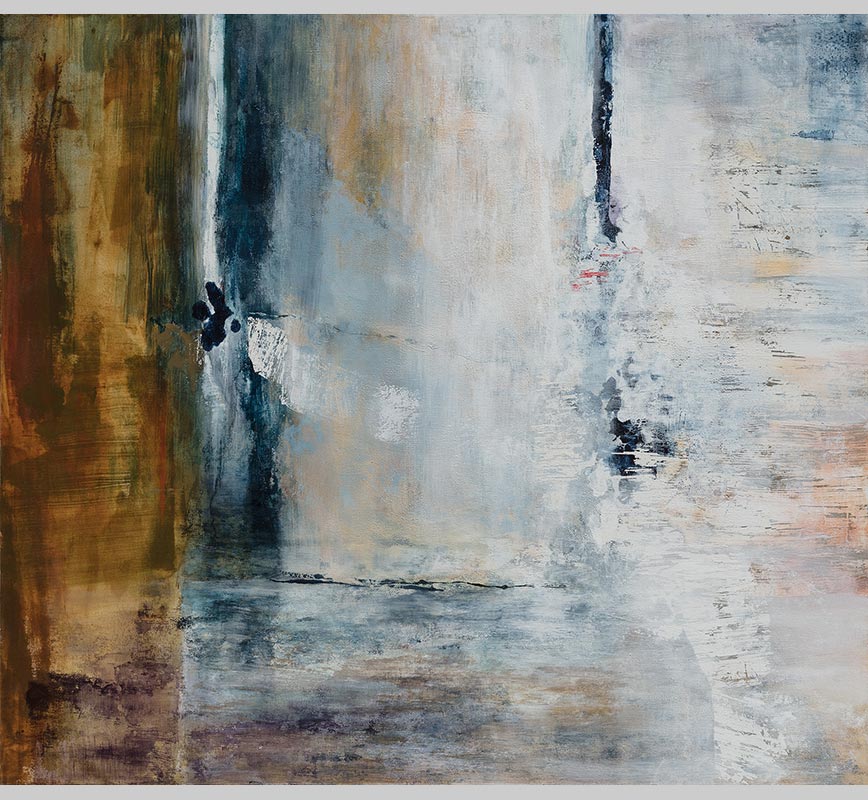
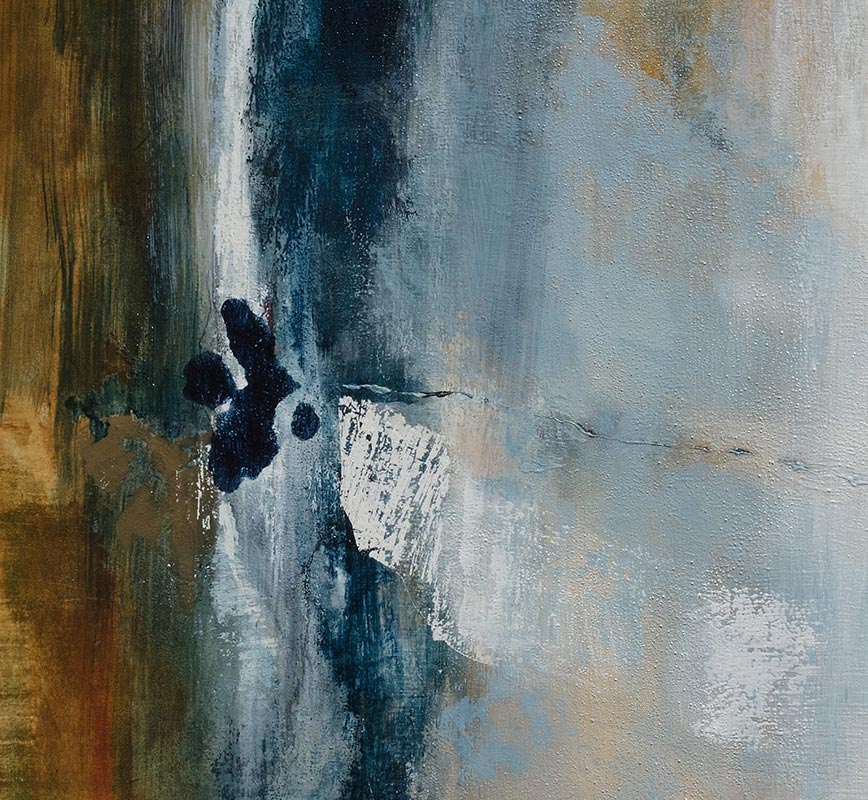
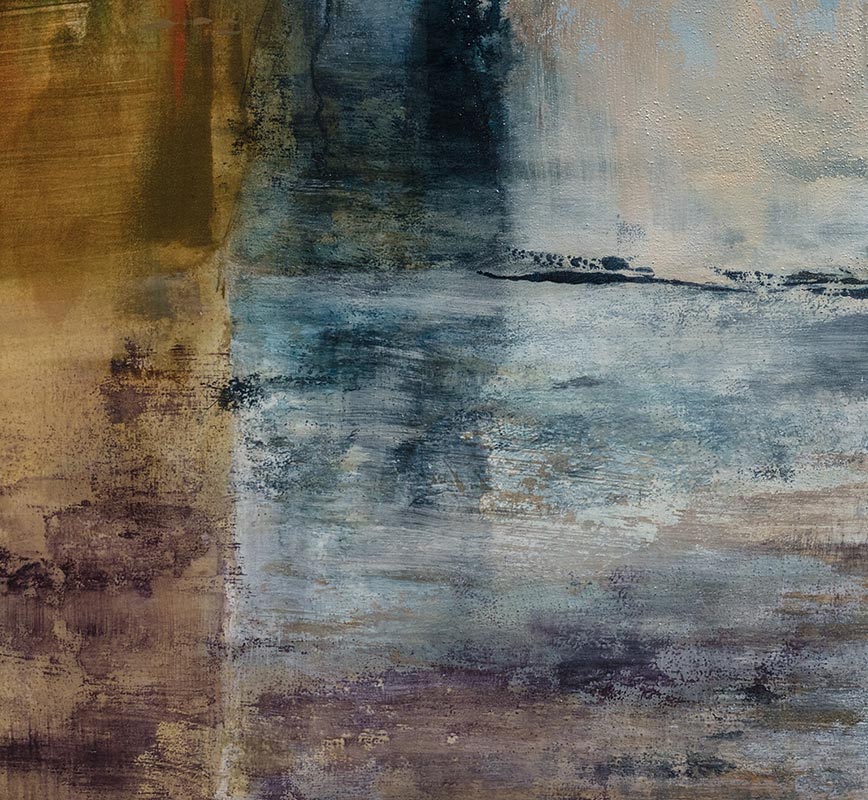
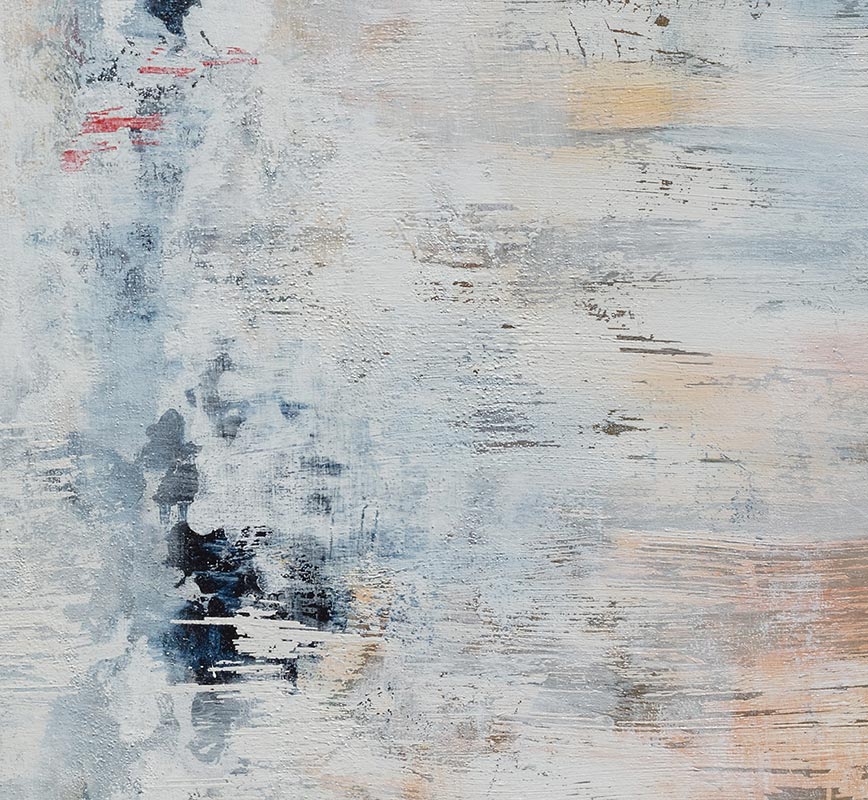
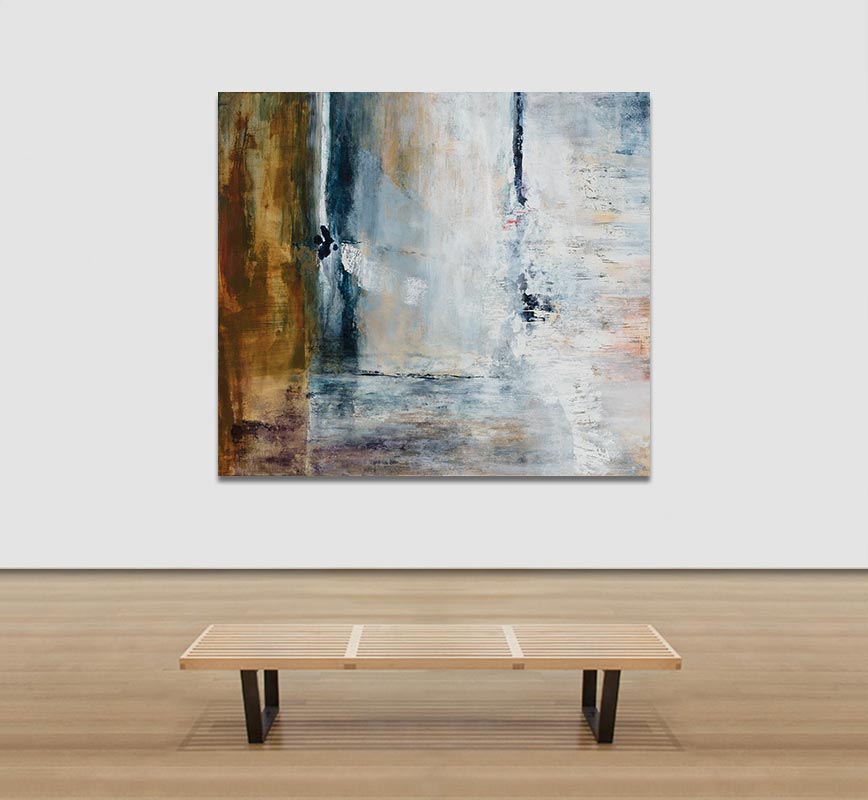
Sun Shower catches a meteorological fact that painters have long found difficult to render: the coexistence of rain and direct sunlight, the moment when two apparently incompatible conditions occupy the same space at once. The canvas is organized vertically, blues and pale lavenders washing from the upper field downward while scattered bursts of orange, red, and warm pink interrupt from within rather than above, as if the warmth is not falling but erupting.
Sun Shower catches a meteorological fact that painters have long found difficult to render: the coexistence of rain and direct sunlight, the moment when two apparently incompatible conditions occupy the same space at once. The canvas is organized vertically, blues and pale lavenders washing from the upper field downward while scattered bursts of orange, red, and warm pink interrupt from within rather than above, as if the warmth is not falling but erupting.
Petrov works with a compositional logic Monet’s water lily series established: the field as ground, individual chromatic events distributed through it without hierarchy, each carrying atmospheric weight without constituting a focal point. The red and orange marks operate on this principle, scattered, vivid, refusing hierarchy, but are denser and more pressurized than Monet’s dissolving pigment, giving the warm elements a charged quality.
The vertically oriented brushwork, descending in long parallel passages of blues and muted greens, provides the gravitational logic: against this downward pull, the warm marks seem to hold their position with effort. This is not serenity and vitality as mood states but as simultaneous physical conditions, the visual result of a meteorological paradox held formally rather than described.