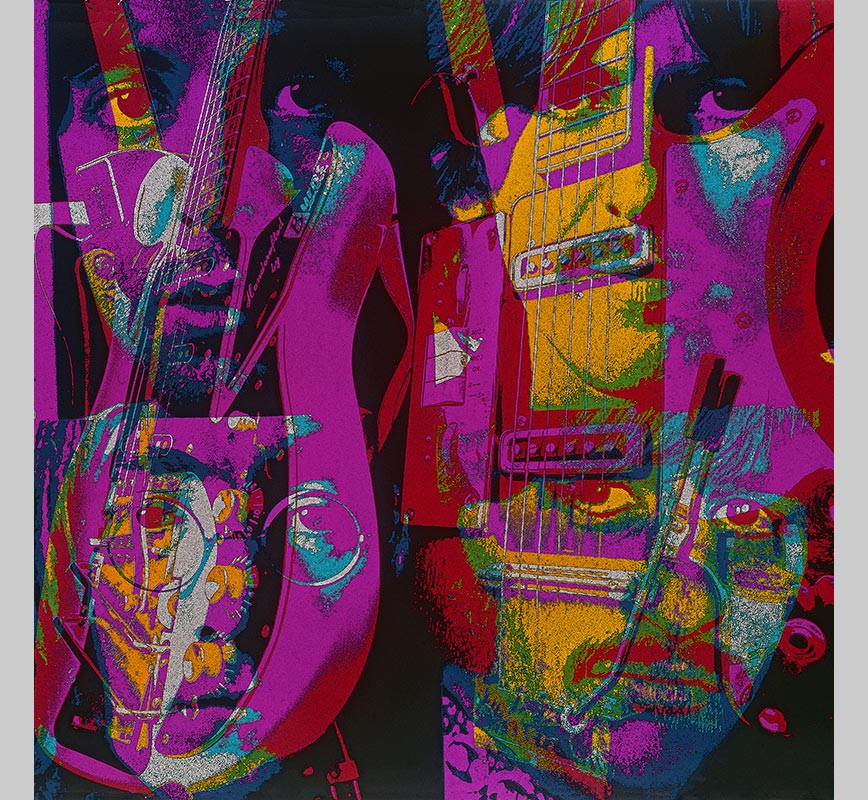
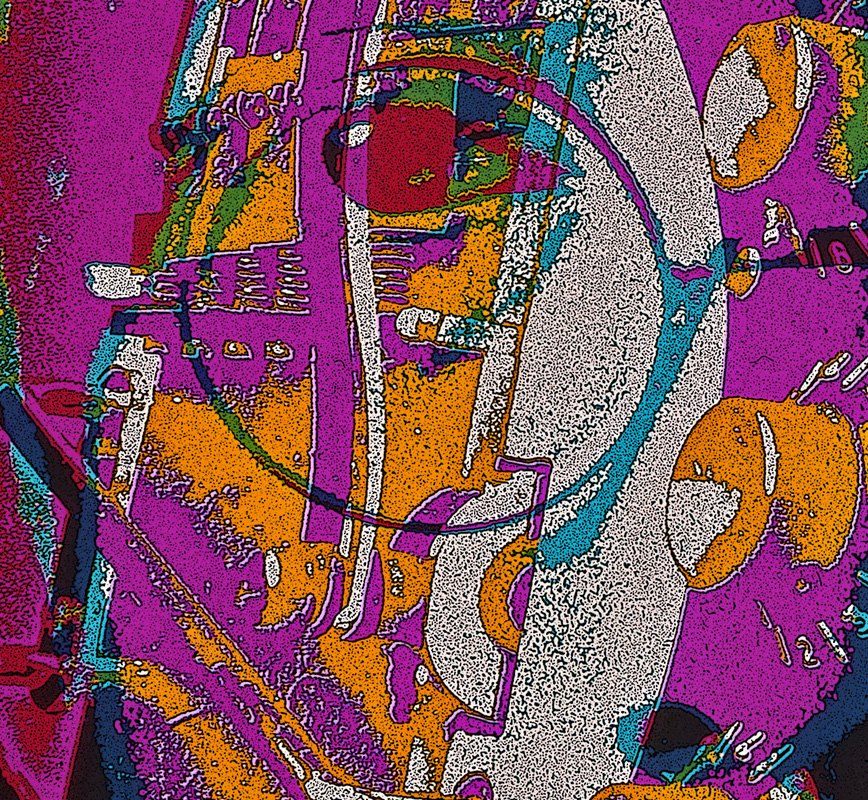
This 1969 photograph of The Beatles showcases Ragazzini’s darkroom experimentation at its most culturally charged: tone-separation, filter selection, and mask techniques refined over a decade transform the group portrait into a chromatic event pulsing with intense reds, blues, and yellows. The result belongs unmistakably to its moment, and unmistakably to him.
This 1969 photograph of The Beatles showcases Ragazzini’s darkroom experimentation at its most culturally charged: tone-separation, filter selection, and mask techniques refined over a decade transform the group portrait into a chromatic event pulsing with intense reds, blues, and yellows. The result belongs unmistakably to its moment, and unmistakably to him.
The comparison with Andy Warhol is available and correct: both practices converge on the idea that a famous face, subjected to bold color and chromatic distortion, becomes something more than an image—it becomes a cultural index. The difference is fundamental. Warhol worked through mechanical reproduction and silkscreen; Ragazzini worked through light, emulsion, and chemical process, producing in the darkroom what Warhol achieved through the press. The optical event here is not simulated; it is materially generated.
These techniques were not borrowed from Pop Art but developed independently, from a formation in industrial graphic arts at a lithography company in Faenza, without knowledge of what the international art world was doing. By the time London’s visual culture caught up with what Ragazzini was producing, the practice was already a decade old. The photograph belongs to his London decade, during which he was the sole non-British participant in the ICA’s landmark Spectrum exhibition in 1969.