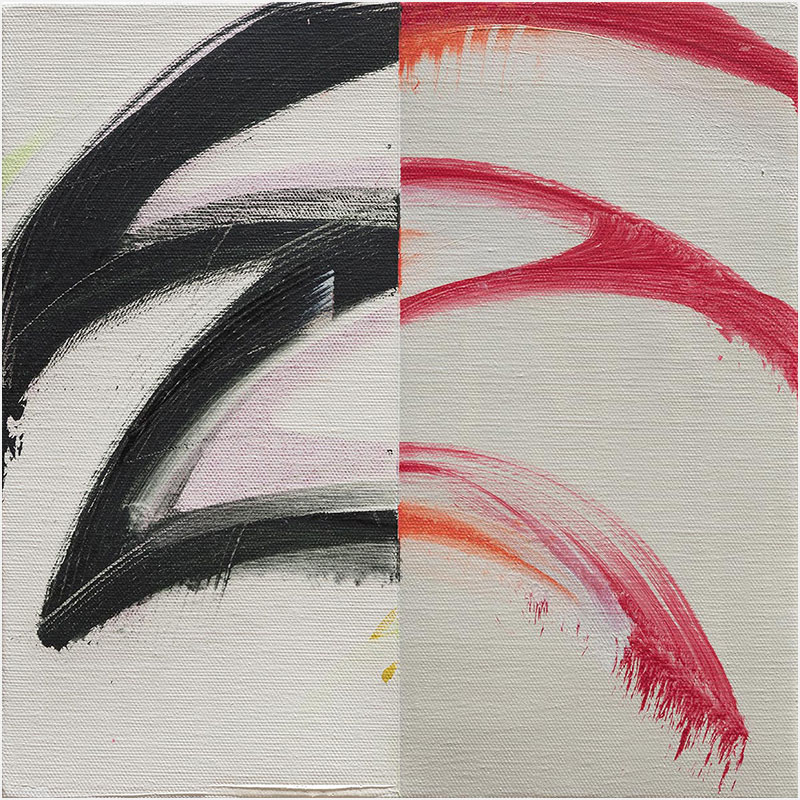
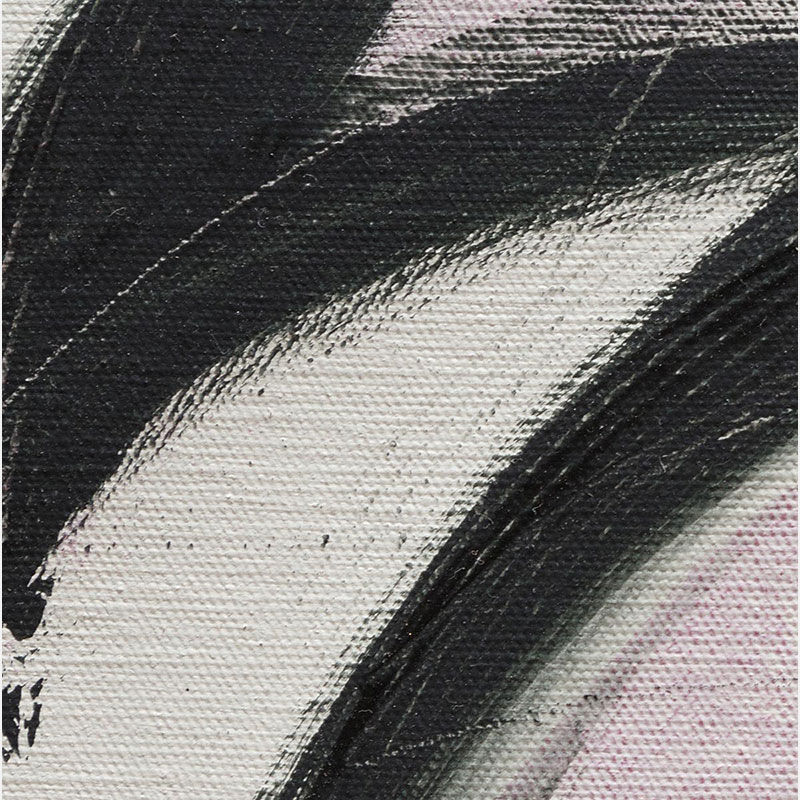
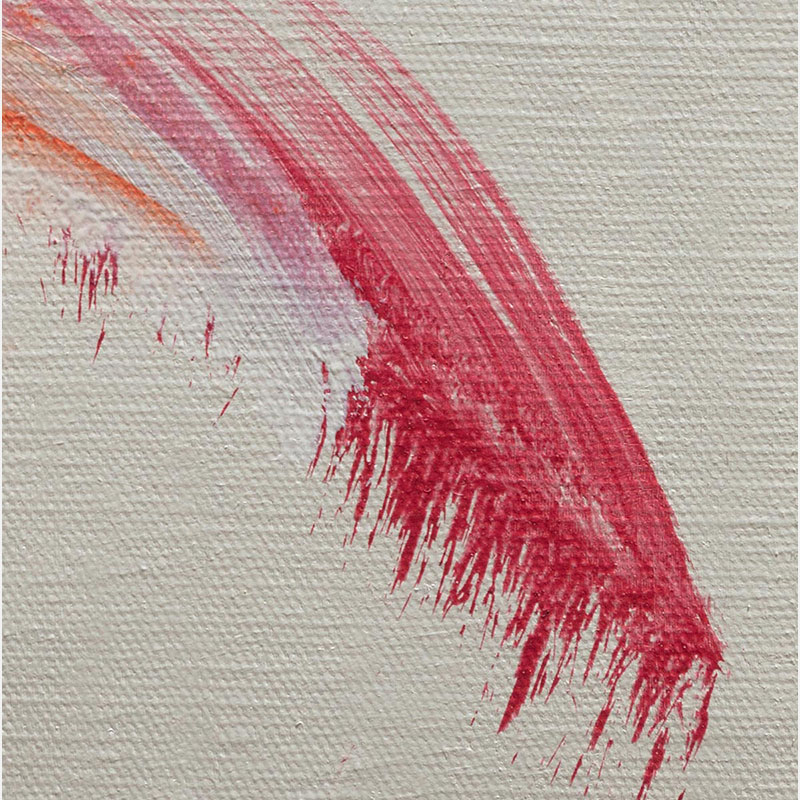
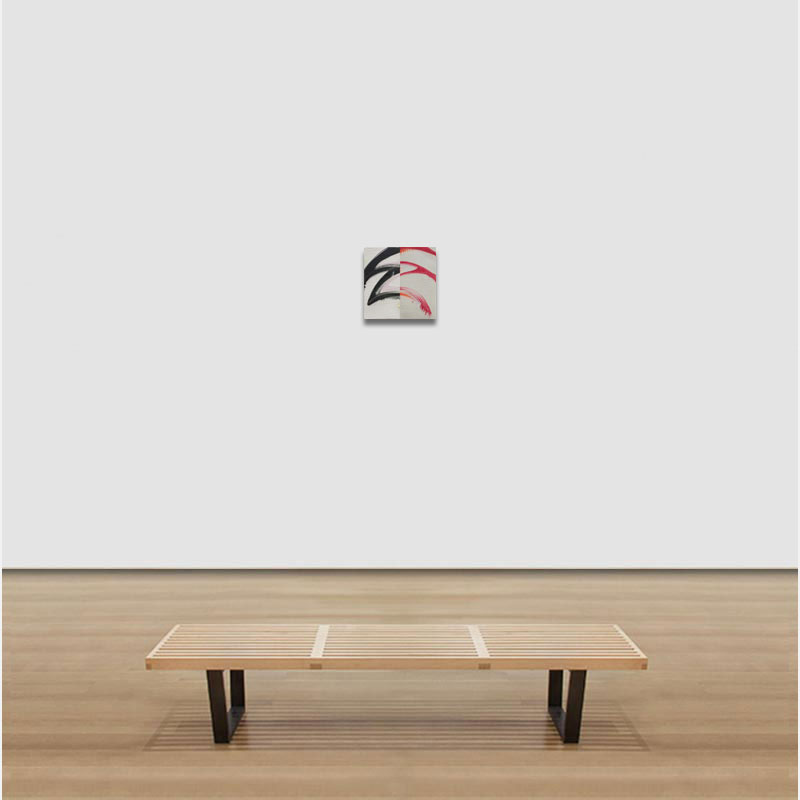
Three black arcs arrive from the left and stop dead at a seam. On the other side, three crimson ones begin at about the same heights, orange flaring at their starts, as if the line had been handed across. The black is dense and dry, its bristle tracks running the length of each arc and hairpinned into a Z. The red thins to fine hairs at its lowest curve. Two moods meet at one hard edge, brisk and brash.
Three black arcs arrive from the left and stop dead at a seam. On the other side, three crimson ones begin at about the same heights, orange flaring at their starts, as if the line had been handed across. The black is dense and dry, its bristle tracks running the length of each arc and hairpinned into a Z. The red thins to fine hairs at its lowest curve. Two moods meet at one hard edge, brisk and brash.
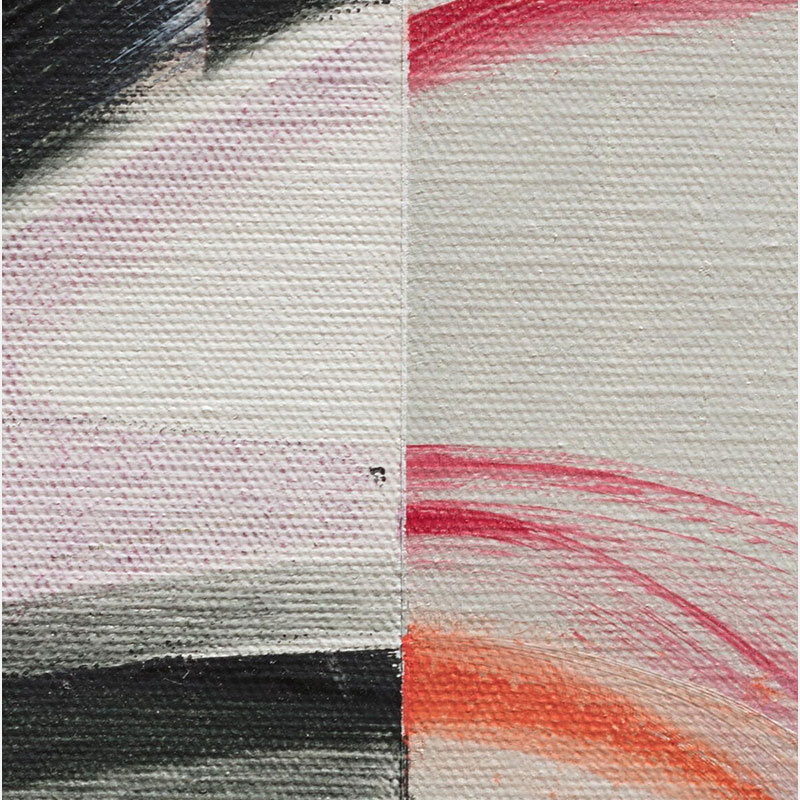
The black arcs end squarely against the seam. The Z is a reversal: the brush turns back on itself twice. On the right the crimson arcs open from the same edge. The top one climbs to the corner, the middle one doubles back in a hairpin, and the lowest frays away. The ground warms on the left and greys on the right.
The seam in Roberto Caracciolo's Shake it is the edge itself, the place where one stroke ends and another begins. The two sets of arcs meet at roughly the same heights, so the division works as a relay and not as a wall. Robert Ryman's white paintings, which treat the edge as part of the composition, are a useful neighbour.