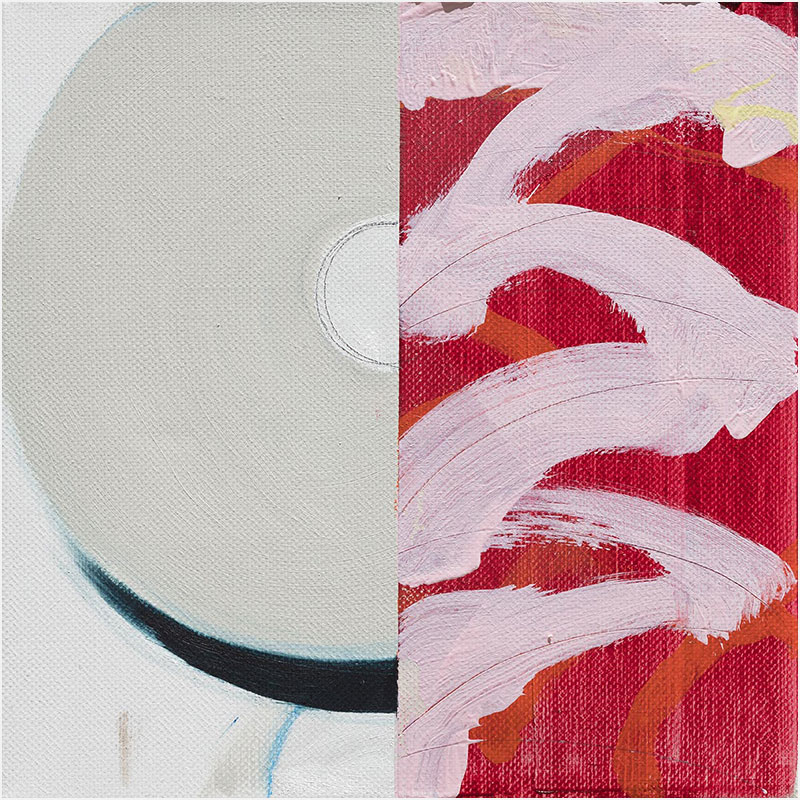
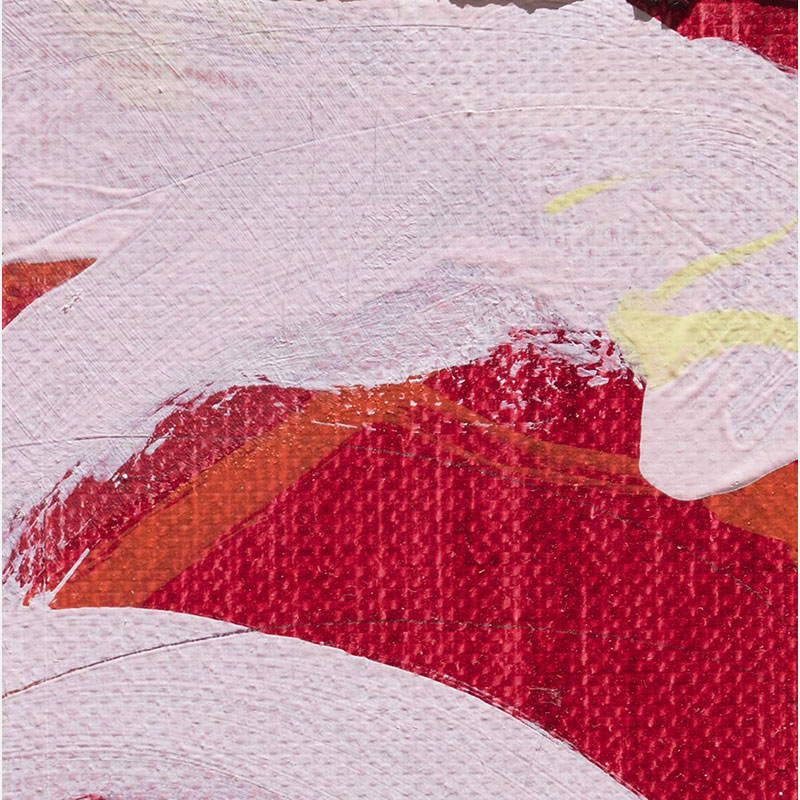
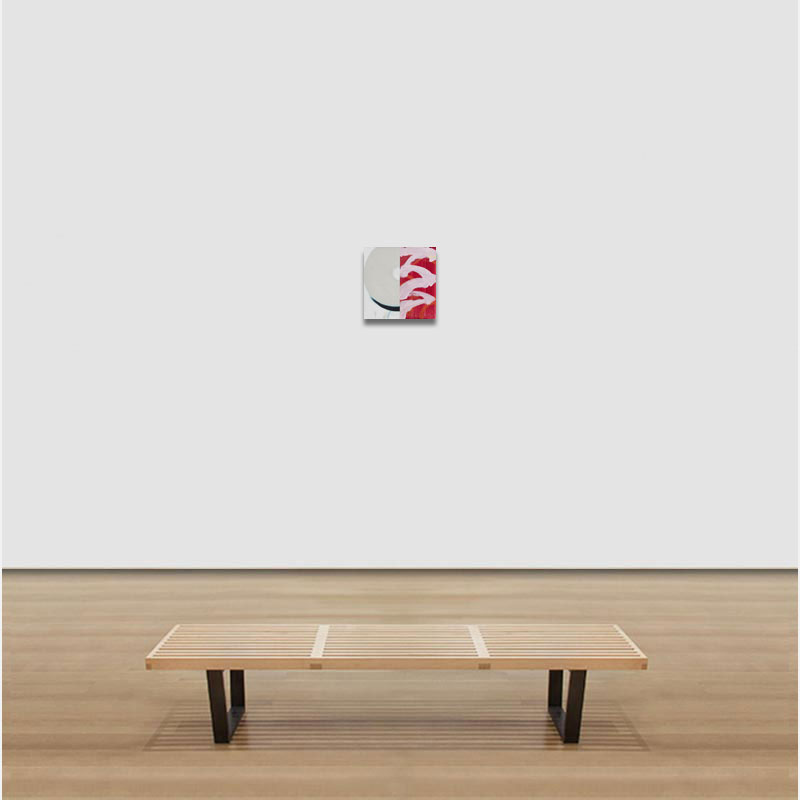
A seam splits this canvas into two climates. On the left, a matte grey disc fills the field, smooth until close looking finds its fine concentric grooves. On the right, four fat arcs of pale pink swing across the crimson, each ending in a frayed lift-off where the brush left the surface. Hot against cool, dense against bare, the canvas turns on one clean cut. The whole surface is tactile, feverish and restless, caught mid-turn.
A seam splits this canvas into two climates. On the left, a matte grey disc fills the field, smooth until close looking finds its fine concentric grooves. On the right, four fat arcs of pale pink swing across the crimson, each ending in a frayed lift-off where the brush left the surface. Hot against cool, dense against bare, the canvas turns on one clean cut. The whole surface is tactile, feverish and restless, caught mid-turn.
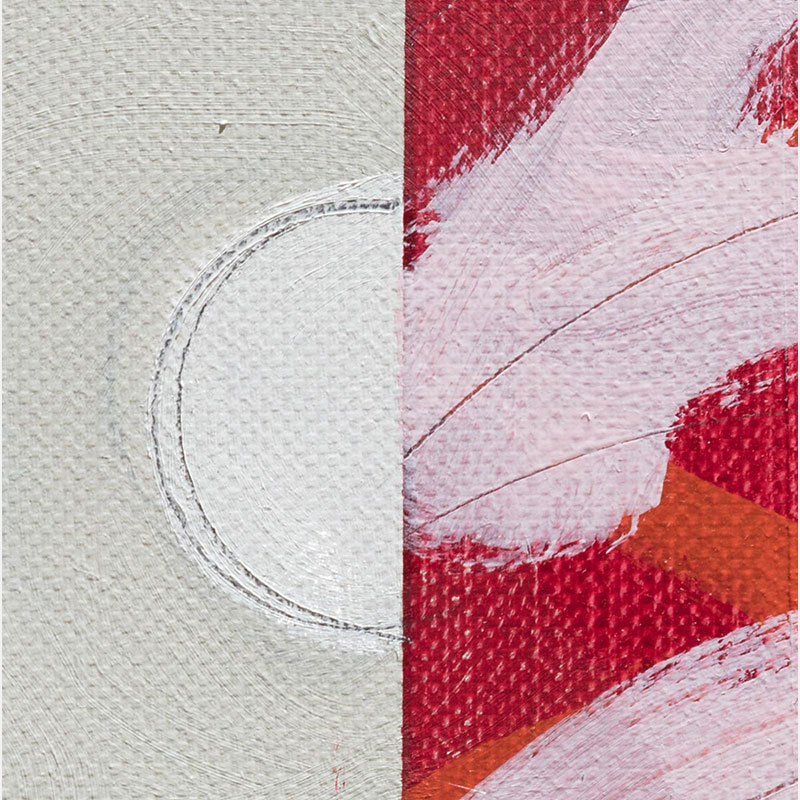
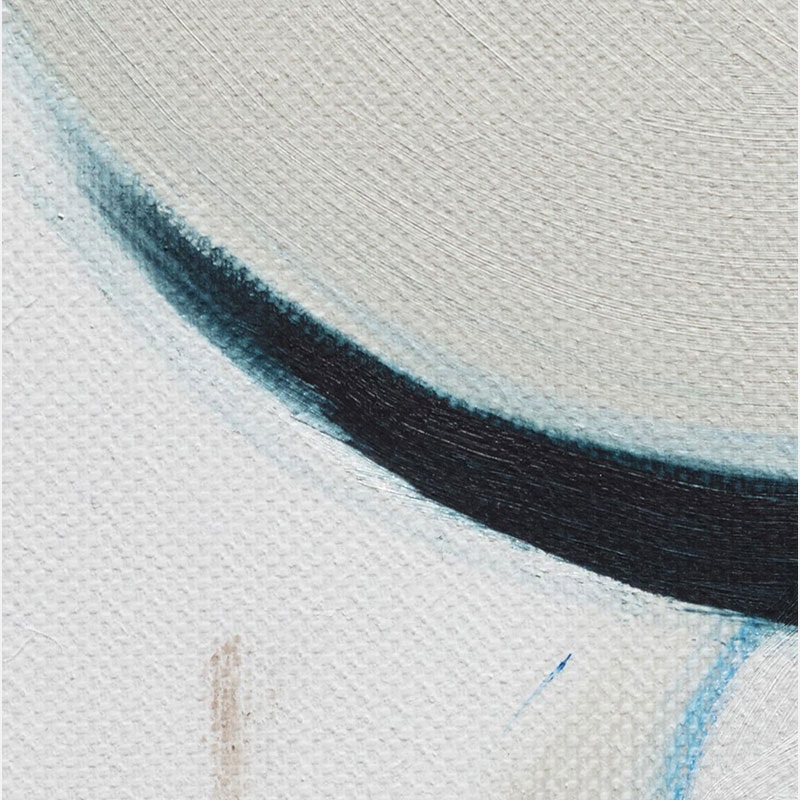
In Roberto Caracciolo's Twist & Turn, a double pencil circle sits at the join. The seam slices through it, so the drawing reads as laid down first and the division made after. Beneath the arcs, the crimson ground is dragged into parallel vertical bristle tracks, and thin graphite lines follow the curve of each pink arc. A blue contour just outside the disc and a black crescent along its lower rim mark the same edge twice.
Scaffold, stroke, cut. The order of work can be read off the surface, each decision left standing. The arcs rise in ridges thick enough to cast shadow, so the evidence is physical as well as visual. Read alongside the paintings of Jacqueline Humphries, where gesture meets the grid and other geometric structures, the pencil circle becomes the device and the seam the interruption. The division cuts through a drawing already begun.