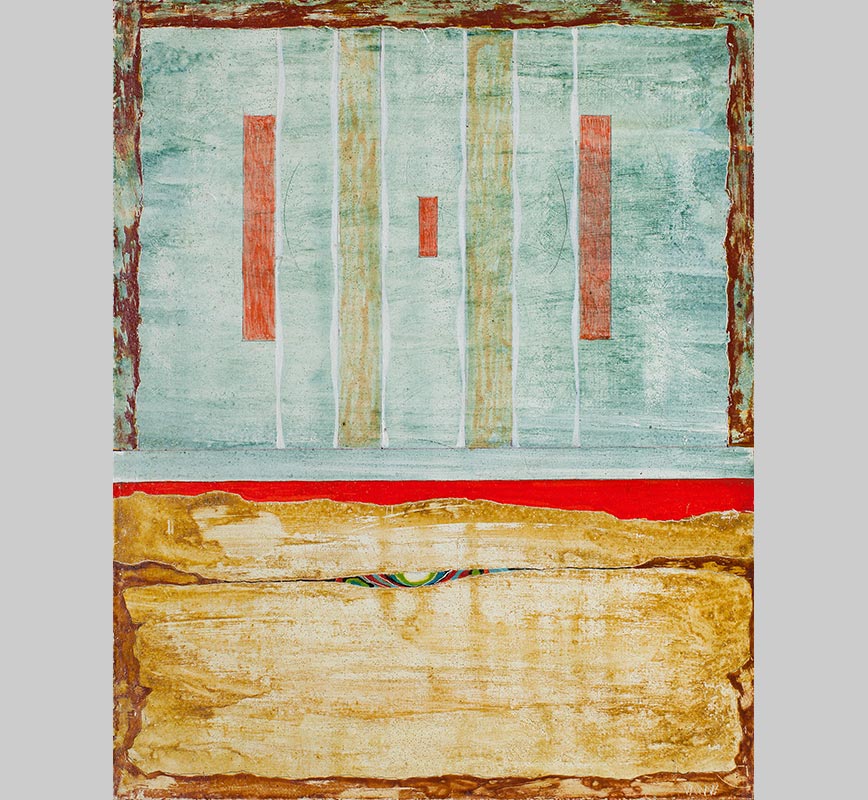
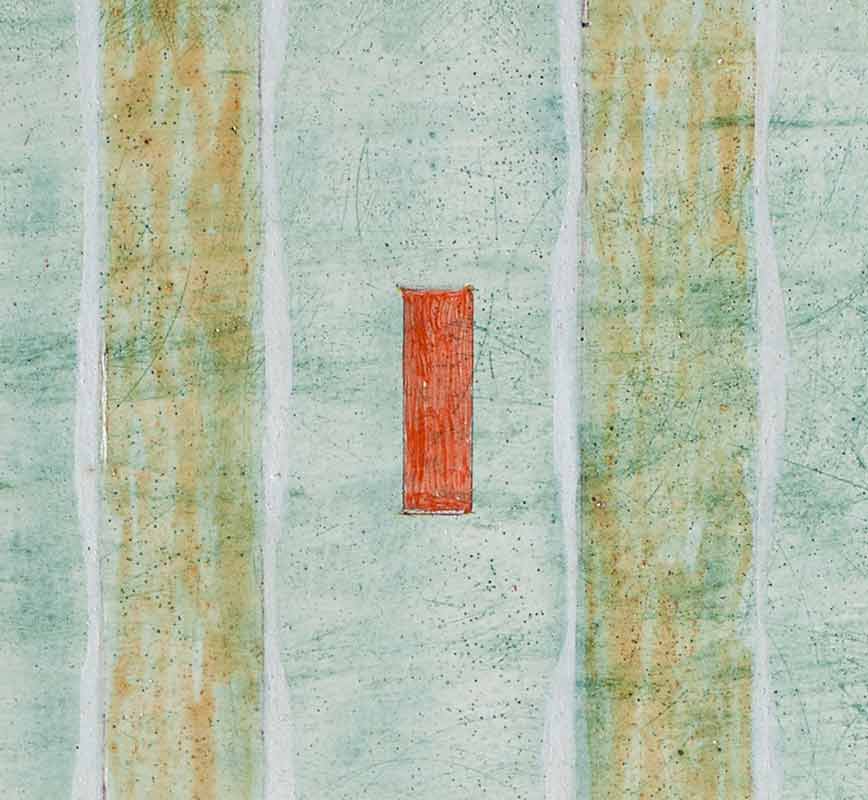
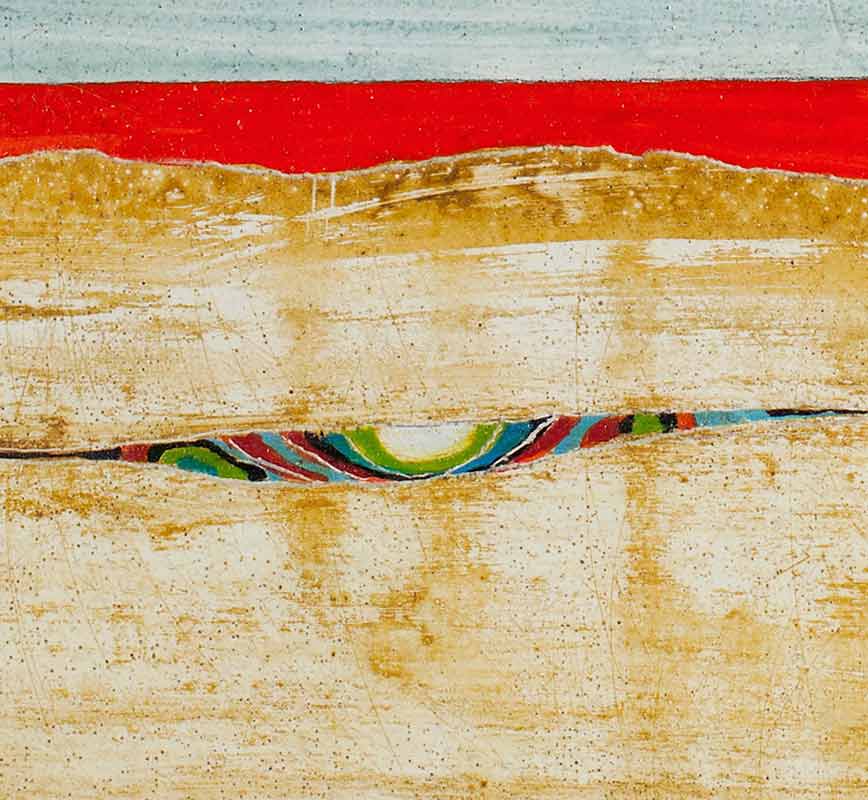
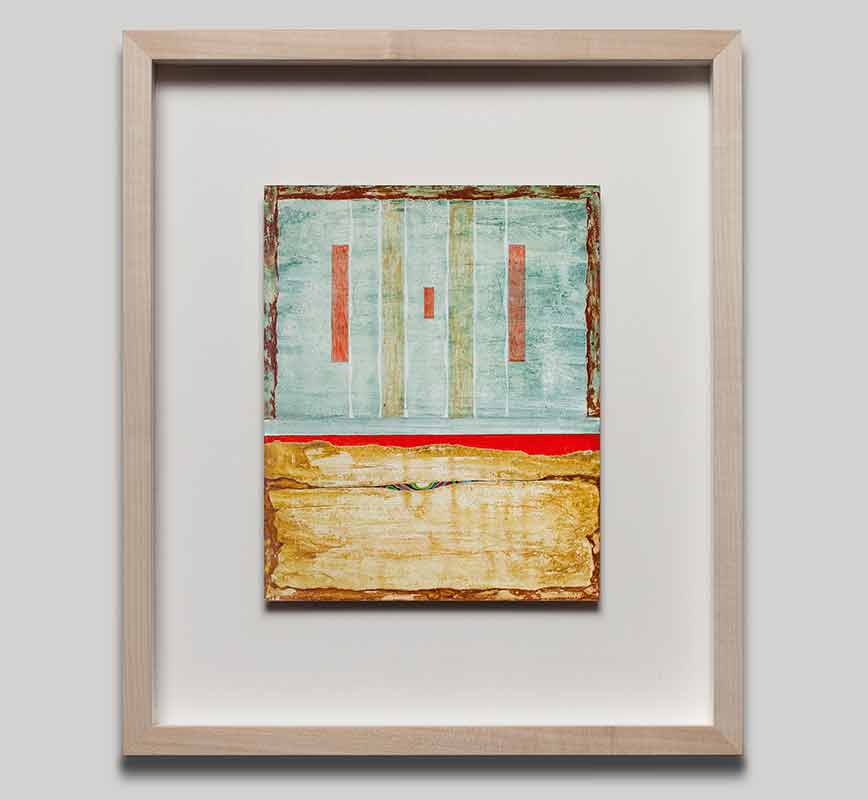
With Nebulosa, Vanni pares his compositional language to its essential oppositions. Gone are the checkerboard ruptures and graphic scaffolding of earlier works. In their place, he sets two distinct forces into quiet tension: broad chromatic expanses and intricate linear clusters. The central fields of lavenders, slate blues, and muted ochres, cool, atmospheric, and unmodulated, evoke vast, drifting planes, while the zones that divide them are densely worked with tiny angular forms, like embankments of sedimented energy along the compositional seams.
With Nebulosa, Vanni pares his compositional language to its essential oppositions. Gone are the checkerboard ruptures and graphic scaffolding of earlier works. In their place, he sets two distinct forces into quiet tension: broad chromatic expanses and intricate linear clusters. The central fields of lavenders, slate blues, and muted ochres, cool, atmospheric, and unmodulated, evoke vast, drifting planes, while the zones that divide them are densely worked with tiny angular forms, like embankments of sedimented energy along the compositional seams.
These edge-like formations recall fragments of a shattered grid, swarming along compositional seams and delineating the boundaries between chromatic expanses. The structure marks a return to the spatial logic of the prismatic-crystalline paintings, yet in a more distilled, contemplative form. What was once faceted and pulsing now appears slow and suspended, as if observed through a translucent membrane.
The color fields do not assert volume; instead, they suggest presence through stillness. Between them, the narrow bands of tightly packed geometry act as thresholds or boundaries, transitional zones where energy accumulates before being released. Like a nebula, the painting hovers between dissolution and form, stillness and charge. The surface breathes, simultaneously veiled and precise, as if caught in the act of becoming.