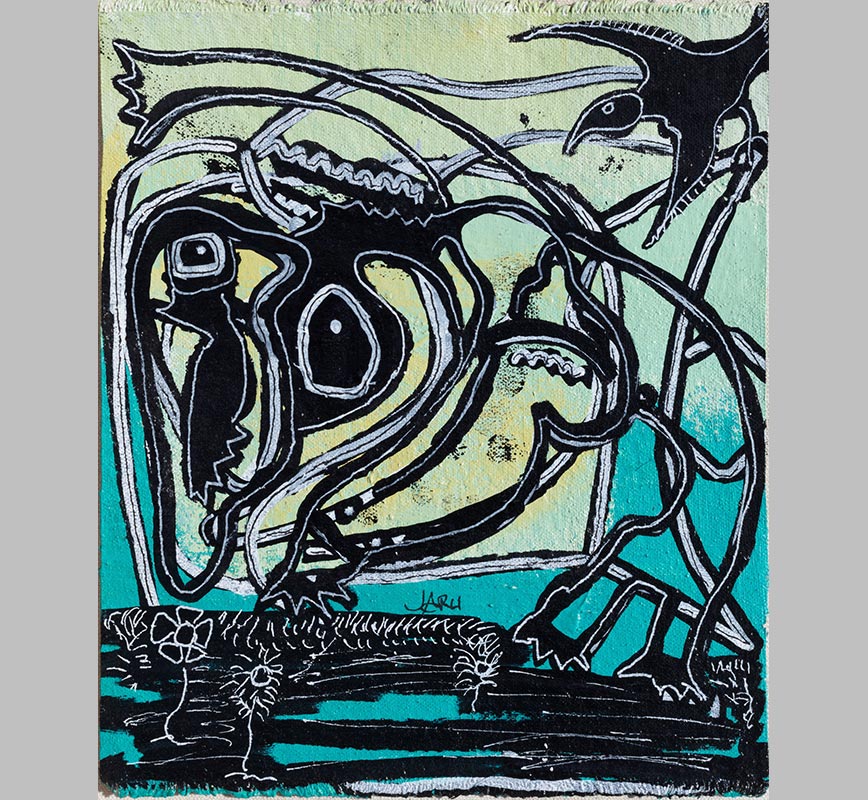
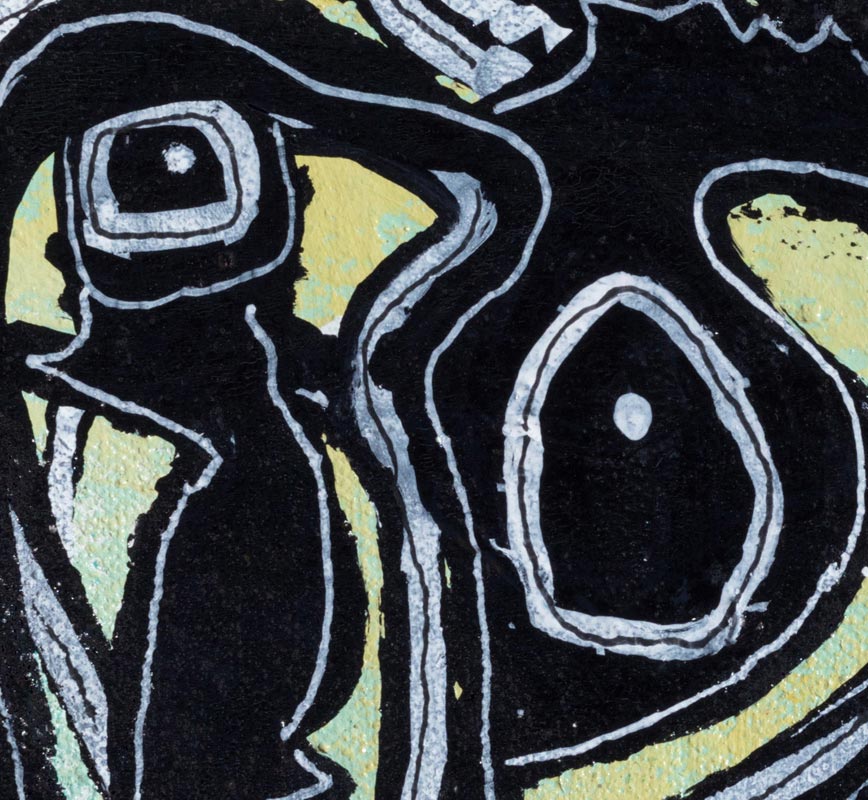
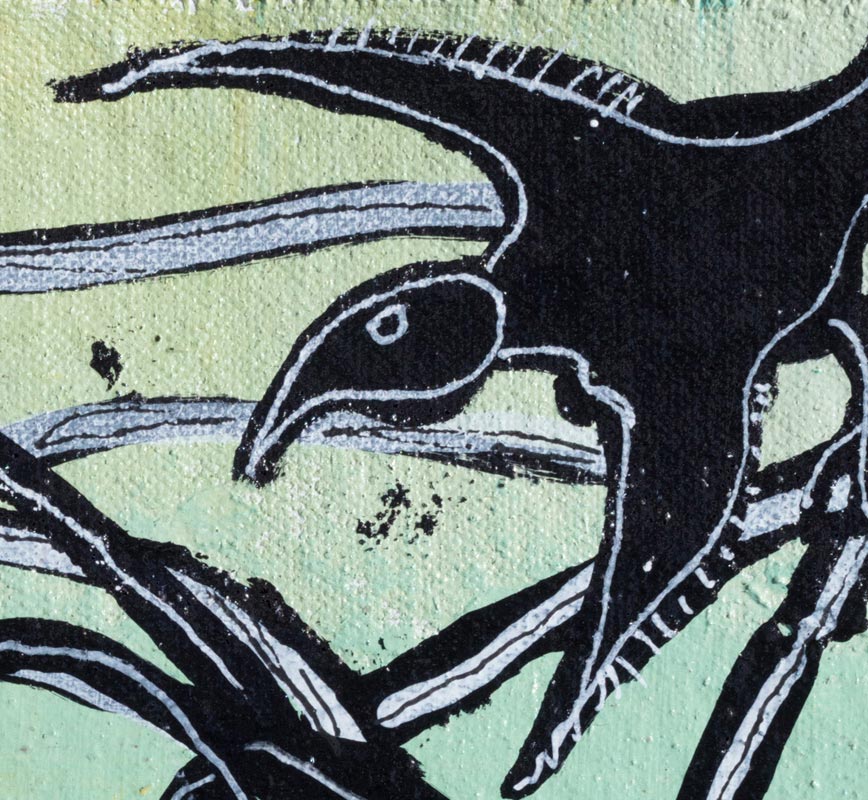
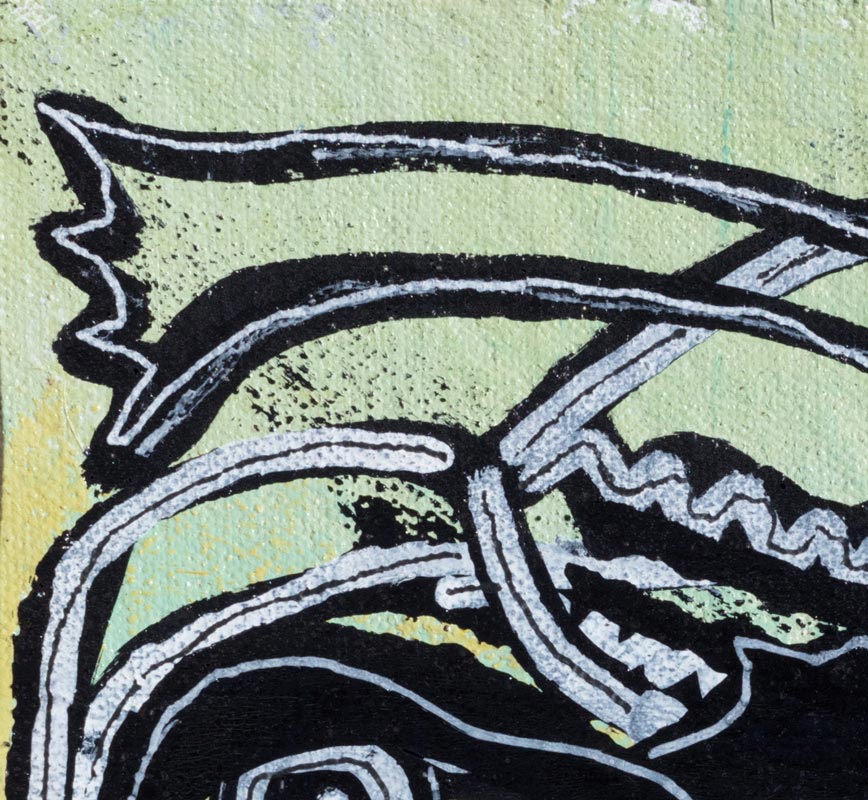
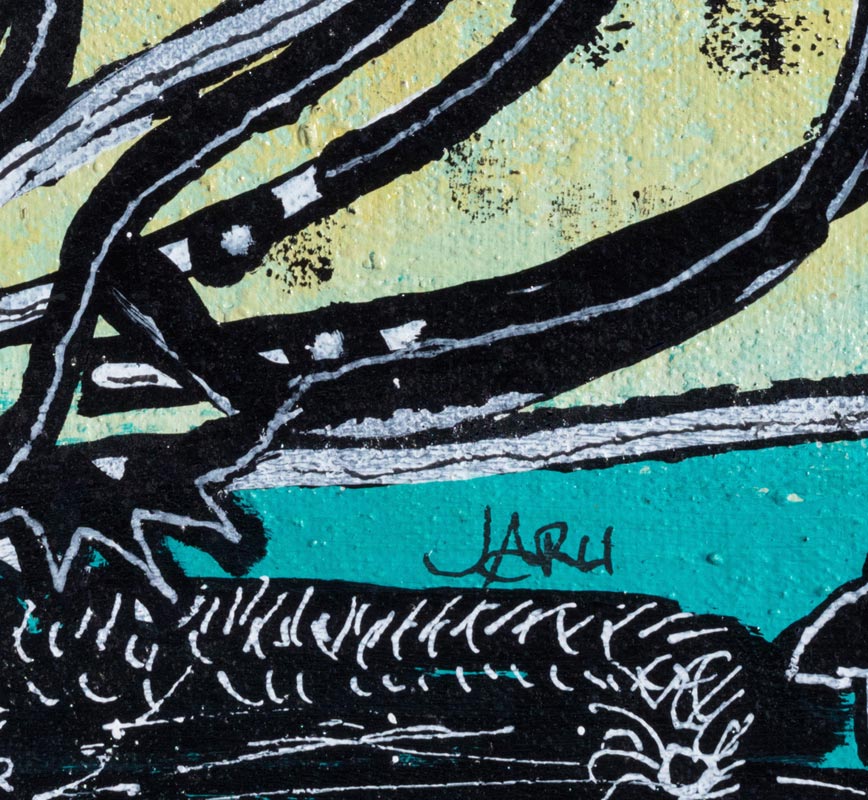
Germ on Shrooms incorporates three-dimensional elements, jagged black forms built up from the foam core in relief, framing a fractured grinning face that stares through what reads as prison bars or a mechanical apparatus. The composition surrounds this dimensional center with Jaru’s comic-inspired linework: distorted faces, fragmented speech bubbles, surreal creatures, the phrase “U smile like a zombie” distributed across the field. The result is part painting, part graffiti, part assemblage, a hybrid that refuses the boundaries of any single medium.
Germ on Shrooms incorporates three-dimensional elements, jagged black forms built up from the foam core in relief, framing a fractured grinning face that stares through what reads as prison bars or a mechanical apparatus. The composition surrounds this dimensional center with Jaru’s comic-inspired linework: distorted faces, fragmented speech bubbles, surreal creatures, the phrase “U smile like a zombie” distributed across the field. The result is part painting, part graffiti, part assemblage, a hybrid that refuses the boundaries of any single medium.
The three-dimensional relief is the formal pivot of the work. By building the central structure outward from the picture plane, Jaru creates a shadow that moves with the viewer, a physical presence that cannot be fully captured in reproduction. The grinning face behind the bars or the machine reads differently depending on the angle: by turns trapped, threatening, and absurd, which is precisely the range the title occupies. Germ on Shrooms: an altered perspective in which the absurdity of social structures becomes not more frightening but more obviously ridiculous.
The assemblage quality places this work in conversation with the expanded field of painting that developed through Robert Rauschenberg’s combines and later through the sculptural-pictorial hybrids of the 1980s New York scene. Jaru’s combination of hand-drawn surface and raised relief generates a tension between the flat graphic world of the Bad Germ mythology and the physical world of objects, suggesting that the critique the series makes of art world surfaces extends to the very surface of art itself.