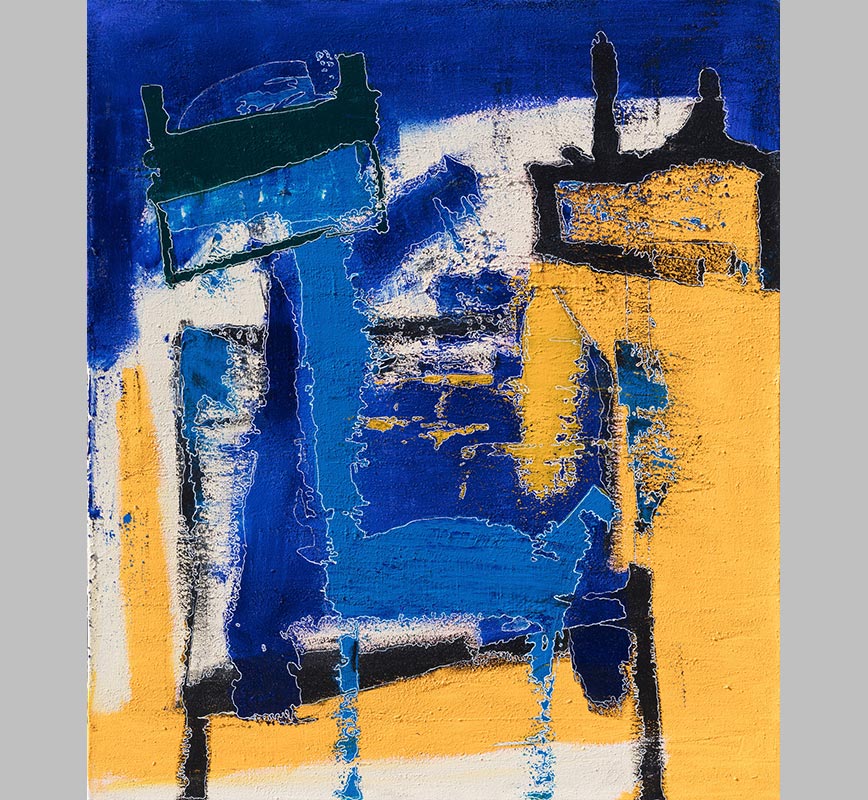
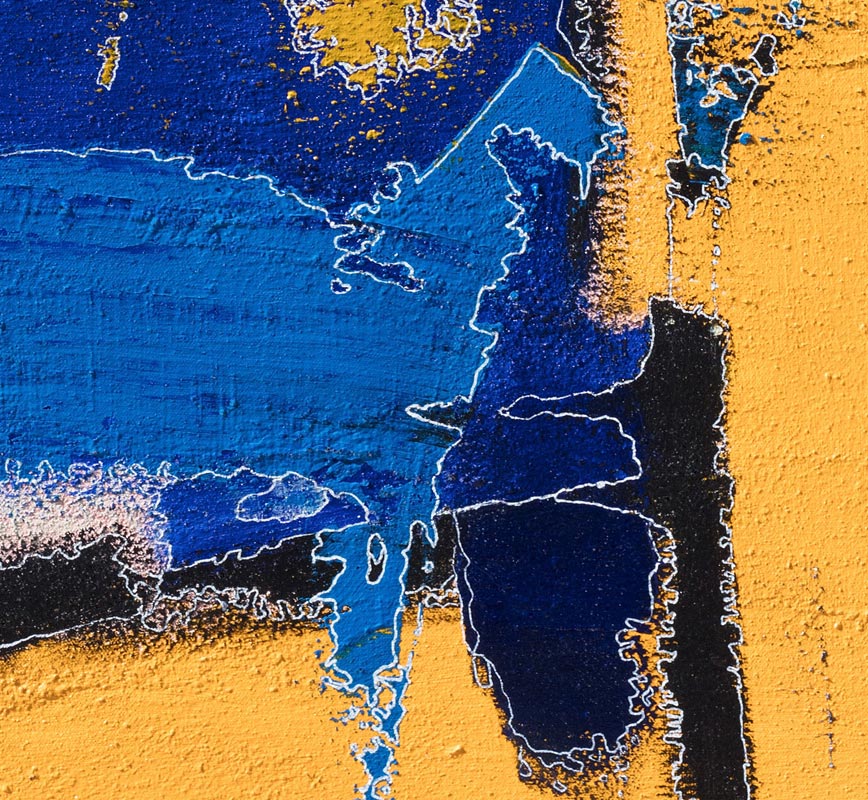
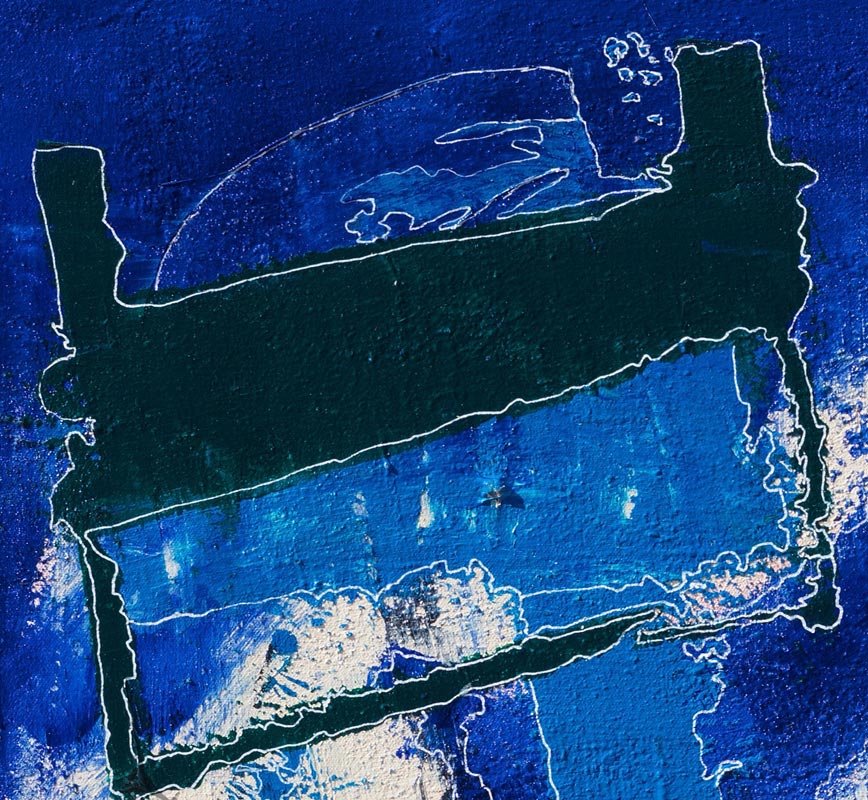
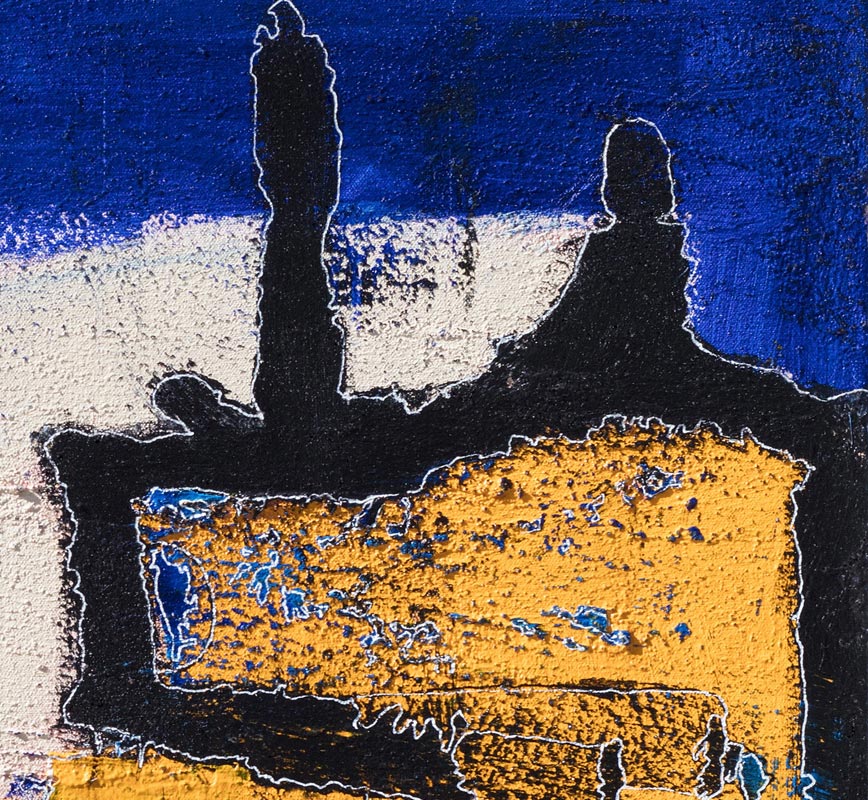
Germ Learns a Lesson floods its canvas with figures, text, and symbols in the high-contrast black and white of Jaru’s Chronicles of Bad Germ series, punctuated by bursts of electric blue that act as visual shocks across the composition. The figures are fragmented and angular, each pressing against the next in a composition so densely populated that no single element holds the eye for long. The speech bubbles function as commentary and noise simultaneously: the lesson, whatever it is, is happening in a scene of considerable chaos.
Germ Learns a Lesson floods its canvas with figures, text, and symbols in the high-contrast black and white of Jaru’s Chronicles of Bad Germ series, punctuated by bursts of electric blue that act as visual shocks across the composition. The figures are fragmented and angular, each pressing against the next in a composition so densely populated that no single element holds the eye for long. The speech bubbles function as commentary and noise simultaneously: the lesson, whatever it is, is happening in a scene of considerable chaos.
The electric blue is the decisive formal element. In a body of work committed to stark monochrome, its appearance here carries weight: the blue zones interrupt the black-and-white logic the way a new piece of information interrupts a settled understanding. Philip Guston’s late-period work, in which cartoonish figures confronted political and personal anxieties with humor that made the confrontation more rather than less unsettling, shares this logic of disruption through the unexpected.
The Chronicles of Bad Germ series began in 2019 as Jaru’s response to New York art world dynamics: social maneuvering and the performance of relevance mattering more than the work itself. The lesson Bad Germ learns here is not stated. What the composition insists on is the condition of learning it: chaos, competing voices, the impossibility of finding a quiet corner from which to absorb what has just happened.