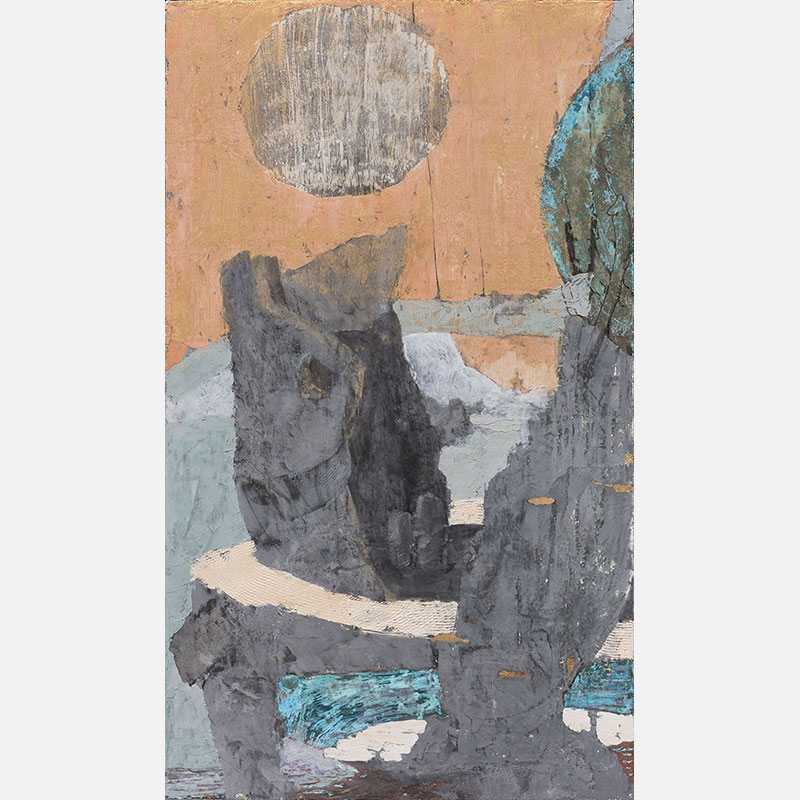
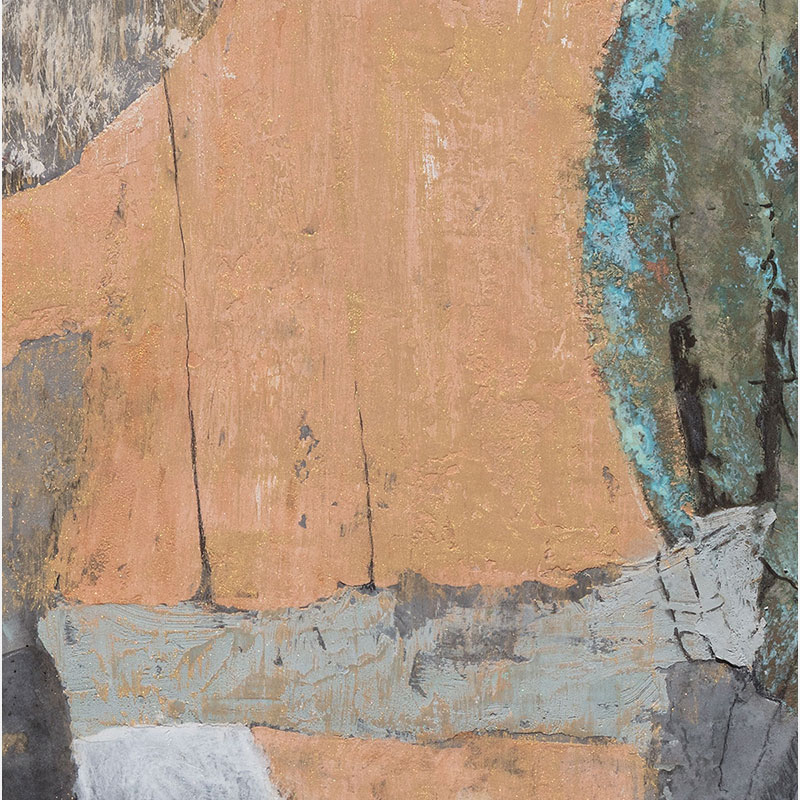
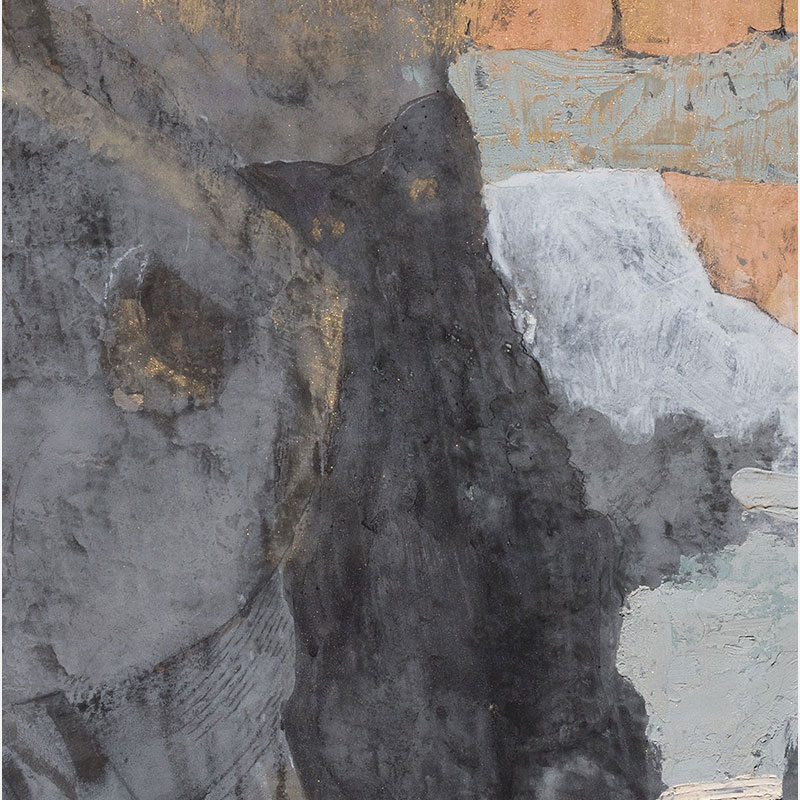
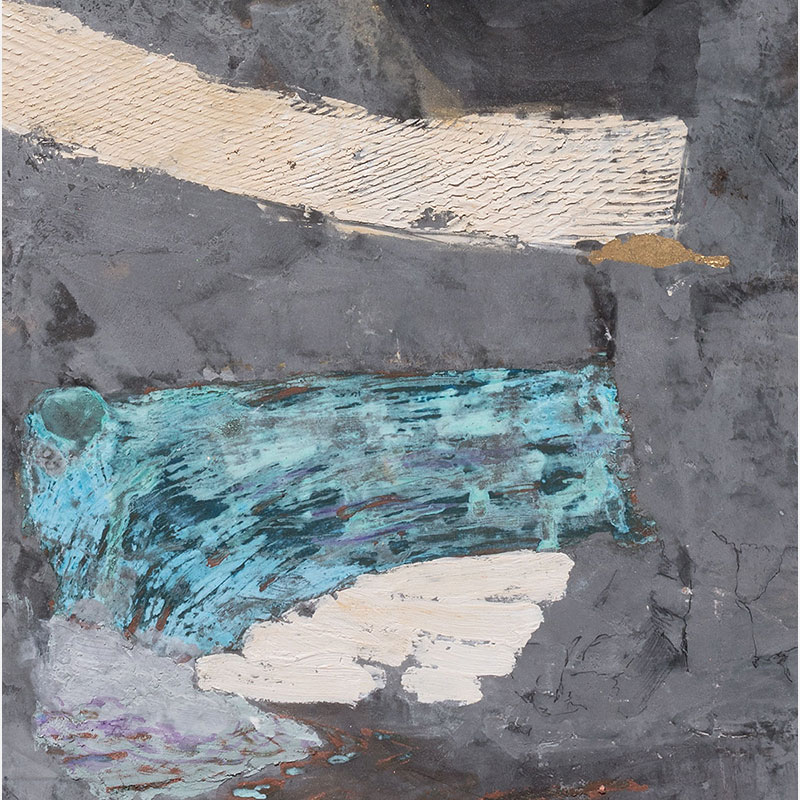
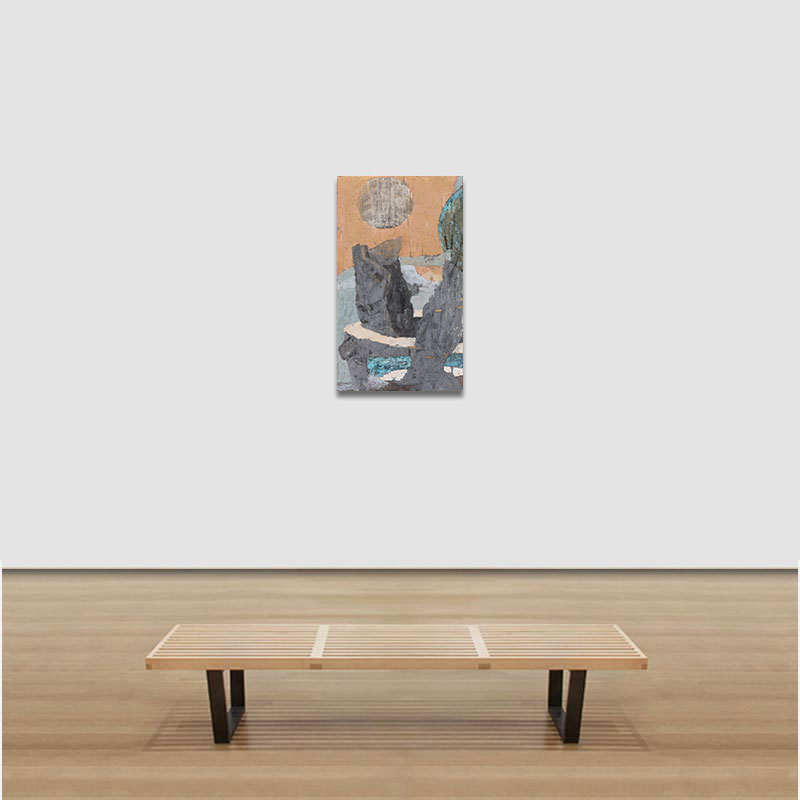
Where’s Piper opens with a monumental rocky form in greys and textured impasto, set against a gold-leaf sky where a pale weathered orb, sun or moon, hovers just above center. Below, turquoise passages of water cut through the dark terrain, and pale horizontal bands suggest paths or ledges. The composition has the quality of a geological event staged for viewing: a landscape so elemental that it exceeds the scale of observation and approaches the scale of time.
Where’s Piper opens with a monumental rocky form in greys and textured impasto, set against a gold-leaf sky where a pale weathered orb, sun or moon, hovers just above center. Below, turquoise passages of water cut through the dark terrain, and pale horizontal bands suggest paths or ledges. The composition has the quality of a geological event staged for viewing: a landscape so elemental that it exceeds the scale of observation and approaches the scale of time.
The title introduces a narrative absence: "Piper" is named, addressed, sought, but nowhere visible in the scene. The question mark is embedded in the title itself, and the painting accepts the question without answering it. This is the logic of the landscape as psychological space rather than observed environment: the named but absent figure is the subjective presence that the viewer supplies, the one for whom the search is conducted.
Robert Motherwell's Elegy to the Spanish Republic series pursues a related formal logic: monumental dark forms against luminous grounds, the composition organized around presence and absence simultaneously, the named subject nowhere visible in the image. The gold-leaf sky lifts the composition out of pure landscape and into a different register. Gustav Klimt's gilded surfaces used gold as a state of being rather than a backdrop, the medium in which figures exist once they have moved beyond the ordinary. Kitterle applies that logic here: the gold holds presence and absence simultaneously; the terrain below is where the search happens.