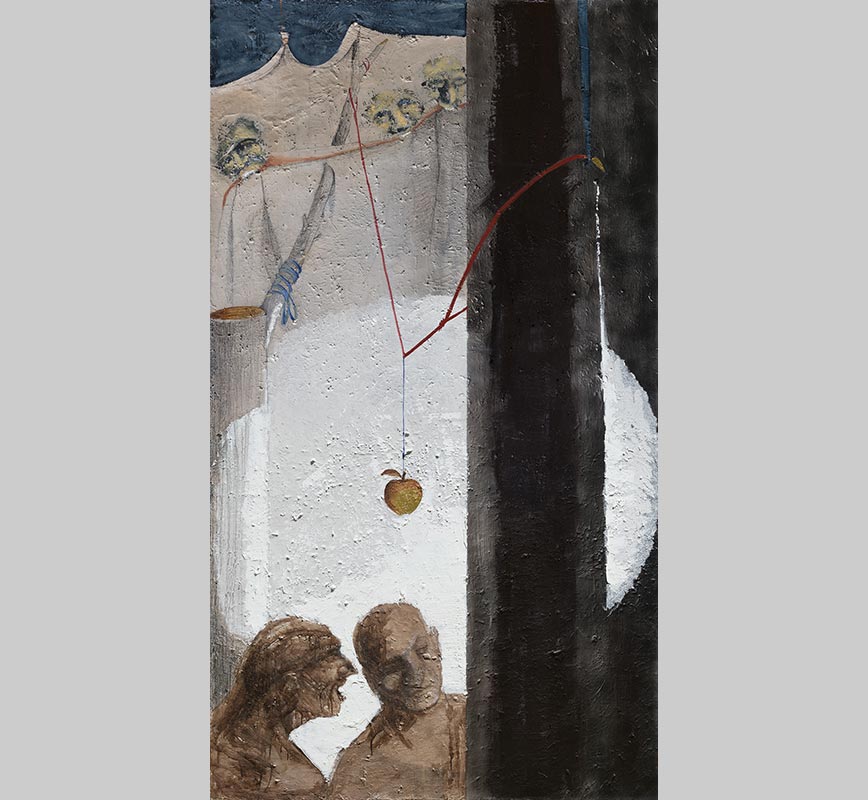
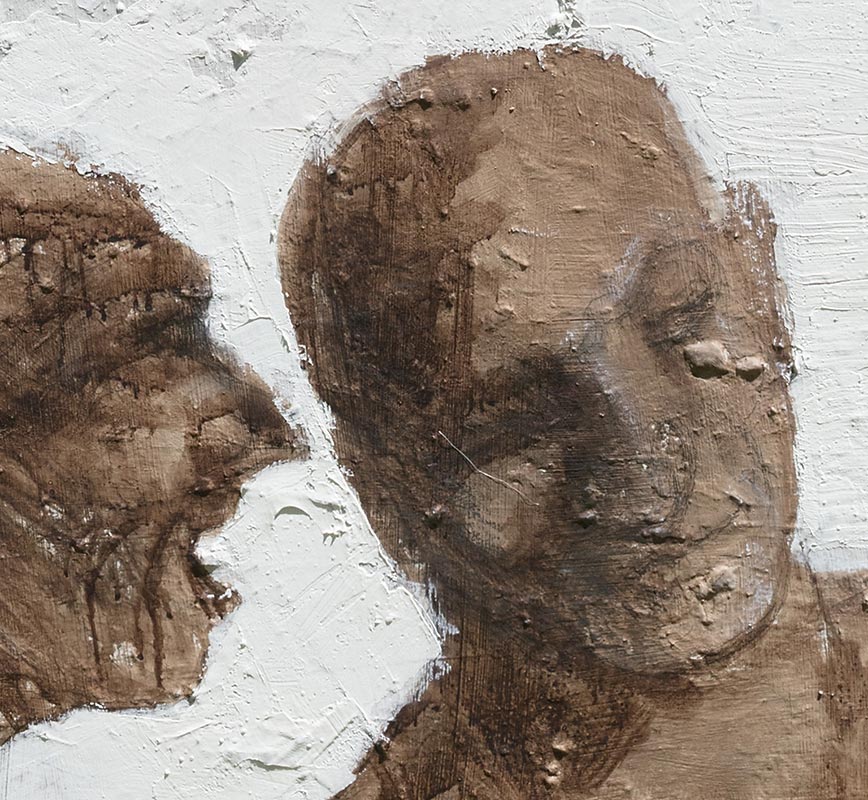
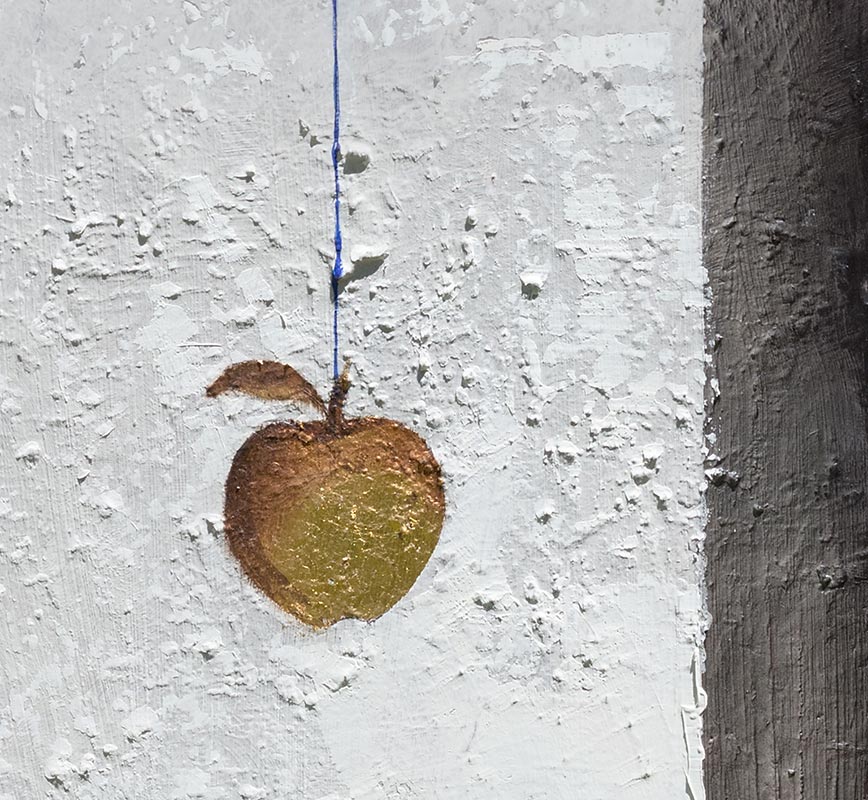
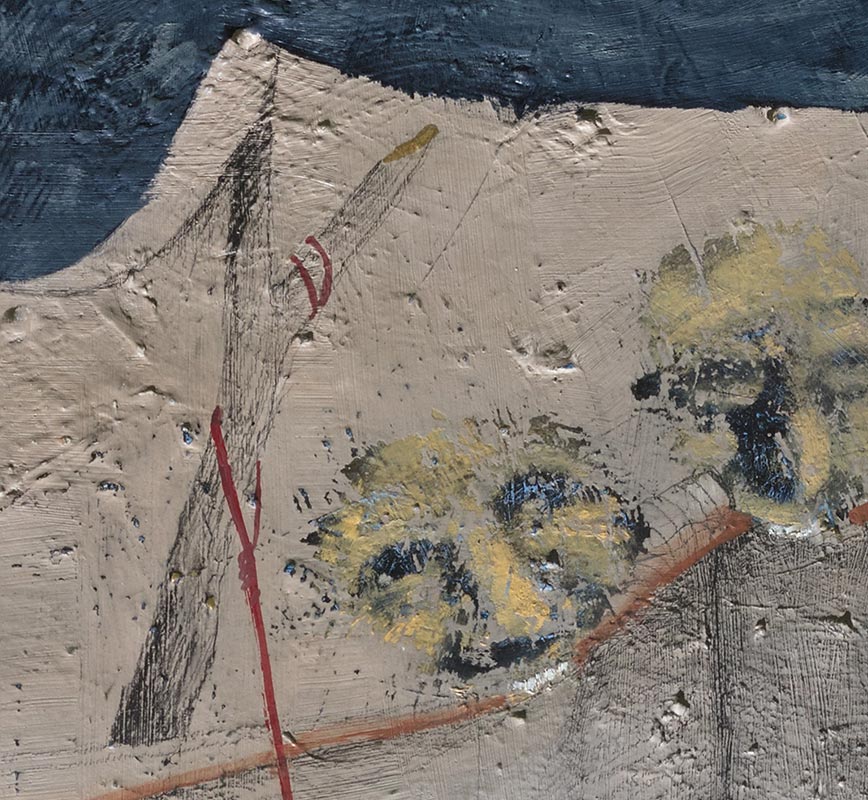
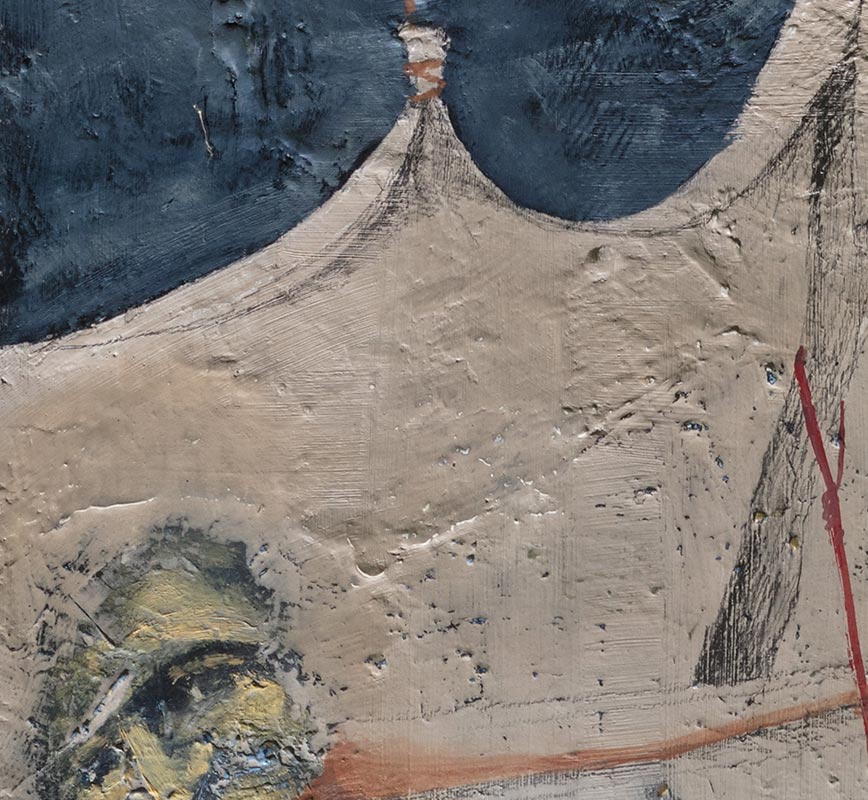
At the Alchemists House works in an unusually warm and high-keyed palette for Kitterle: purples, ochres, muted yellows, and atmospheric greys that constitute a spatial experience rather than a depicted space. Vessels, architectural fragments, moons, and faint suggestions of smoke float through the composition without fixed ground plane or logical perspective. A red line traces through the scene as both spatial guide and symbolic current, connecting what the space does not otherwise cohere.
At the Alchemists House works in an unusually warm and high-keyed palette for Kitterle: purples, ochres, muted yellows, and atmospheric greys that constitute a spatial experience rather than a depicted space. Vessels, architectural fragments, moons, and faint suggestions of smoke float through the composition without fixed ground plane or logical perspective. A red line traces through the scene as both spatial guide and symbolic current, connecting what the space does not otherwise cohere.
The alchemical title is precise. Alchemy, as an early modern practice, was less concerned with the literal transmutation of metals than with understanding the hidden correspondences between matter and spirit, the idea that the surface of the physical world conceals a deeper order accessible through careful attention and transformation. Kitterle’s fresco practice follows an analogous logic: the surface of the plaster reveals forms that were not consciously placed, and the artist reads these as the alchemist reads the crucible, looking for what the material discloses.
Remedios Varo’s Surrealist paintings of alchemical laboratories and transformative ritual provide the closest visual precedent: compositions in which vessels, moons, instruments, and architectural fragments are assembled in spaces that are neither interior nor exterior, where the ordinary rules of spatial logic are suspended in favor of symbolic order. Hokusai, named among Kitterle’s influences, understood color as a vehicle of energy rather than description, his most intense passages using color to suggest forces moving through a scene rather than objects present within it. At the Alchemists House operates on both of these principles: it is a space of transformation, and the colors are the activity.