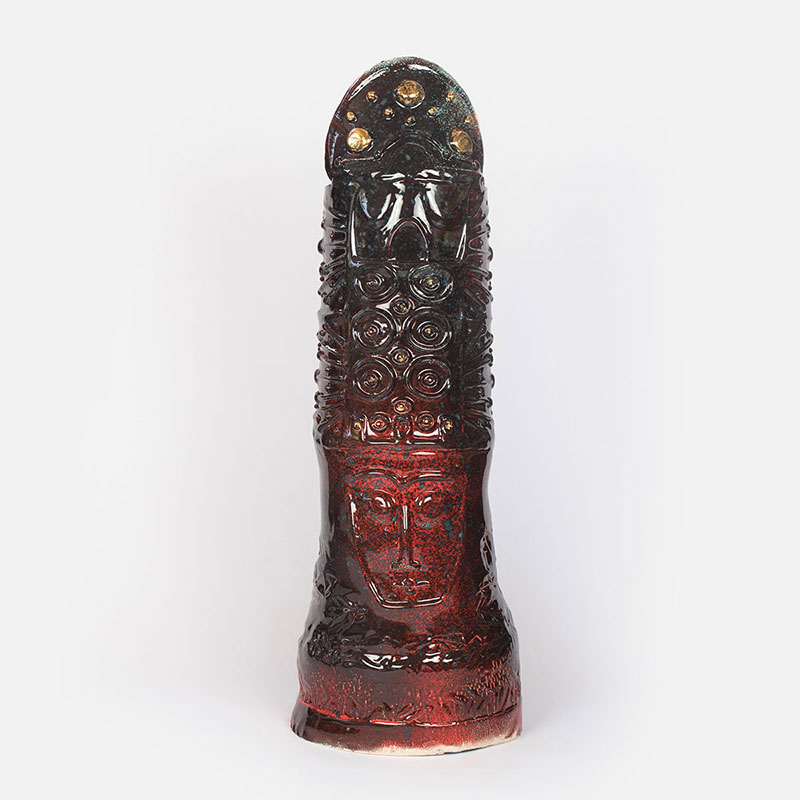
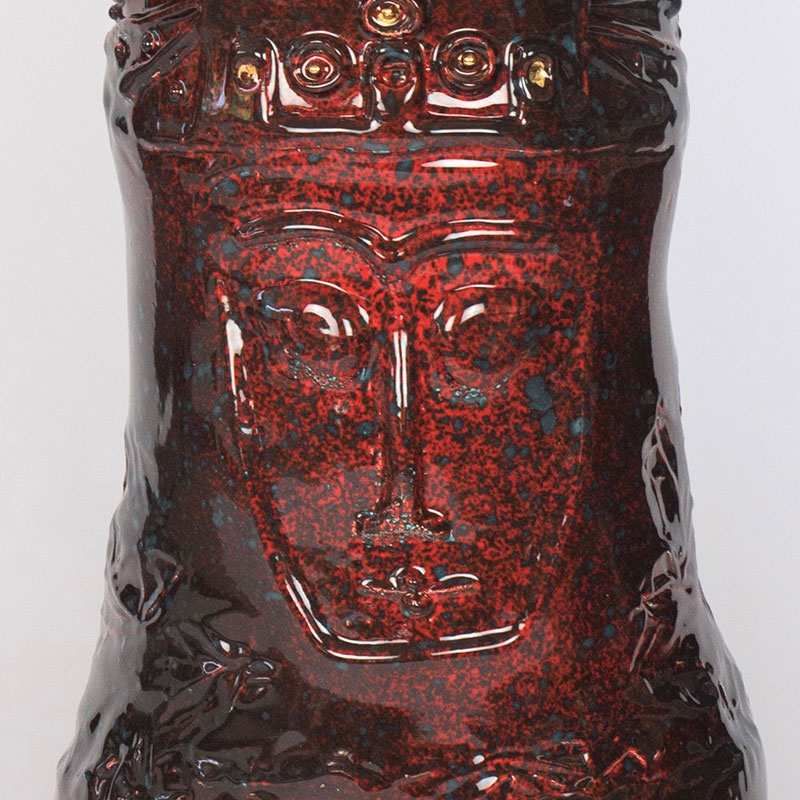
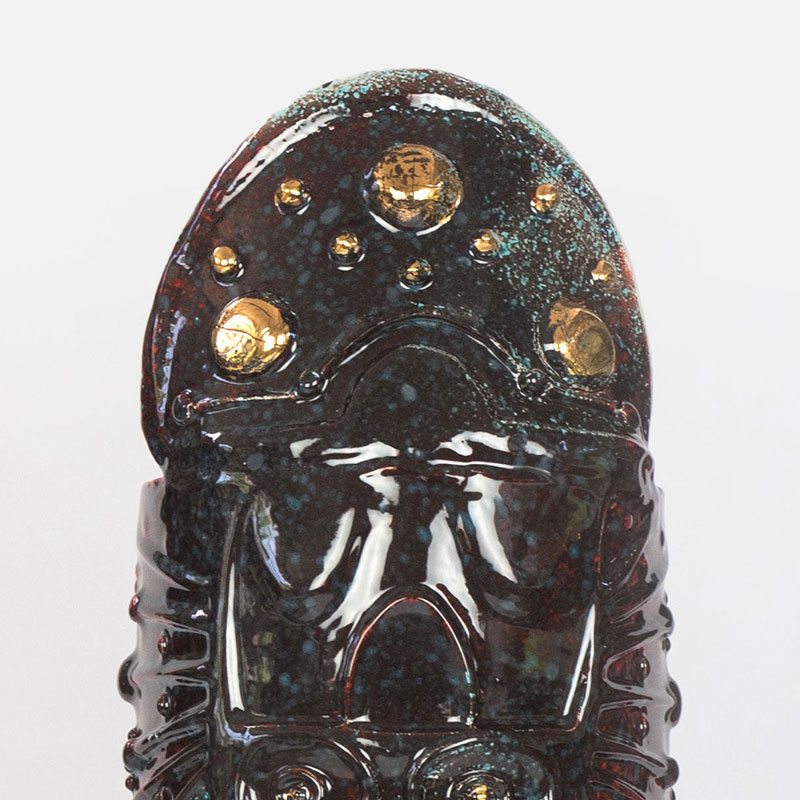
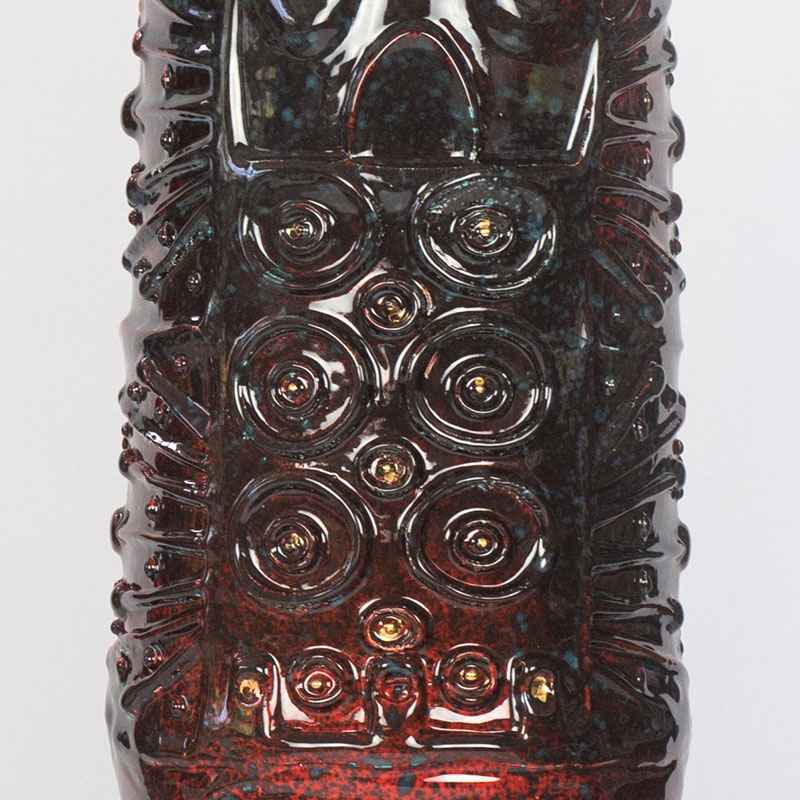
Apparizione Dorata II [Golden Apparition II] holds light differently. The near-black glaze, broken by deep crimson undertones as though the material were lit from within, is punctuated by vertical columns of gold luster discs arranged down the body with the deliberateness of ritual markers. These gold elements do not accent the form; they organize it, reading as medallions, votive ornaments, or devotional insignia embedded in the surface. The frontal face is partially submerged, glimpsed rather than revealed, less a portrait than something briefly surfacing.
Apparizione Dorata II [Golden Apparition II] holds light differently. The near-black glaze, broken by deep crimson undertones as though the material were lit from within, is punctuated by vertical columns of gold luster discs arranged down the body with the deliberateness of ritual markers. These gold elements do not accent the form; they organize it, reading as medallions, votive ornaments, or devotional insignia embedded in the surface. The frontal face is partially submerged, glimpsed rather than revealed, less a portrait than something briefly surfacing.
Part of the Apparizioni [Apparitions] series, the work draws on a ceremonial visual register spanning Byzantine mosaic, Etruscan funerary metalwork, and pre-Columbian ceremonial objects, without citing any of these traditions literally. The gold against near-black surface invokes the logic of sacred objects in which gold signifies not wealth but the presence of something charged beyond the ordinary. Wifredo Lam, in his ceramic work, treated the vessel surface as a field where spiritual forces are made present rather than represented, the face emerging from a dark worked ground as a charged sign rather than a likeness: a strategy this sculpture inhabits with its own material logic.
Within the Apparizioni series, the figure does not present itself as a stable body but as a manifestation: the face surfaces as if through layers of glaze and fire, a presence that is momentary and unresolved. Crisafi’s background in theater informs the work’s frontal address, but the sculpture resists narrative or performance, standing instead as an autonomous object shaped by material intensity, ritual stillness, and the transformative unpredictability of the ceramic process.