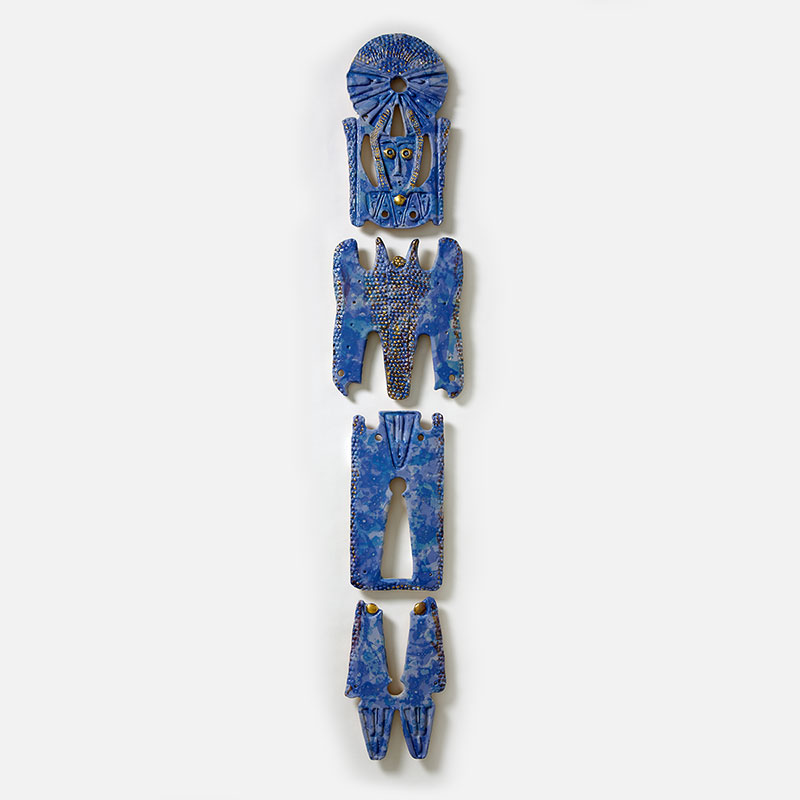
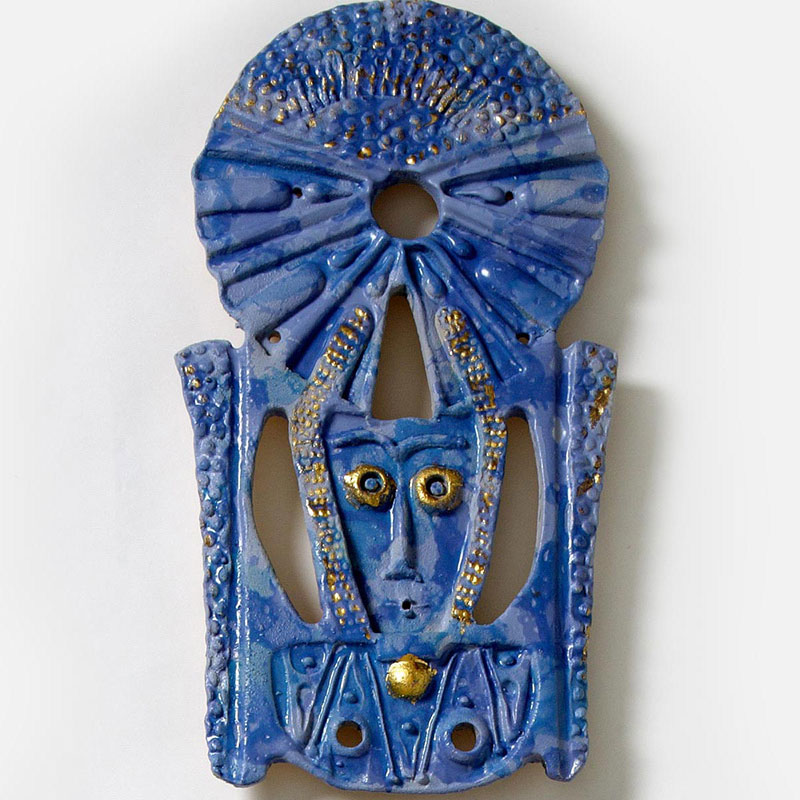
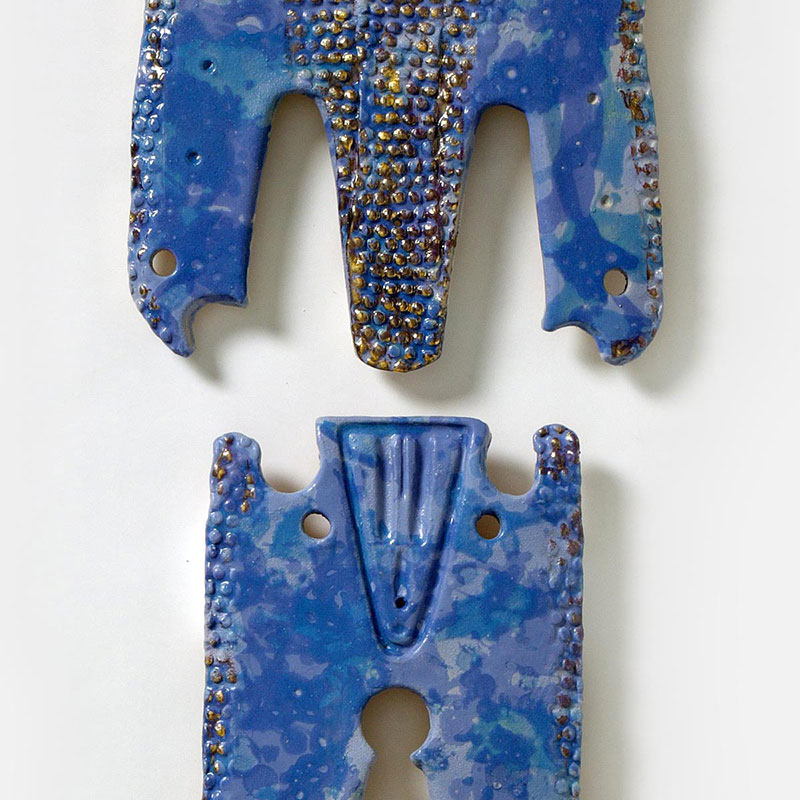
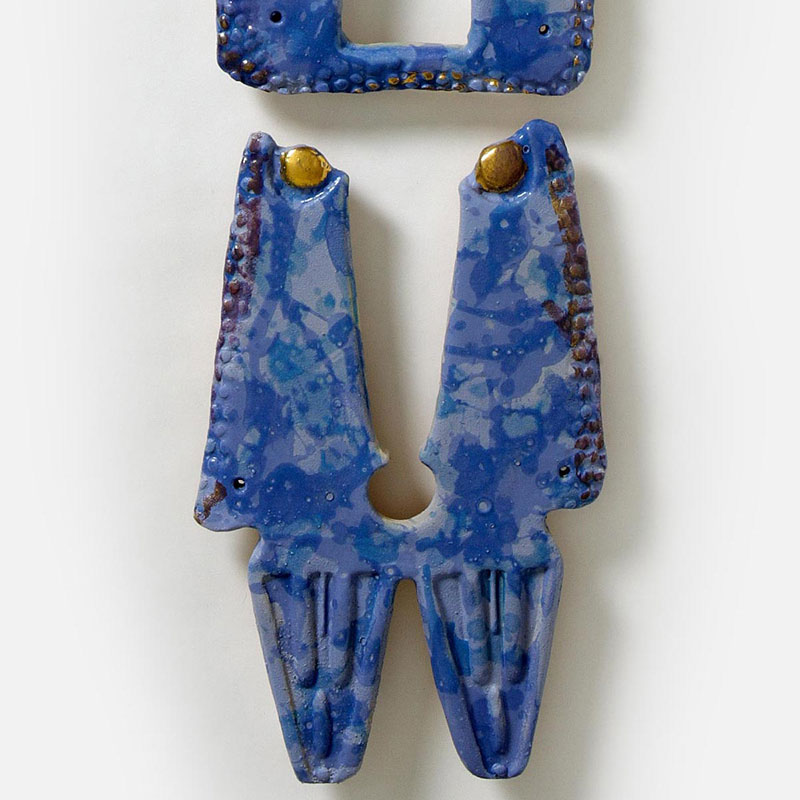
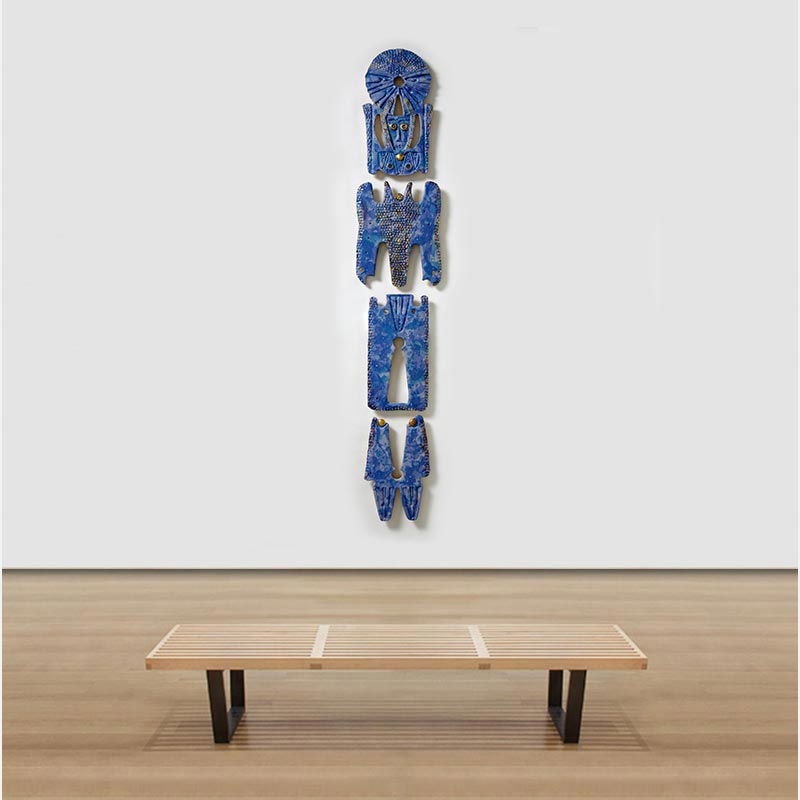
Legami IV [Bonds IV] commands attention through the authority of blue. The deep cobalt glaze, animated by luster accents that shift with the light, gives this four-element ceramic figure a ceremonial weight that goes beyond decoration. The segmented construction holds head, torso, and lower body in vertical alignment without fusing them, each element retaining its own gravity while cohering through repetition and interval. The face, schematic and mask-like, looks outward with the stillness of a sign rather than a subject.
Legami IV [Bonds IV] commands attention through the authority of blue. The deep cobalt glaze, animated by luster accents that shift with the light, gives this four-element ceramic figure a ceremonial weight that goes beyond decoration. The segmented construction holds head, torso, and lower body in vertical alignment without fusing them, each element retaining its own gravity while cohering through repetition and interval. The face, schematic and mask-like, looks outward with the stillness of a sign rather than a subject.
Part of the Legami [Bonds] series, the work roots itself in the Umbrian ceramic tradition, where clay has carried symbolic as well as functional weight for centuries. The hieratic stillness and frontal authority recall Etruscan funerary figures, in which the body was condensed into an emblem rather than described as anatomy. At the same time, the vertical articulation and emphasis on essential form align the sculpture with postwar modernist investigations of concentrated meaning, particularly in Constantin Brancusi, who understood the column as a structure capable of carrying symbolic load without narrative.
The Legami series takes its concept seriously as both formal and metaphorical structure. Here, the ties between elements are not concealed but constitutive: the gaps between units and the visible fasteners holding them in relation are as much the subject as the glaze or the face. Connection does not dissolve difference; it holds it in productive tension. Crisafi’s background in theater informs the work’s frontal address and self-contained presence, but the sculpture resists performance. It stands as an archetypal body: an object that asserts itself through material, structure, and symbolic gravity rather than expression.