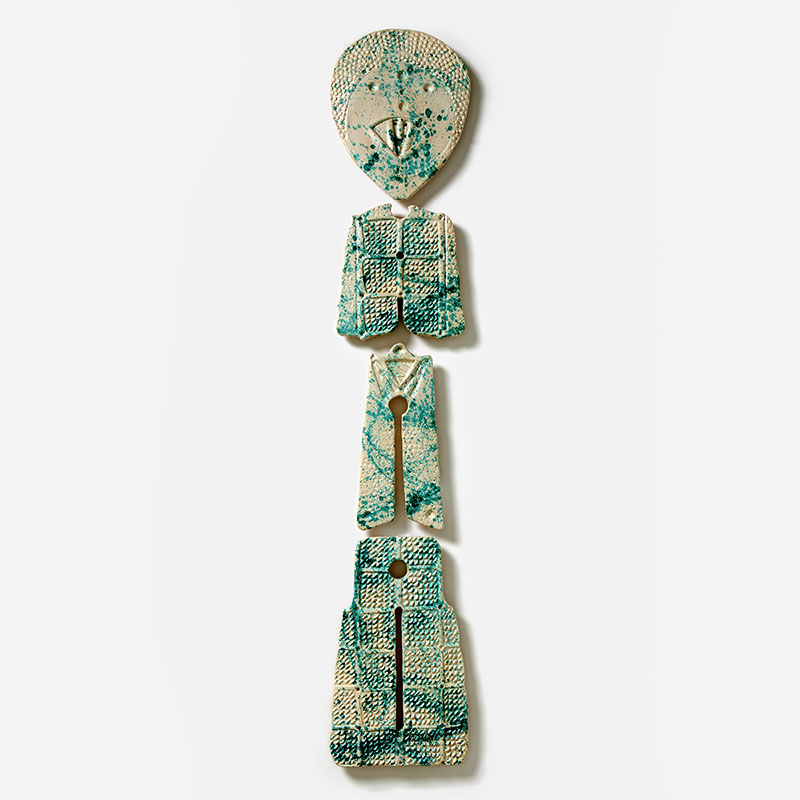
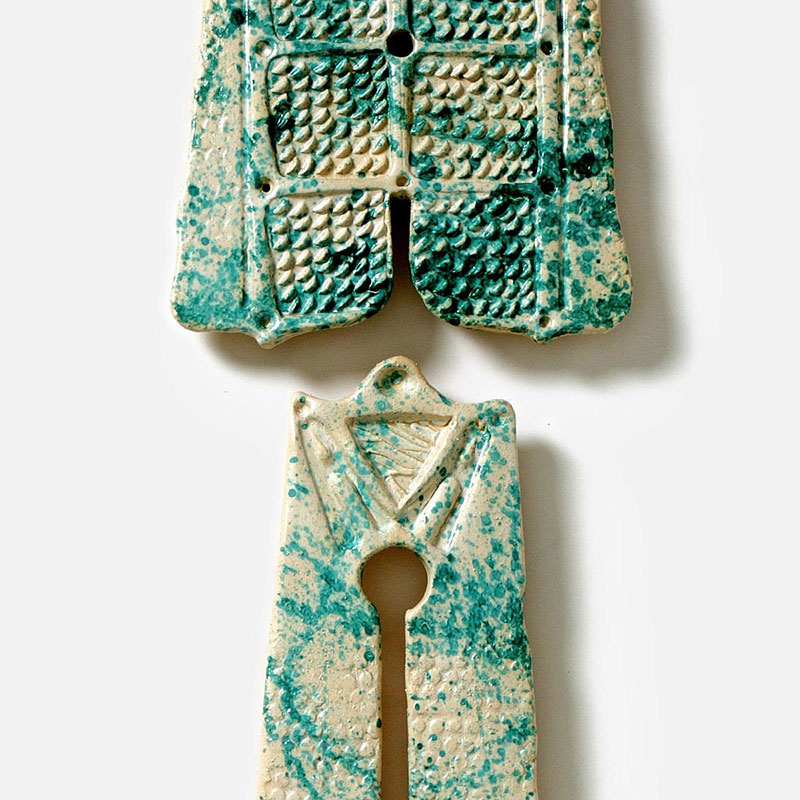
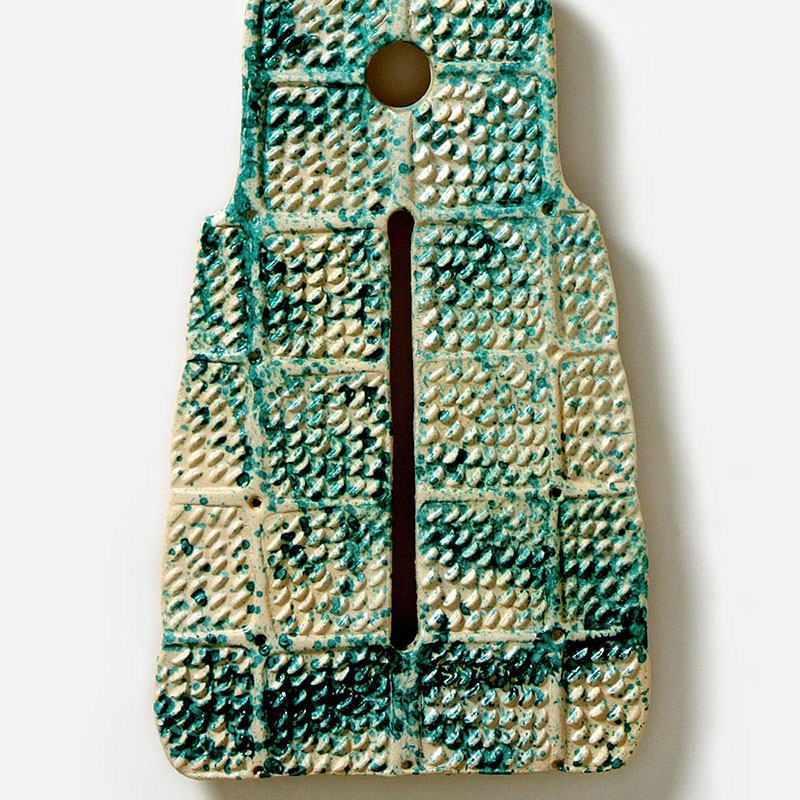
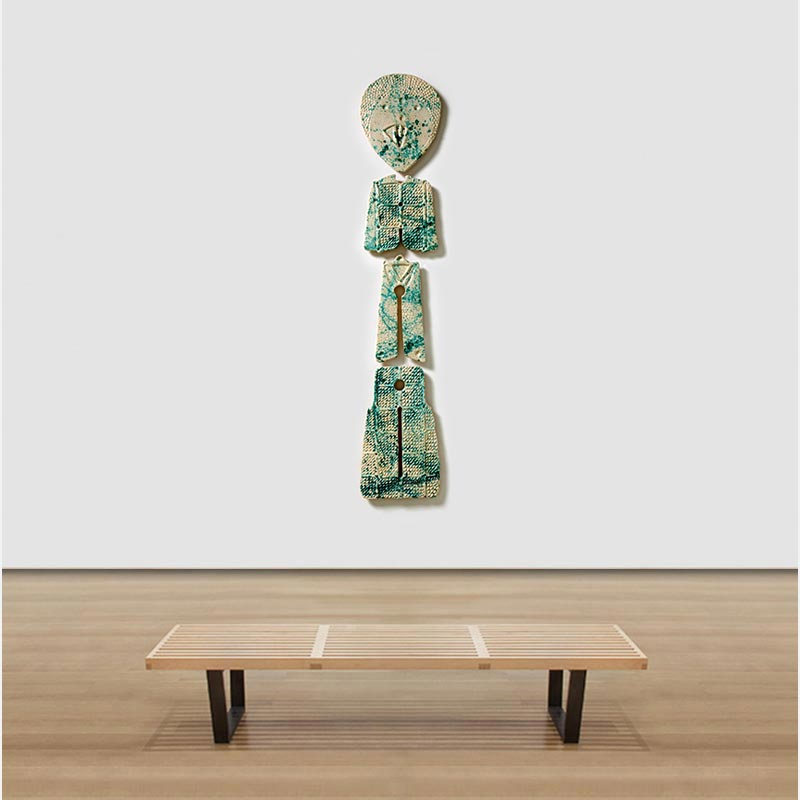
Legami XVIII [Bonds XVIII] is the figure in its most human register. The segmented ceramic elements assemble into a form that reads unmistakably as bodily: a head-like shape, articulated shoulders, a grounded stance that suggests posture rather than symbol. The sculpture operates just below life scale, creating an encounter that is intimate and insistent, placing the viewer face-to-face with the work rather than beneath it. The matte glaze foregrounds volume and relief over reflection, lending the surface a gravity that invites touch.
Legami XVIII [Bonds XVIII] is the figure in its most human register. The segmented ceramic elements assemble into a form that reads unmistakably as bodily: a head-like shape, articulated shoulders, a grounded stance that suggests posture rather than symbol. The sculpture operates just below life scale, creating an encounter that is intimate and insistent, placing the viewer face-to-face with the work rather than beneath it. The matte glaze foregrounds volume and relief over reflection, lending the surface a gravity that invites touch.
The absence of luster shifts attention toward sculptural mass and material density. Leoncillo Leonardi’s approach to the figure through weight and tactile modeling rather than chromatic force is a relevant precedent here: the body reduced to mass, rhythm, and surface pressure rather than descriptive detail, the hand present in the surface without the surface becoming expressive in a gestural sense. This is postwar Italian figuration understood as matter that happens to be human-shaped, embedded in the Arte Informale tradition’s engagement with physical presence as primary content.
Within the Legami [Bonds] series, this work proposes connection as bodily continuity rather than structural articulation. The figure appears held together by its own weight and stance, the bonds between its parts enacted through the coherence of a body that simply stands. Crisafi offers a quieter, more human register: one in which recognition precedes symbolism, and presence is established through the immediate, unresolved fact of a figure occupying space.