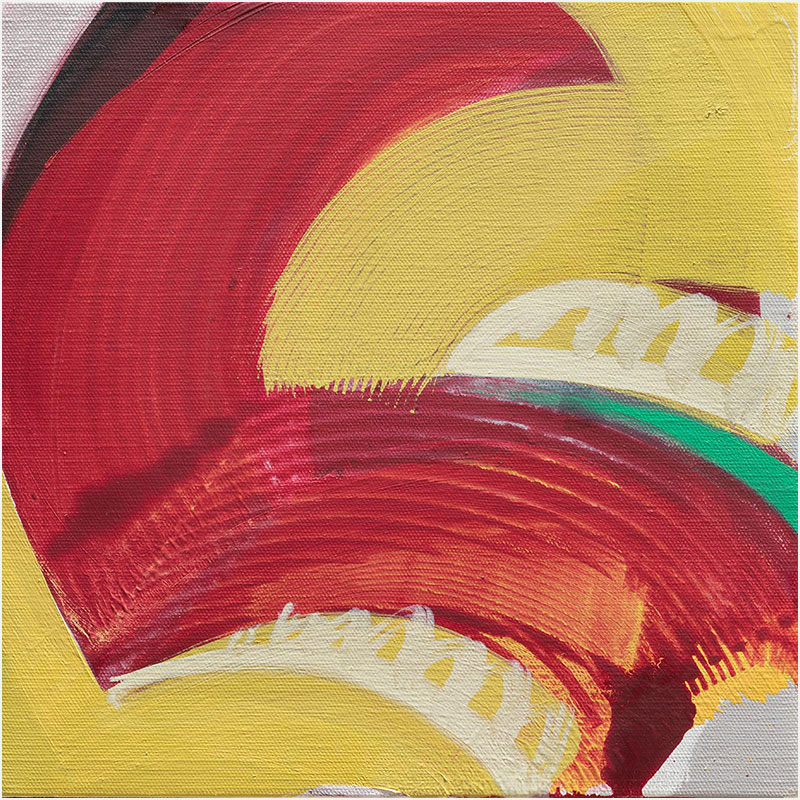
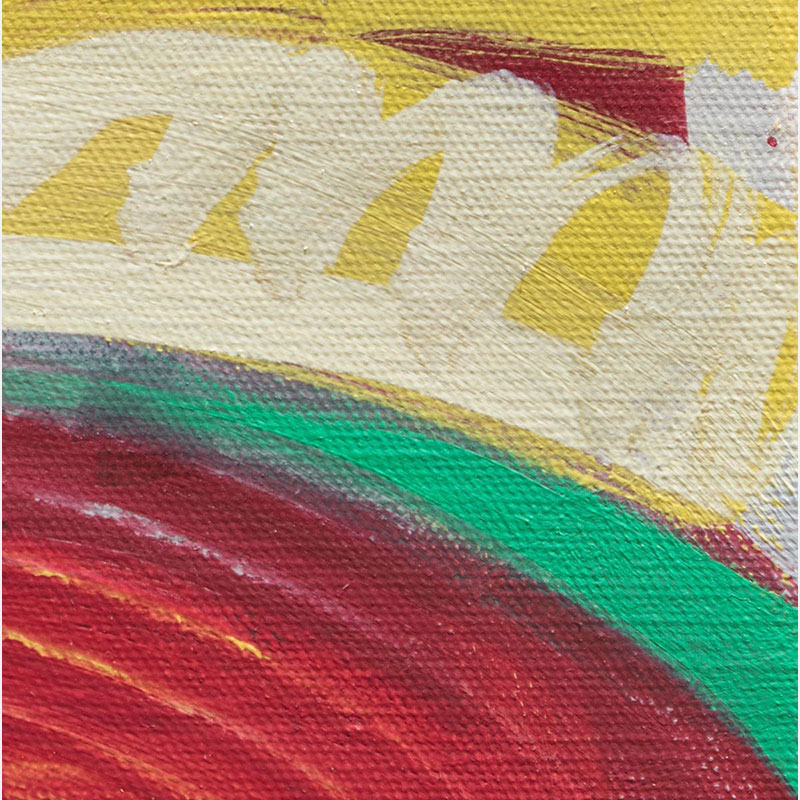
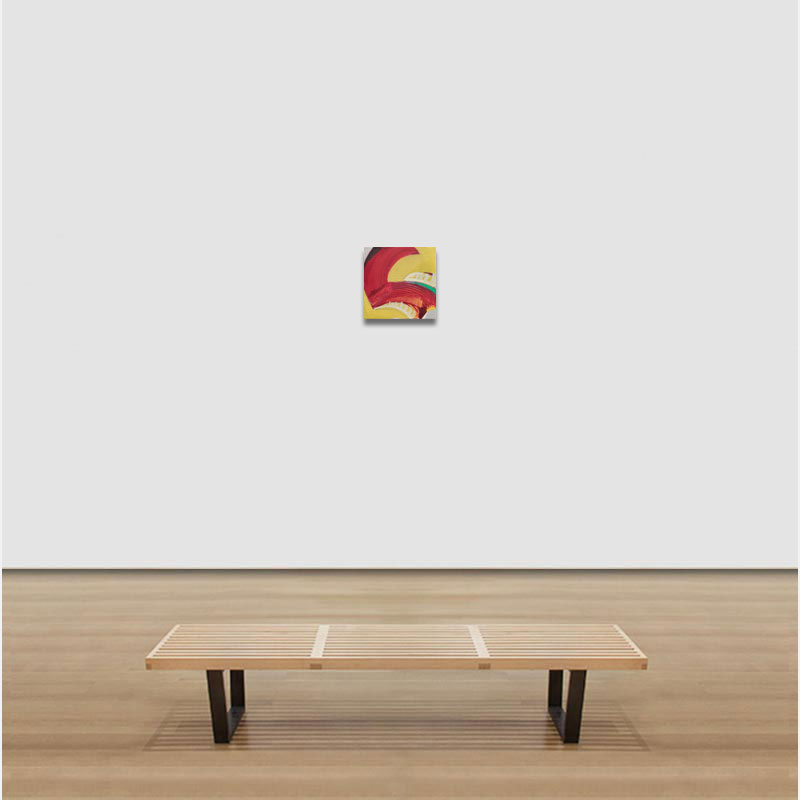
Red and yellow collide in sweeps wide enough to hold the whole canvas, and every bristle can be followed along the ridged grain of the thick paint. A red fan swings from the upper left, and a yellow one answers it. Two cream bands run across with toothed gaps where the brush ran dry. A thin green stripe slides underneath, cool and sharp. Loud and urgent, the whole canvas presses heat hard against every edge.
Red and yellow collide in sweeps wide enough to hold the whole canvas, and every bristle can be followed along the ridged grain of the thick paint. A red fan swings from the upper left, and a yellow one answers it. Two cream bands run across with toothed gaps where the brush ran dry. A thin green stripe slides underneath, cool and sharp. Loud and urgent, the whole canvas presses heat hard against every edge.
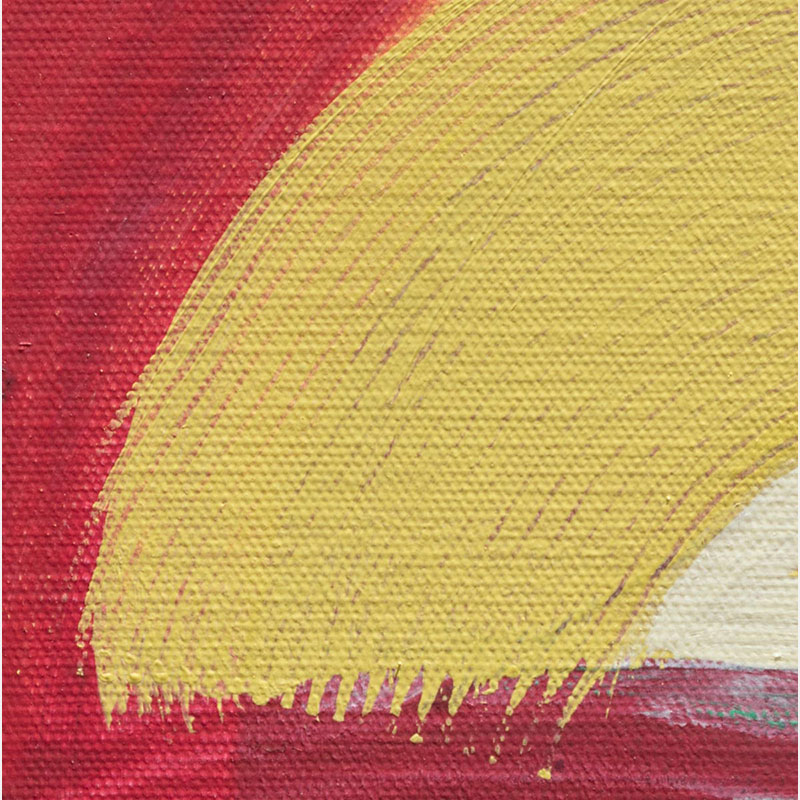
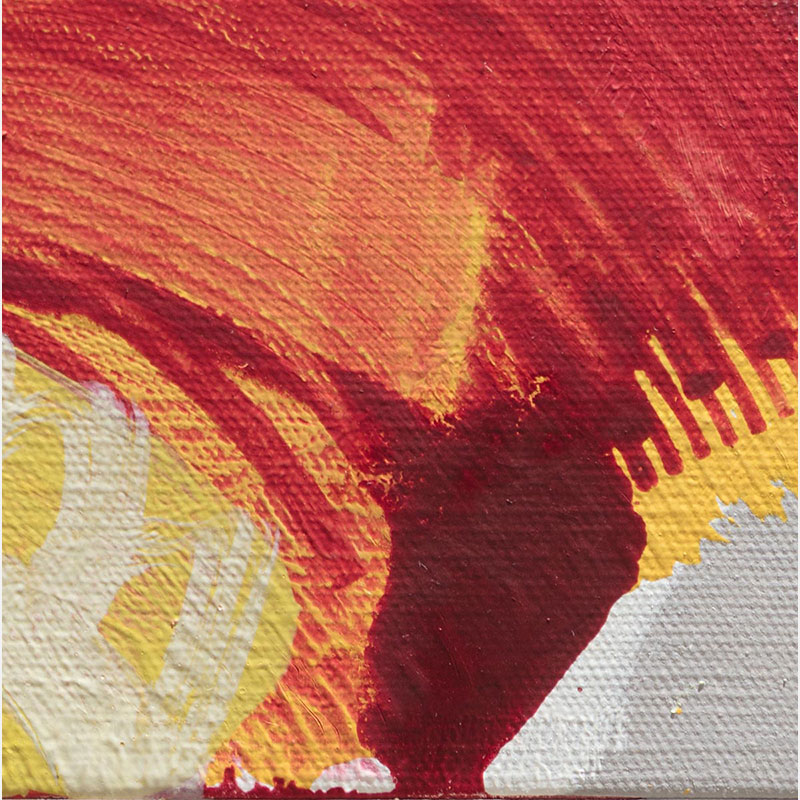
The grooves run concentric, so each fan's centre can be found by eye. Each sweep reads as one stroke. The brush enters loaded, turns, and lifts off in a comb of separated bristles. Orange glows through the red beneath the yellow fan, where one layer has been dragged over another. Roberto Caracciolo has said he reaches for green while thinking of red and how the two will "vibrate and fight on the surface." Here the fight spreads to every edge where red meets yellow.
The conditions of each stroke look fixed before the brush touches, a centre, an arc and a load. The result is not. Each stroke reads as made once. The ending is shared. He chooses where the brush leaves the canvas, and the bristles part as they will. Beside the Brushstroke paintings of David Reed, where rapid, irreversible gestures meet constraints set in advance, the question sharpens. How much of a stroke happens beyond the plan that made it possible?