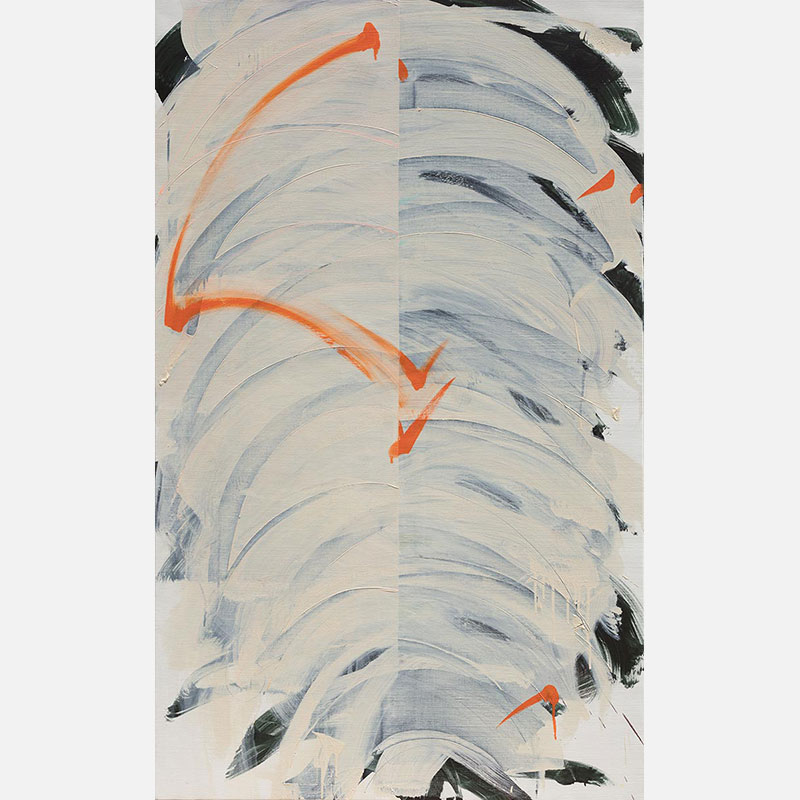
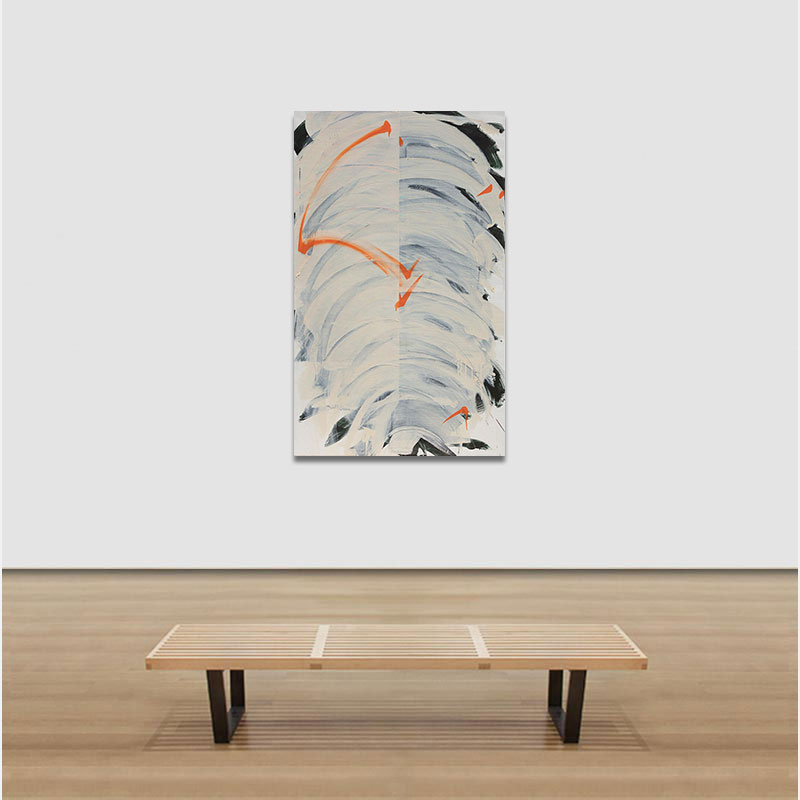
Thick cream and grey-blue arcs stack up the full height of the canvas, each overlapping the last. A vertical seam runs through the middle, where a warmer half meets a cooler one. One thin orange line swings down, turns hard at the left edge and ends in two arrowhead ticks, with more orange ticks at the edges. Dark green-black gathers in the corners of the canvas. Everything pulls steadily upward with a buoyant, insistent energy.
Thick cream and grey-blue arcs stack up the full height of the canvas, each overlapping the last. A vertical seam runs through the middle, where a warmer half meets a cooler one. One thin orange line swings down, turns hard at the left edge and ends in two arrowhead ticks, with more orange ticks at the edges. Dark green-black gathers in the corners of the canvas. Everything pulls steadily upward with a buoyant, insistent energy.
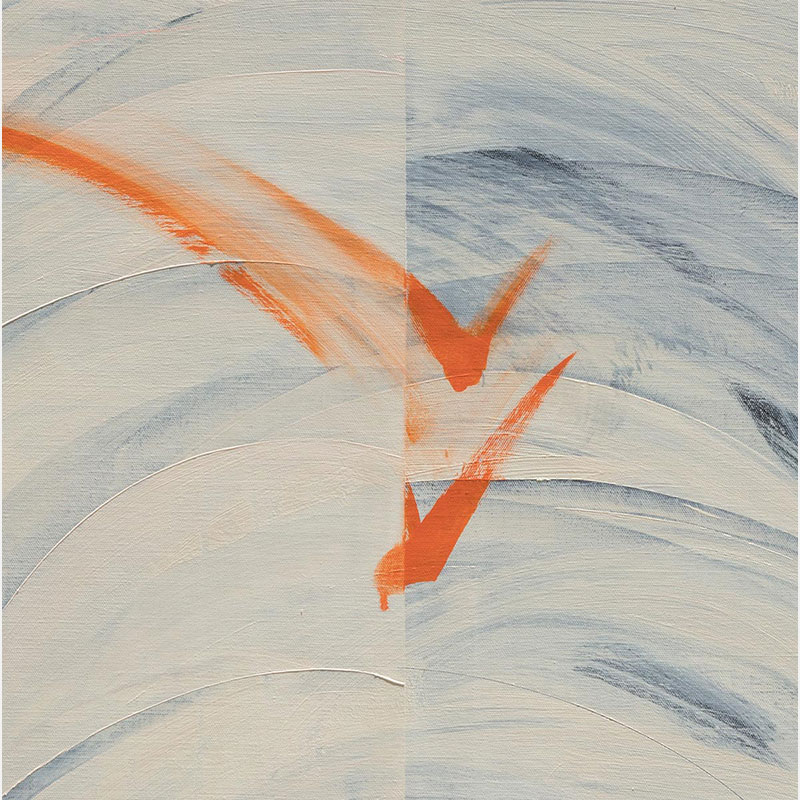
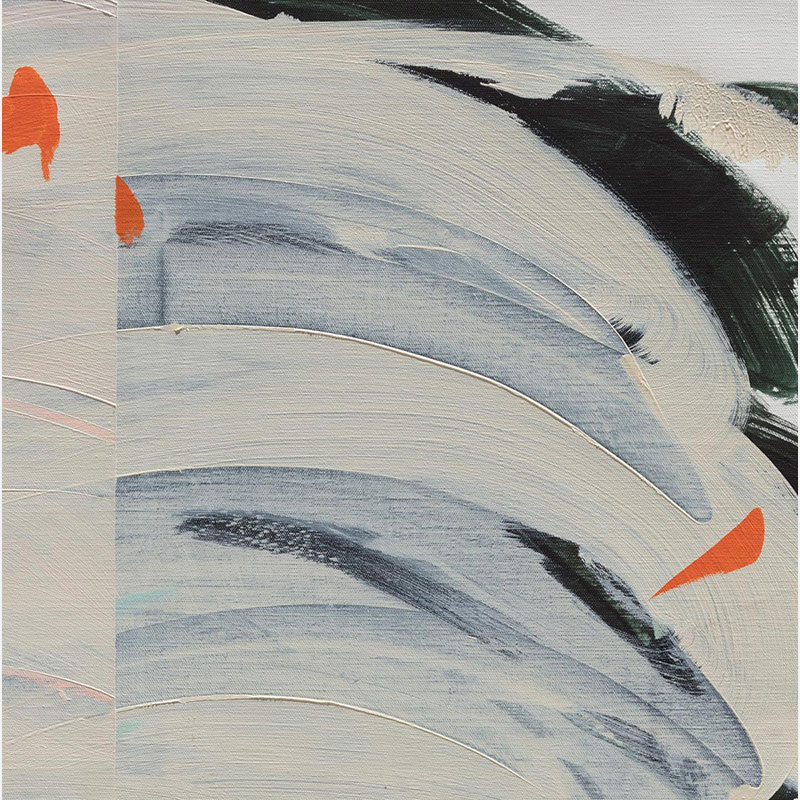
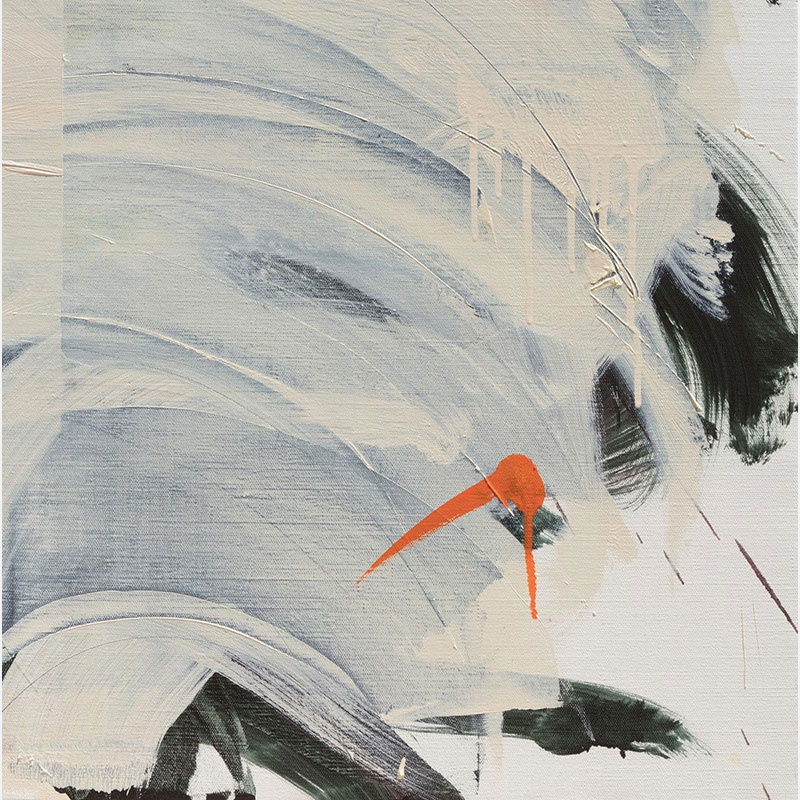
Fine scored lines run through the paint in concentric arcs, each showing its centre, and the overlaps give the sequence of strokes. The seam divides a warmer left from a greyer right, yet the arcs cross it unbroken. The orange is another kind of mark: thin, fast and angular, changing direction as the arcs never do.
Every arc in Roberto Caracciolo's Pull is a decision and also the ground for the next. David Reed's early Brushstroke paintings subjected rapidly executed, irreversible gestures to deliberately established constraints, and the tall stack makes that sequence legible. Only the orange line breaks the pattern.