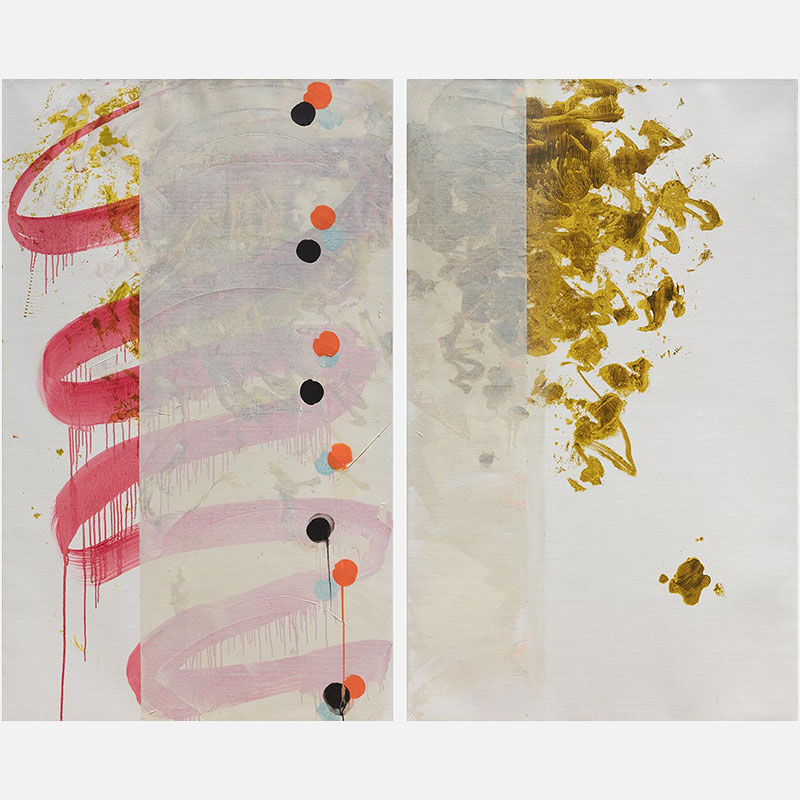
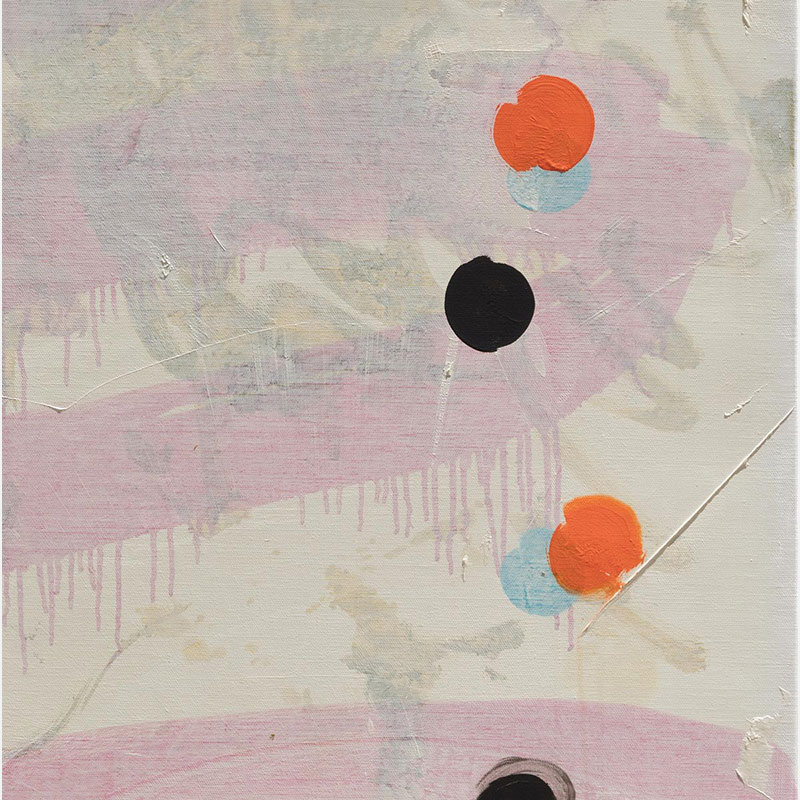
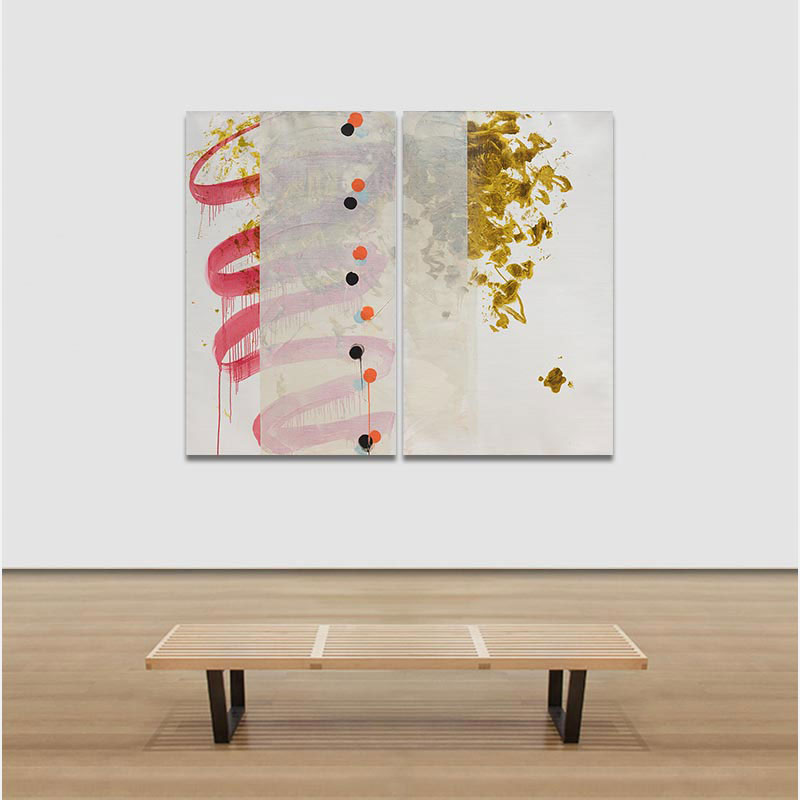
Crimson ribbons loop down the left panel, swelling at each turn and trailing drips, until a cream veil slides across them and softens them to pink. A column of orange and black dots, each shadowed in pale blue, keeps its own count over the haze. In the second panel a mass of gold paint breaks across the white, thick and rough-edged, with one stray clot below. It looks like a ceremony glimpsed through frosted glass, eerie and celebratory at once.
Crimson ribbons loop down the left panel, swelling at each turn and trailing drips, until a cream veil slides across them and softens them to pink. A column of orange and black dots, each shadowed in pale blue, keeps its own count over the haze. In the second panel a mass of gold paint breaks across the white, thick and rough-edged, with one stray clot below. It looks like a ceremony glimpsed through frosted glass, eerie and celebratory at once.
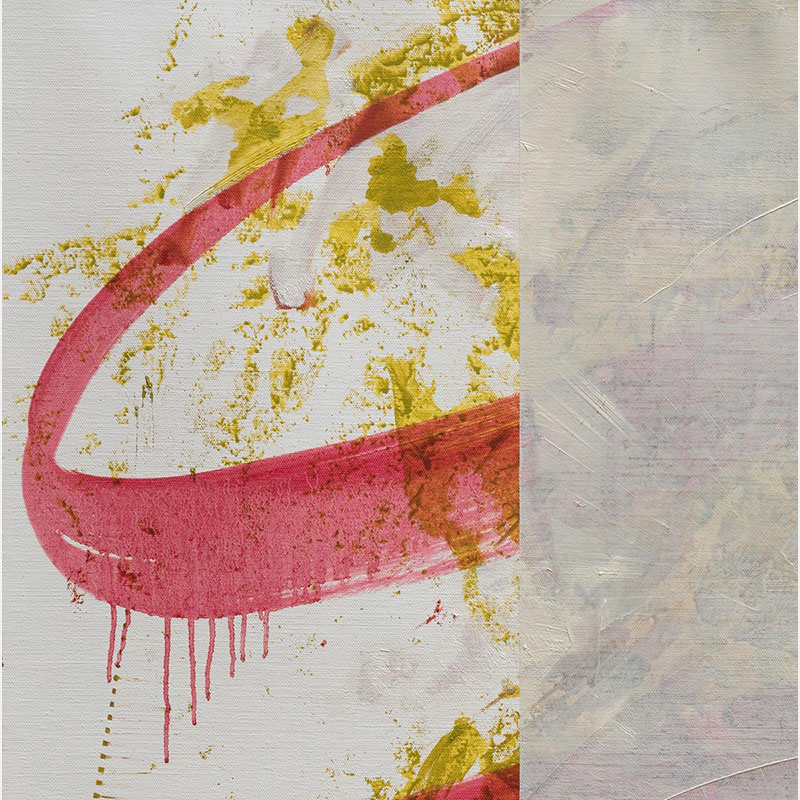
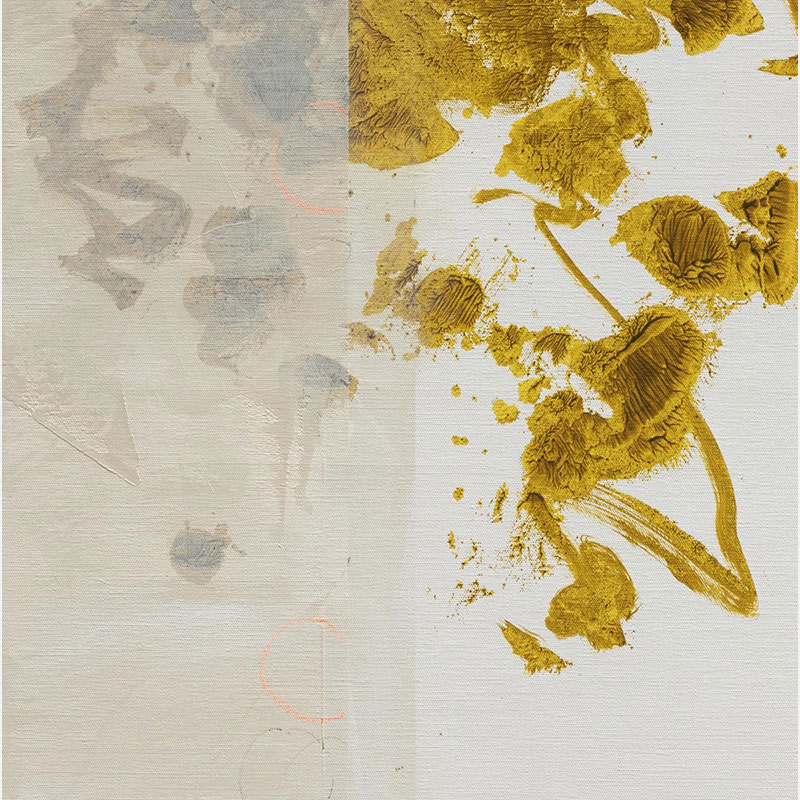
Each ribbon is one loaded stroke, thickening at the turn and shedding drips below. The veil is a single wide stroke laid over them. It is translucent, so the loops stay legible, and it crosses the gap to take a third of the second panel. The gold is pushed and dragged into ragged flames. Ribbons, gold and a column of dots return at a larger scale in The gesture you allowed to happen.
Roberto Caracciolo has described the stroke in Cy Twombly's Bacchus paintings as torn, fragile and shaky. Their red loops gather into dense whirls. Here the ribbons are loaded and complete, and the fragile event is the veil, which withdraws the turning without erasing it.