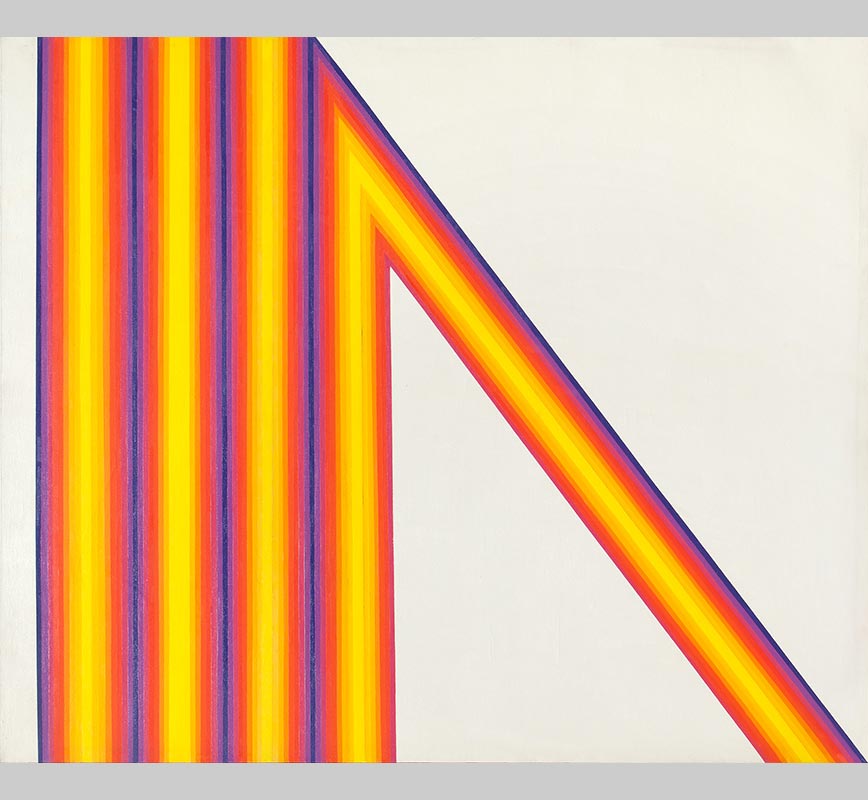
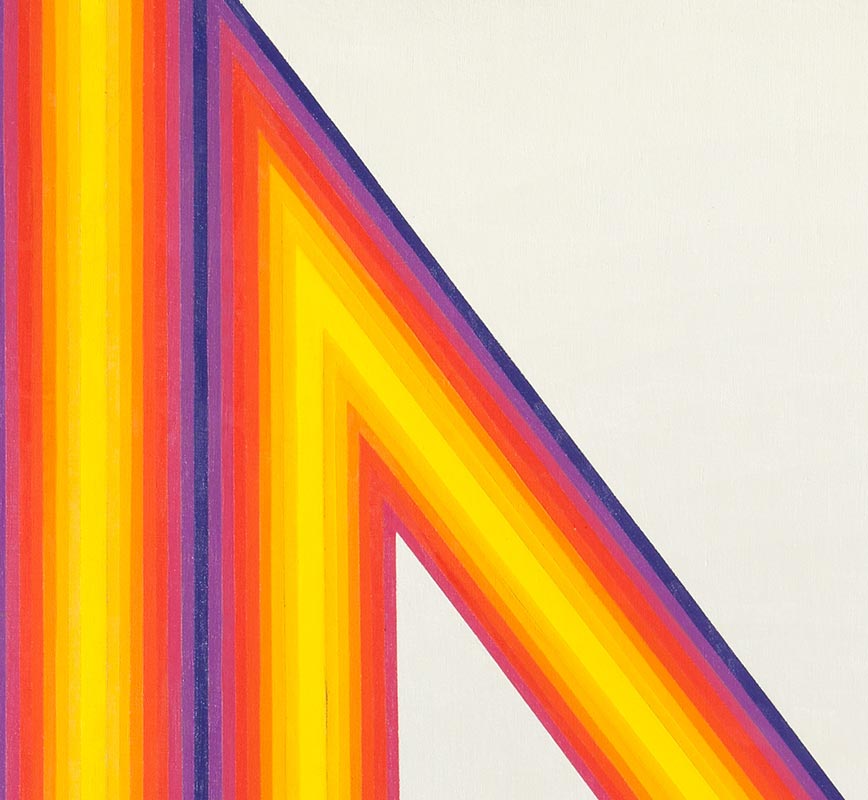
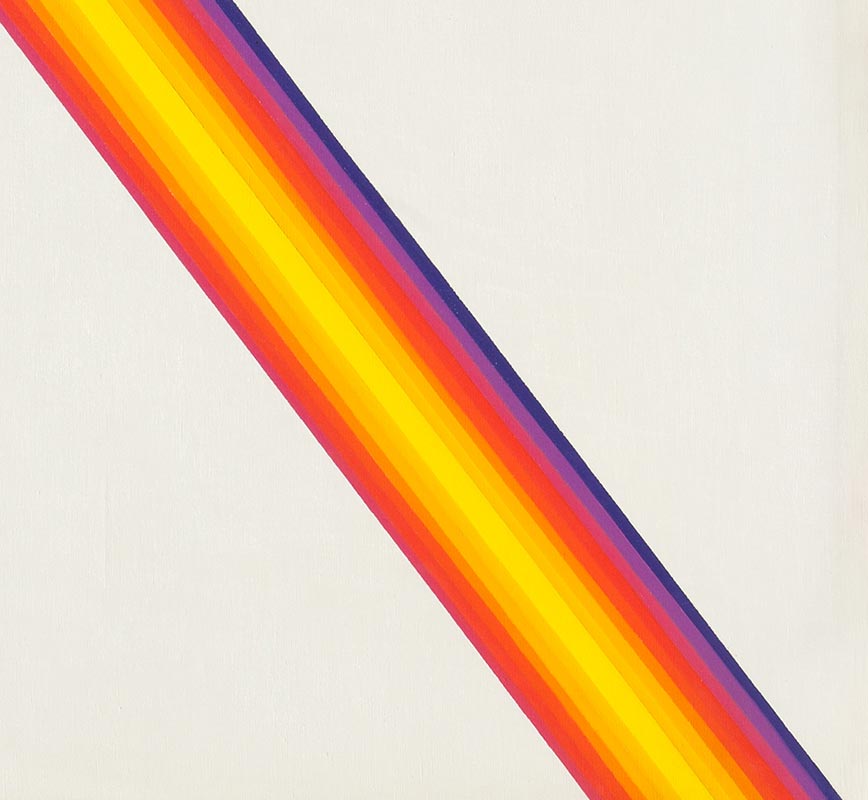
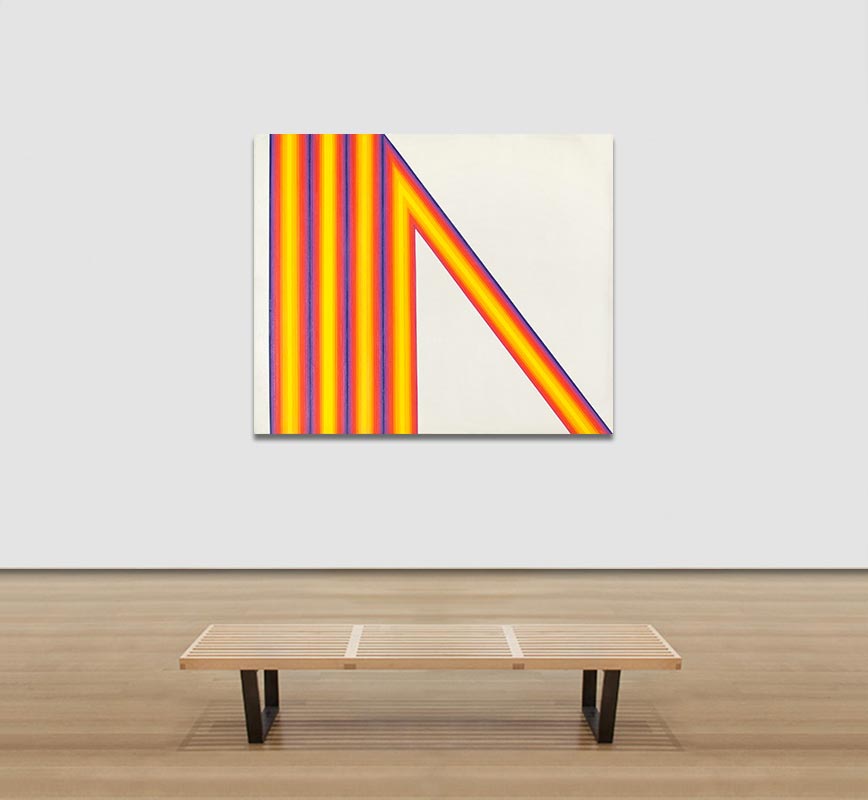
Untitled #68 is a long horizontal canvas whose edges are cut to angular peaks and valleys, the support itself a geometric event before any color is applied. Red, black, white, orange, and violet occupy the resulting zones in sharply defined planes, a thin yellow line running along certain edges as a structural separator, holding the composition together while allowing the colors on either side of it to retain their full, competing intensity without interference.
Untitled #68 is a long horizontal canvas whose edges are cut to angular peaks and valleys, the support itself a geometric event before any color is applied. Red, black, white, orange, and violet occupy the resulting zones in sharply defined planes, a thin yellow line running along certain edges as a structural separator, holding the composition together while allowing the colors on either side of it to retain their full, competing intensity without interference.
Canin understands the shaped support and the color it carries as a single argument, the form and the chromatic logic inseparable rather than additive. Carmen Herrera built her compositions from the same premise: uncompromising color oppositions, two or three planes in high chromatic contrast, shapes angular, edges absolute. The comparison is structural rather than merely stylistic. The 1989 date places Untitled #68 in a period when shaped canvas painting was no longer fashionable, which gives its commitment to the format a quality of conviction rather than trend.
Canin’s earlier band paintings explored color as an atmospheric event experienced over time; this shaped canvas compresses the energy differently, the multiple zones and the eccentric support requiring the eye to move and reorganize rather than settle and dwell. The motion and stasis that earlier works held in equilibrium through color alone is here managed through the physical intervention of the support, the painting as object and the painting as event occupying the same surface simultaneously.