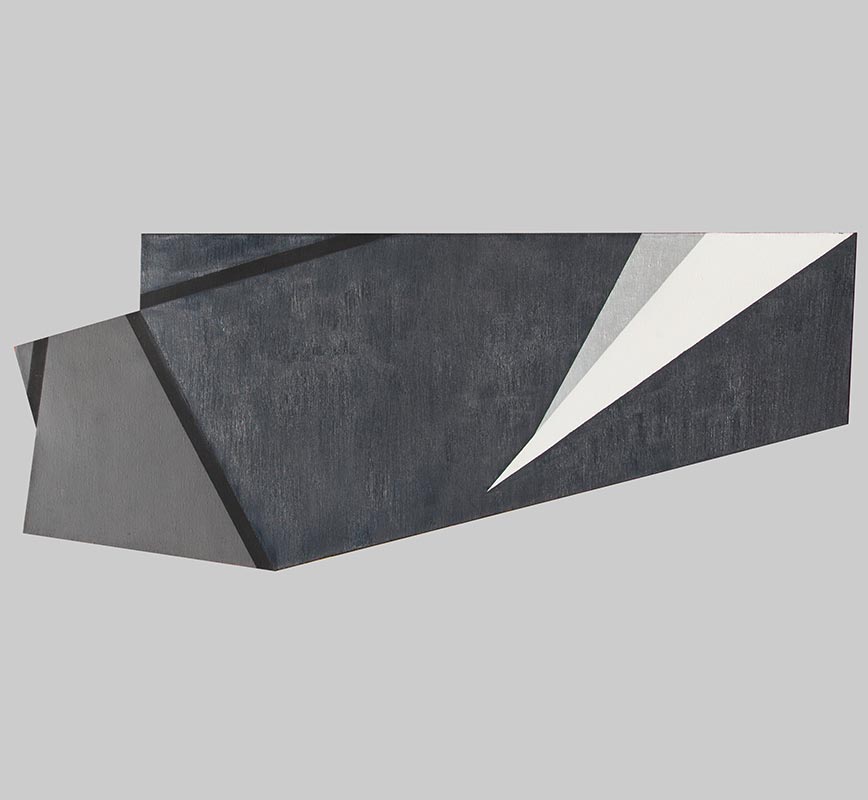
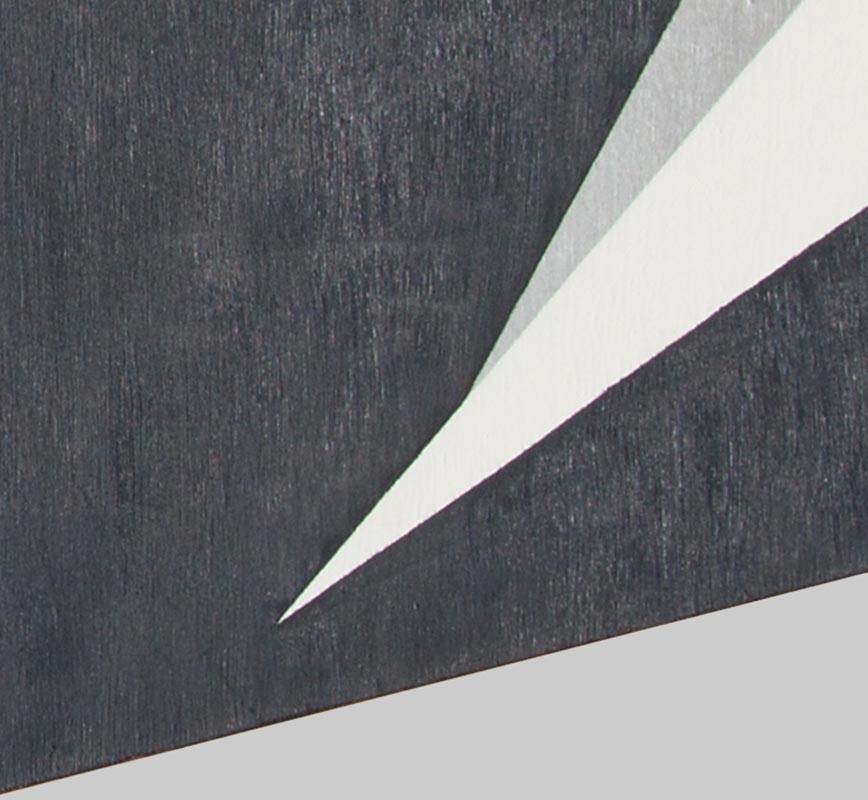
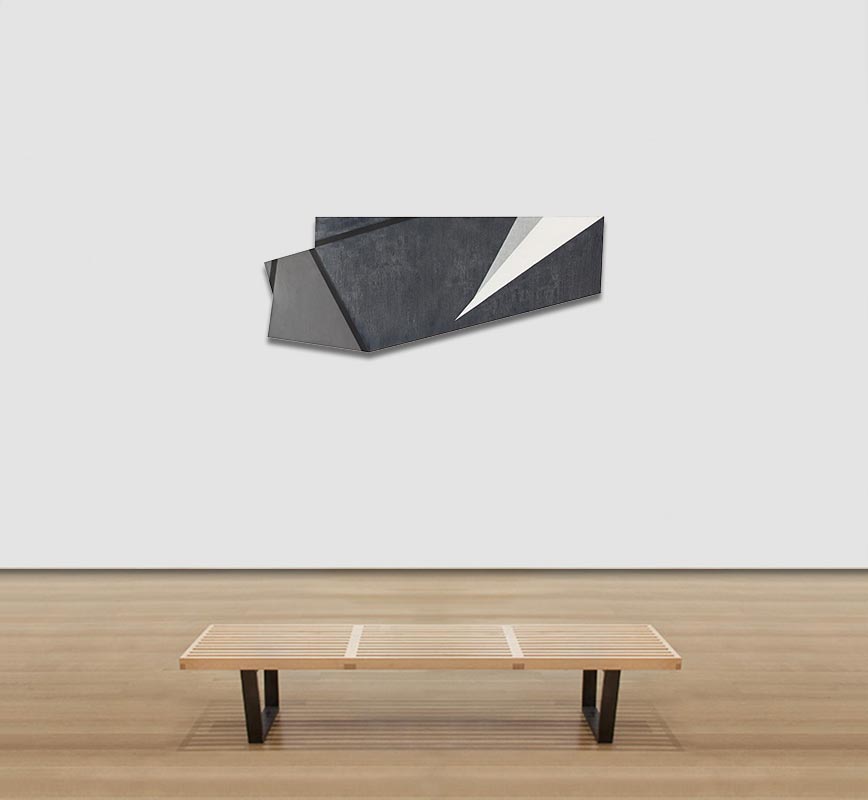
Black dominates Untitled #86 without apology: the dark zone occupies the upper right and center of the composition, a physical presence that the smaller planes of purple, maroon, and white must work against rather than into. A white triangular element angles across the dark zone as though folding out of the surface, its pale geometry more spatial suggestion than flat plane, and the eye follows its diagonal upward and to the left into the dark where it terminates.
Black dominates Untitled #86 without apology: the dark zone occupies the upper right and center of the composition, a physical presence that the smaller planes of purple, maroon, and white must work against rather than into. A white triangular element angles across the dark zone as though folding out of the surface, its pale geometry more spatial suggestion than flat plane, and the eye follows its diagonal upward and to the left into the dark where it terminates.
Canin’s relationship to black here differs from both poles of the tradition. The dark zone is complete in itself, the purple, maroon, and white planes intruders rather than components, the visual energy concentrated in the composition’s margins rather than distributed across it. This inverts the logic of Franz Kline’s large-scale black-and-white paintings, where neither black nor white was fully dominant, each requiring the other to exist as a compositional event.
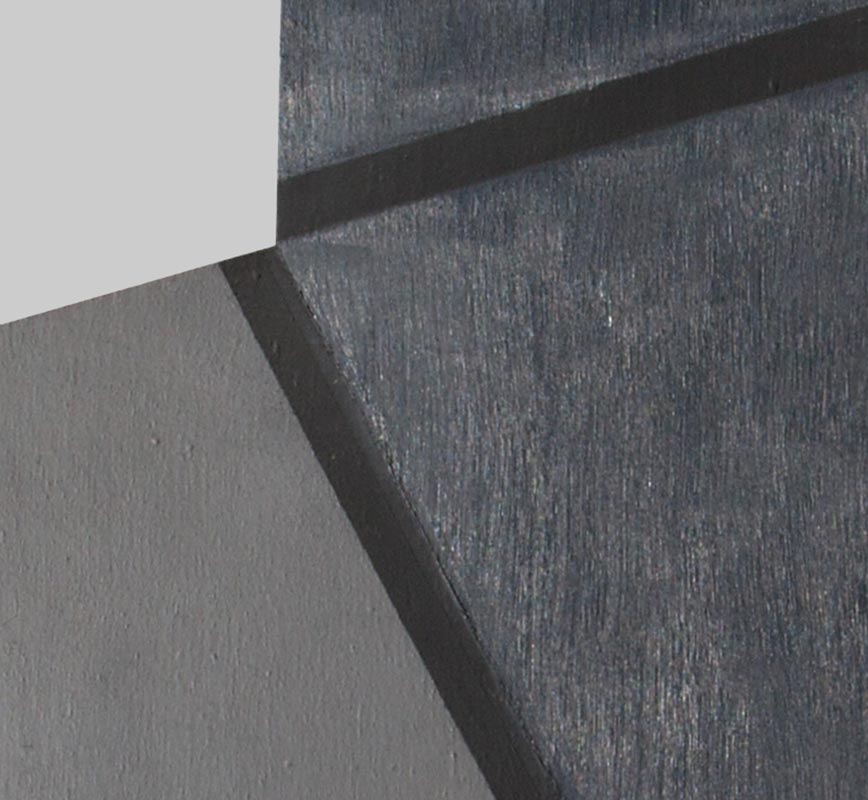
The slight surface variation within the dark zone distinguishes this work from the terminal black paintings of Ad Reinhardt while keeping it in that tonal neighborhood. The white triangle, precisely placed, insists on its own geometry within a field that has little use for geometry: a form that remains fully present precisely because the dark surrounding it is so complete.