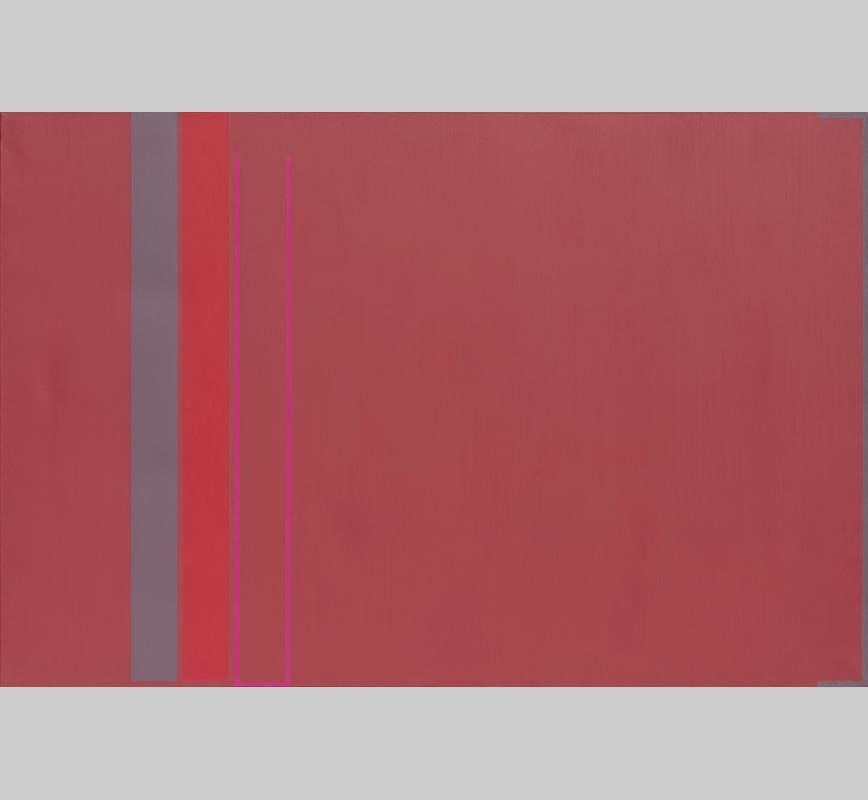
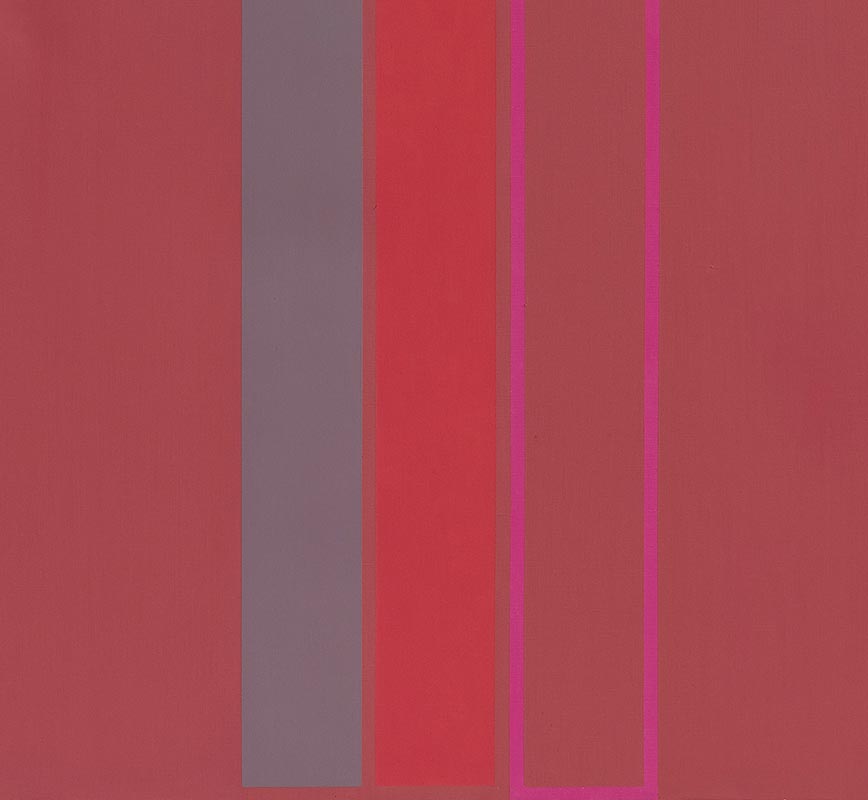
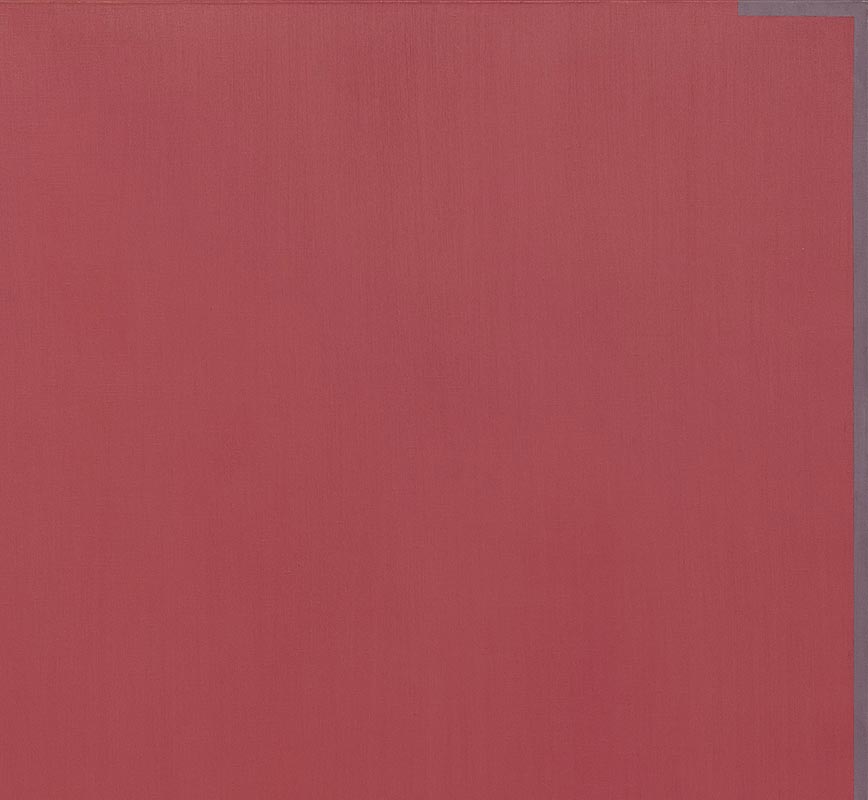
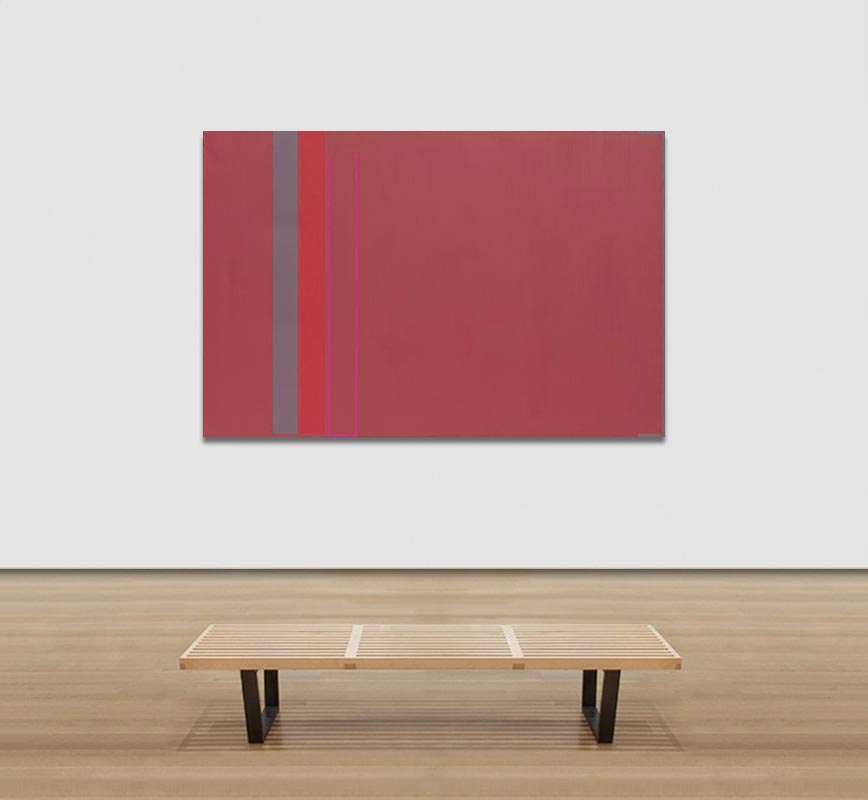
Red Painting is built from vertical bands of red and magenta that repeat across the canvas with the rhythmic logic of a musical phrase: not a single statement but a sequence, each band a variation on the one before it, the color relationships shifting in small increments of intensity and hue so that the warm field the whole produces is generated by differentiation, not uniformity. Within some of the bands, thin angled lines cut diagonally, adding a further register of movement to the already active surface.
Red Painting is built from vertical bands of red and magenta that repeat across the canvas with the rhythmic logic of a musical phrase: not a single statement but a sequence, each band a variation on the one before it, the color relationships shifting in small increments of intensity and hue so that the warm field the whole produces is generated by differentiation, not uniformity. Within some of the bands, thin angled lines cut diagonally, adding a further register of movement to the already active surface.
Red Painting shares the ethos of deliberate, workmanlike application that the Hard-Edge painters pursued, most rigorously represented by Ellsworth Kelly, who eliminated every mark that was not the final statement. Canin’s distinction is the diagonal slivers within the bands: a controlled disturbance too fine to carry structural weight but present enough to fracture the geometric stillness. The precision is Kelly-adjacent; the slight agitation is not.
David Reed described the tape-edge painters of this generation as using a declarative surface: paint applied matter-of-factly, the process legible but undemonstrative. Red Painting is declarative in exactly this sense, but the warm chromatic charge accumulates beyond the workmanlike. The repetition of reds and magentas builds like stanzas in a poem: individually spare, collectively insistent.