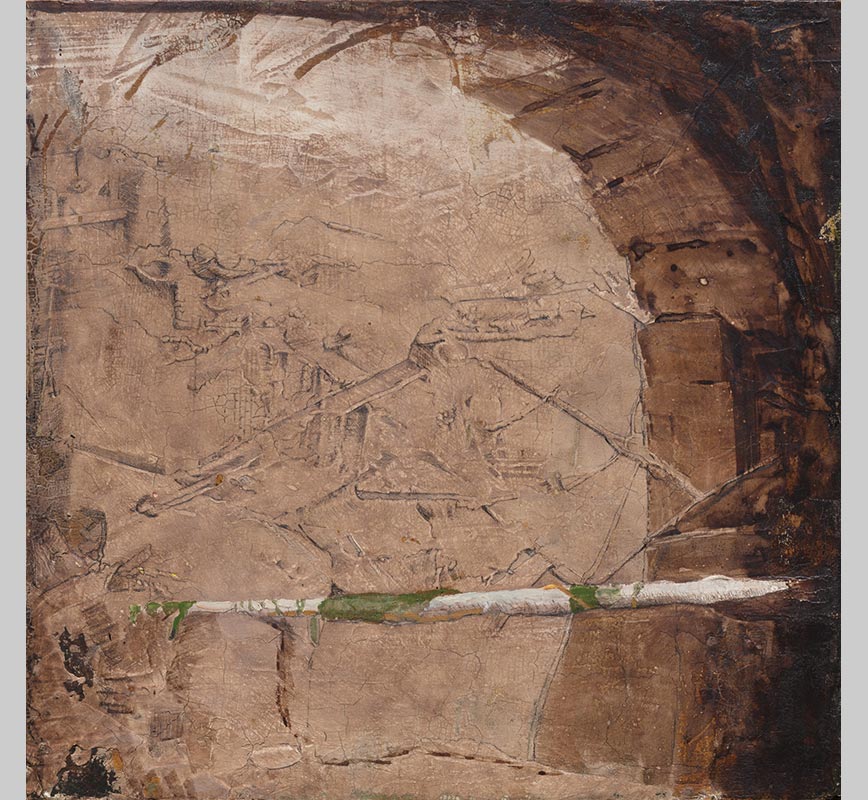
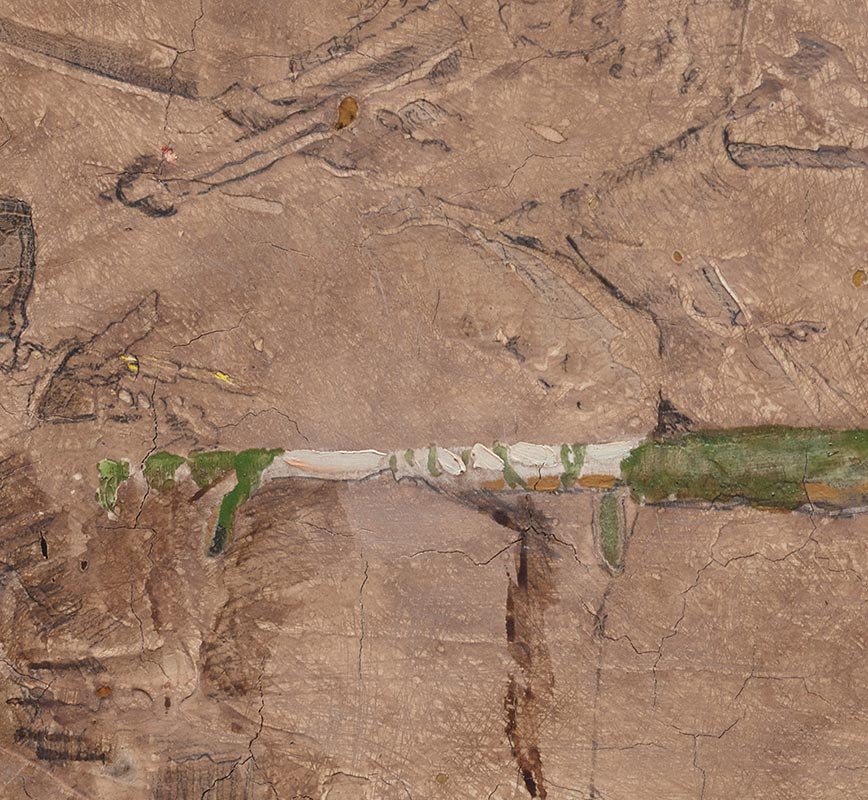
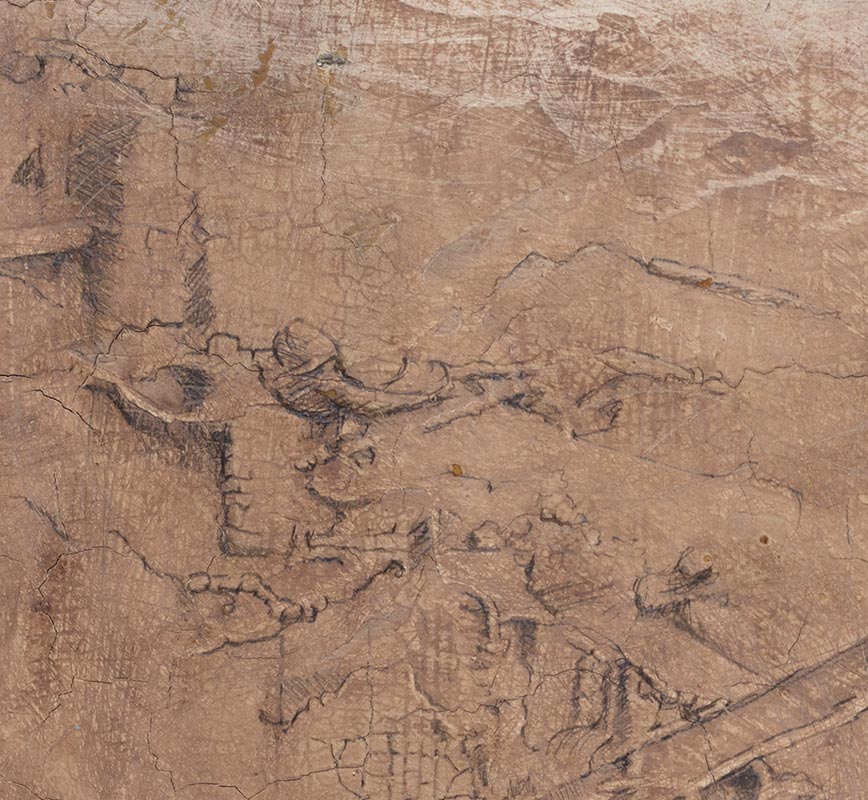
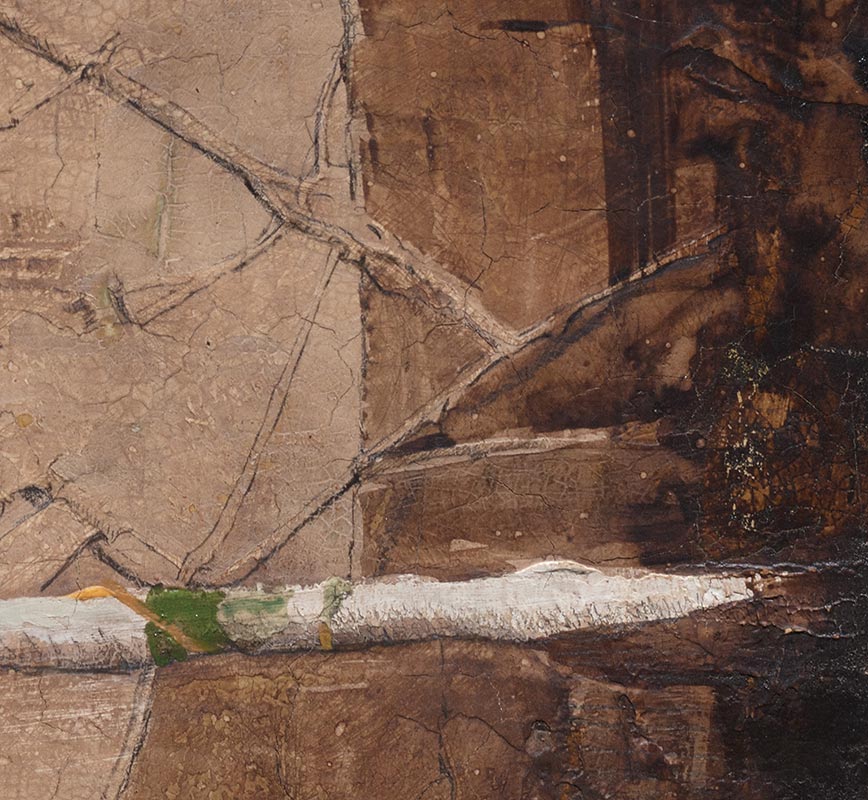
King’s Bath centers on a dark oval pool from which smoke or steam rises in spiraling rings, ascending into the upper field of the composition where they dissipate into the fresco surface. Around the pool, abstracted figures merge with the landscape, their forms inseparable from the earthy, muted ground; they are participants in something that predates description. The ceremony has no name in this painting, but the fresco surface, which belongs to the history of public ritual imagery, is exactly the right medium for it.
King’s Bath centers on a dark oval pool from which smoke or steam rises in spiraling rings, ascending into the upper field of the composition where they dissipate into the fresco surface. Around the pool, abstracted figures merge with the landscape, their forms inseparable from the earthy, muted ground; they are participants in something that predates description. The ceremony has no name in this painting, but the fresco surface, which belongs to the history of public ritual imagery, is exactly the right medium for it.
The rising rings above the pool are the compositional engine of the work: swirling, gestural marks that introduce velocity into an otherwise still and weighted scene. They suggest that something has been released rather than simply lost, and the direction upward matters: whatever the bath has cleansed or transformed is not absorbed into the earth but dispersed into the air. Kitterle’s fresco surface contributes to this: the mineral ground absorbs what is deposited into it at the lower registers, while the freer marks in the upper field suggest a different material state, something between fixity and dissolve.
The mythological register Kitterle draws on across his practice finds in King’s Bath its most openly ceremonial form. The Stoicism he cites as an influence implies a relationship to natural process: not resistance but alignment, the body given to a larger order. The bath as ritual is precisely this: a site of deliberate surrender to an element that is simultaneously purifying and absorbing. Nolde, one of Kitterle’s named formative influences, produced ceremonial and ritual scenes of comparable chromatic gravity, where the rite is legible from the atmosphere before any narrative detail resolves. King’s Bath operates on the same principle.