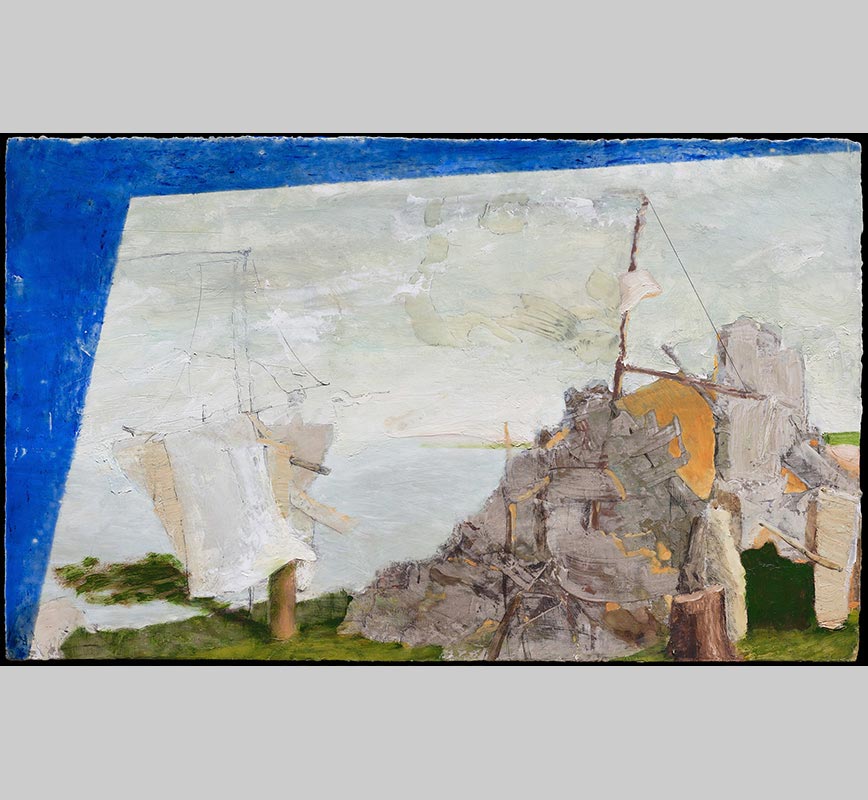
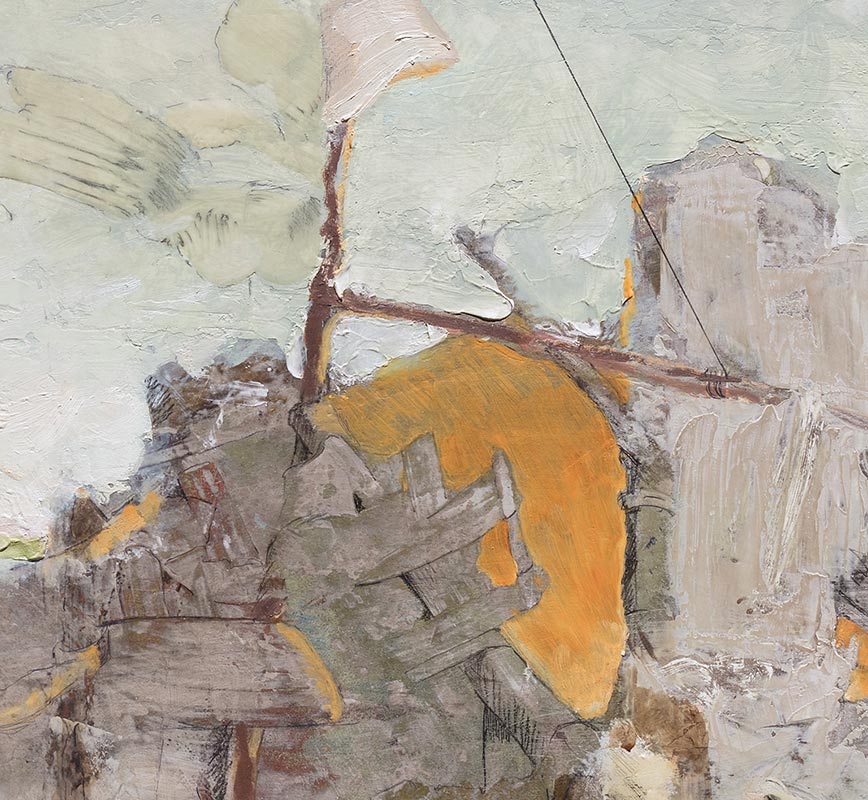
Budget Cut stages its subject with the precision of a theatrical set: green curtains or draped fabric fill the background, and at the center of a white pedestal sits a small gold disc, the kind of object that might be a coin, an offering, or a medal. A red and yellow-striped tool extends from the pedestal at a diagonal. The whole arrangement sits inside a fresco surface whose rough, accumulated texture declares its own opposite history: the patient, costly work of building a surface over time.
Budget Cut stages its subject with the precision of a theatrical set: green curtains or draped fabric fill the background, and at the center of a white pedestal sits a small gold disc, the kind of object that might be a coin, an offering, or a medal. A red and yellow-striped tool extends from the pedestal at a diagonal. The whole arrangement sits inside a fresco surface whose rough, accumulated texture declares its own opposite history: the patient, costly work of building a surface over time.
The title operates in two directions simultaneously: the budget cut of austerity politics, and the cut of a brush across a surface. Both meanings are active. The gold disc on the pedestal is simultaneously a token of value and a formal decision: the amount of gold leaf in the work is its own kind of budget, a calculated deployment of the precious within the modest.
The object arrangement has the quality of a vanitas: the northern tradition of still life in which objects of beauty and value are juxtaposed with reminders of impermanence and limitation. The classical vanitas placed skulls beside flowers, coins beside hourglasses; Budget Cut substitutes the painter’s tool and the gold disc. The memento is not death but scarcity. Claes Oldenburg, who enlarged and isolated everyday objects on plinths to examine their symbolic and economic weight, engages the same formal territory: the single object freed from its utilitarian context becomes both absurd and charged. Here the painter’s tool and the gilded coin achieve a comparable displacement: removed from use, arranged for examination, they become a question about value rather than an instrument of it.