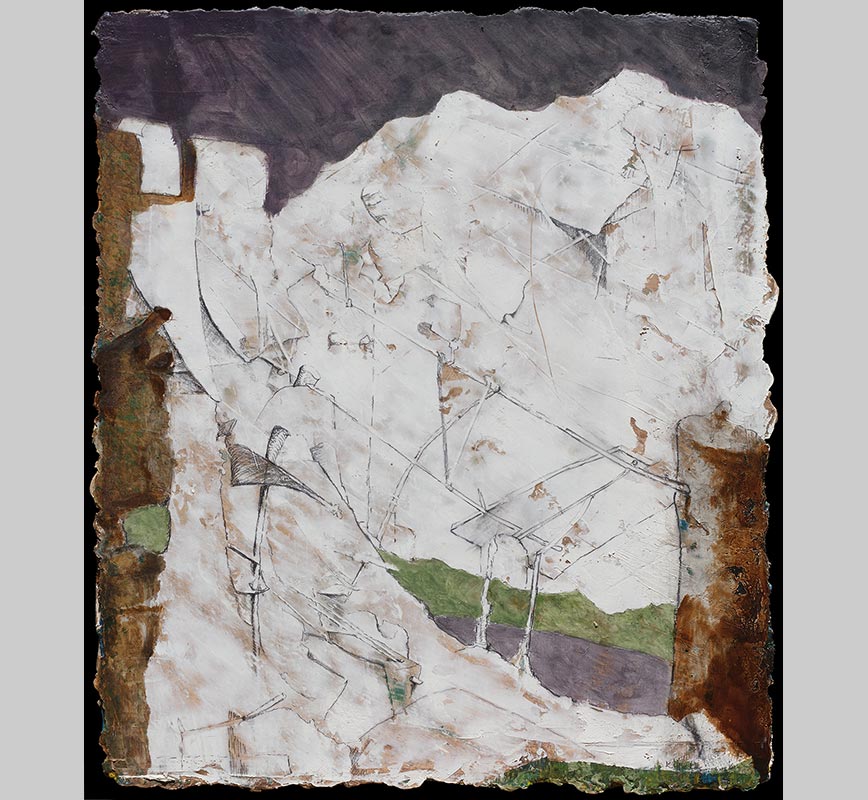
In Ruin, Gregory Kitterle constructs a landscape of collapse from the inside. A cylindrical tower on the right, banded in warm orange, holds its ground against a left-hand field of tilting planes, abraded surfaces, and color running in thin streaks through layered pigment. The palette stays close to earth: ochres, raw umbers, muted greens, with flashes of cooler tone emerging from beneath the surface. Nothing in the scene has fallen yet; everything is in the process of falling.
In Ruin, Gregory Kitterle constructs a landscape of collapse from the inside. A cylindrical tower on the right, banded in warm orange, holds its ground against a left-hand field of tilting planes, abraded surfaces, and color running in thin streaks through layered pigment. The palette stays close to earth: ochres, raw umbers, muted greens, with flashes of cooler tone emerging from beneath the surface. Nothing in the scene has fallen yet; everything is in the process of falling.
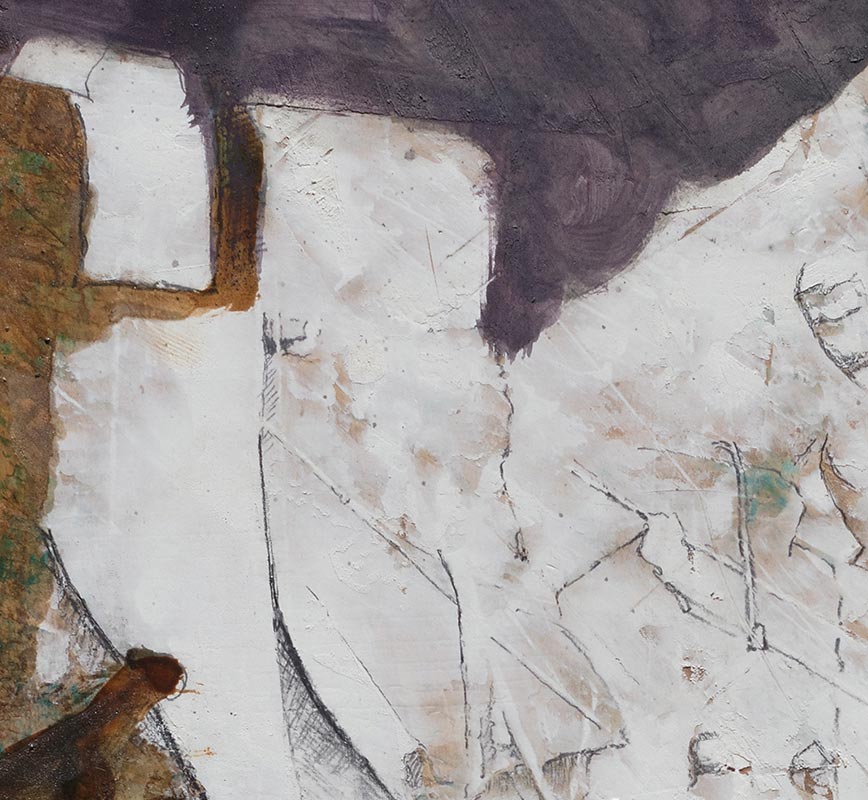
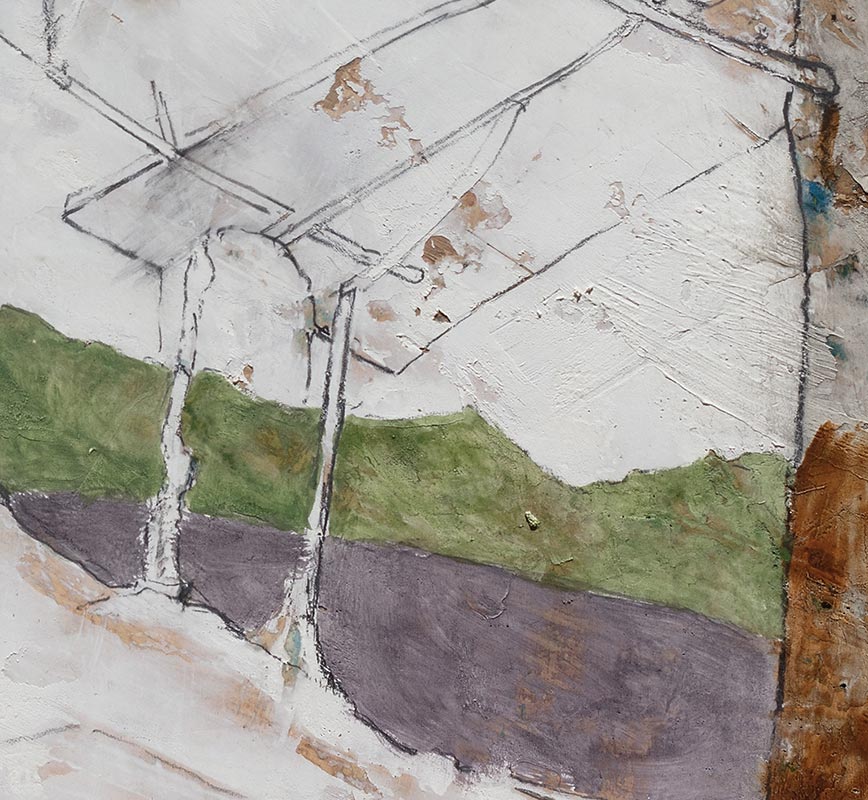
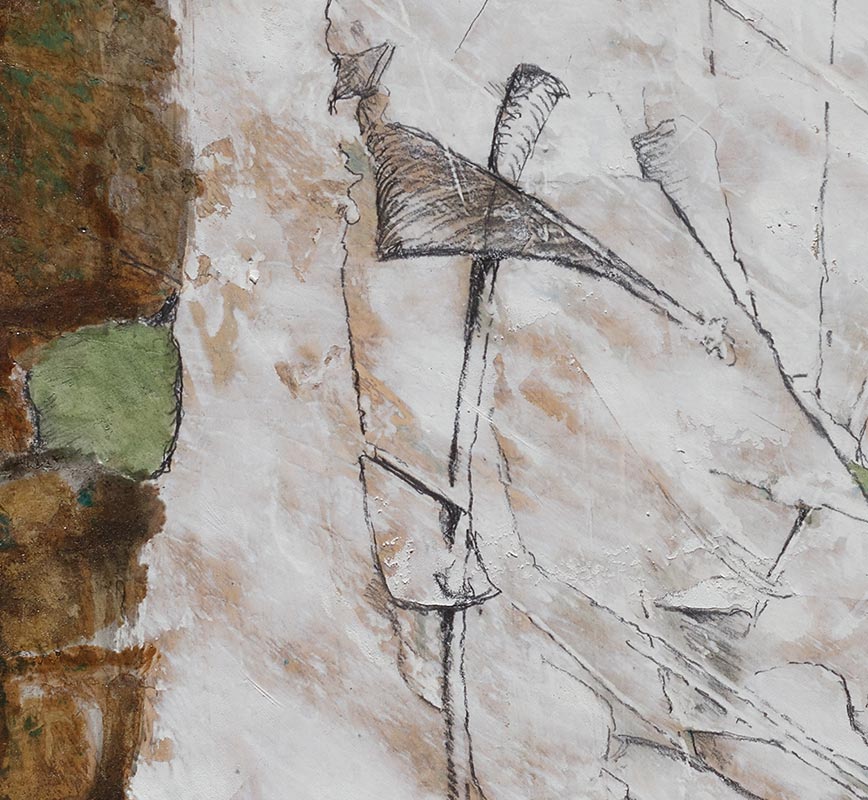
The ruined structure in this small oil on panel is less a subject than a proposition: that the painted surface and the thing it depicts share the same condition. Both are material objects made of layered, applied matter; both are susceptible to erosion, displacement, and the slow renegotiation of form. Kitterle builds the picture’s left side through accumulation and subtraction simultaneously, scoring through wet layers to reveal what is underneath, letting the support show through in the abraded passages. The cylindrical tower, reinforced by its orange banding, reads as human engineering in dialogue with entropy: the bands hold, or try to.
The work belongs to a tradition of ruins painting that extends from Piranesi’s archaeological fantasies to the shattered landscapes of German Expressionism, but Kitterle’s version is intimate rather than theatrical. What it shares with Albert Pinkham Ryder, the New England painter Kitterle has named among his influences, is a willingness to let a scene accumulate psychological weight through the physical density of applied paint rather than through narrative legibility. The ruin here is not a monument; it is a surface asking to be read.