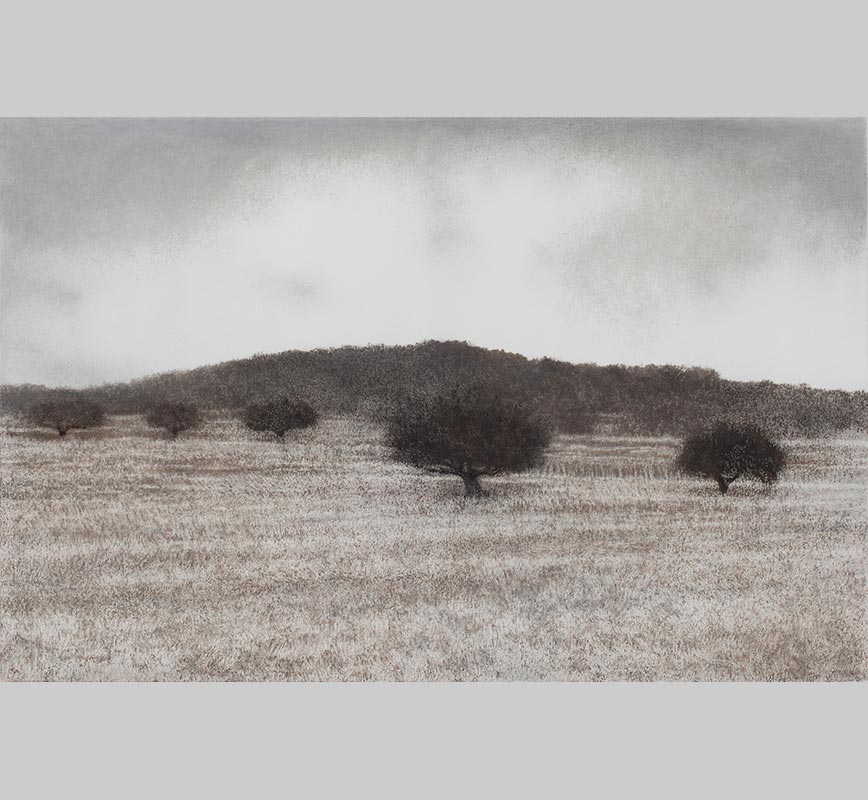
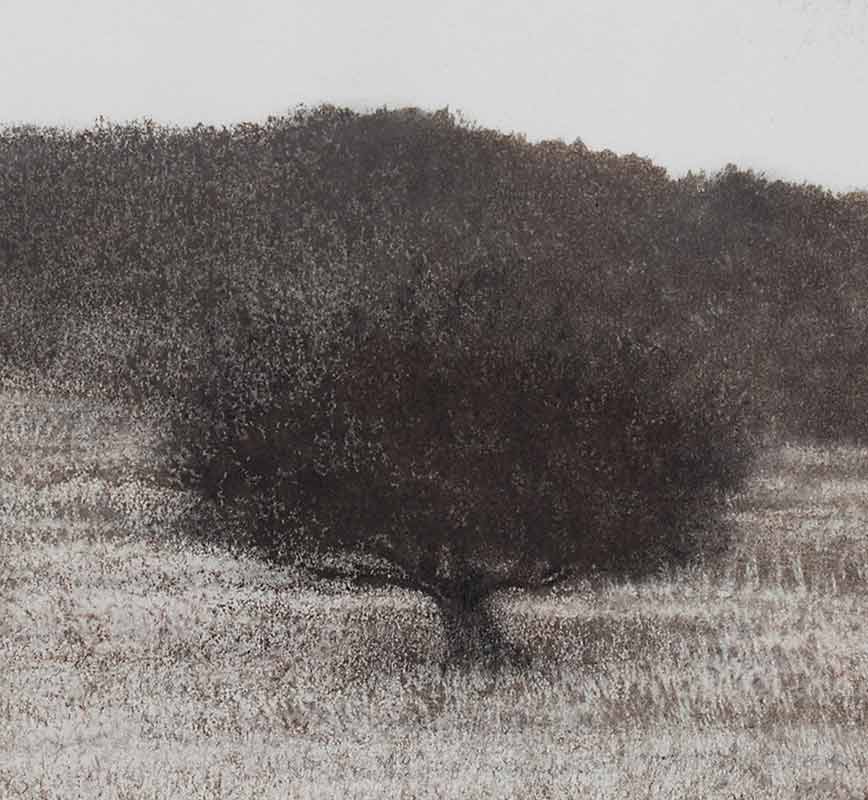
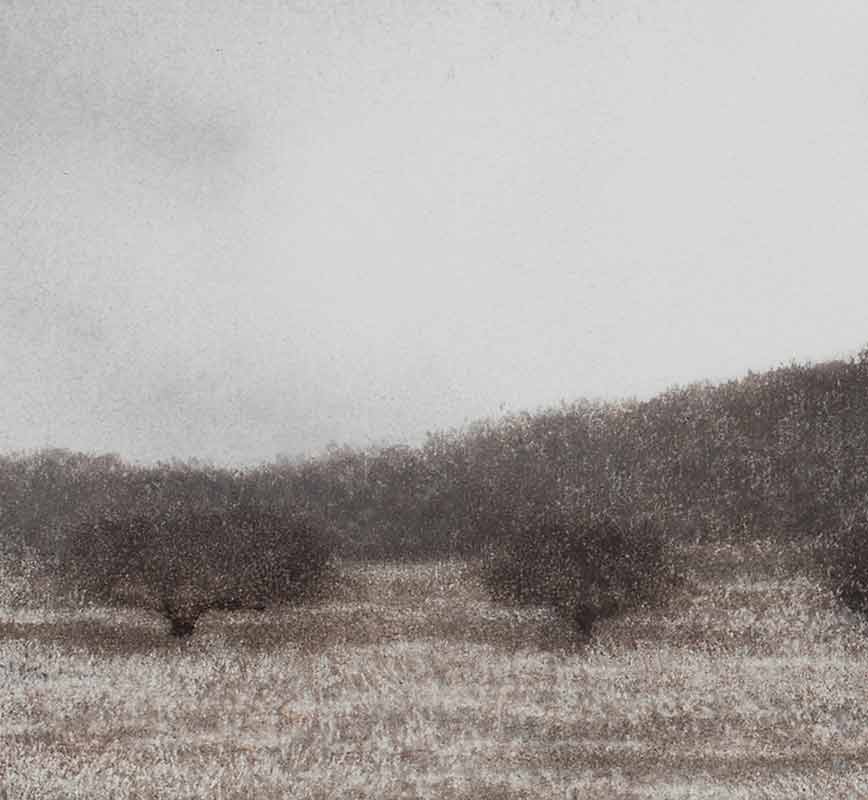
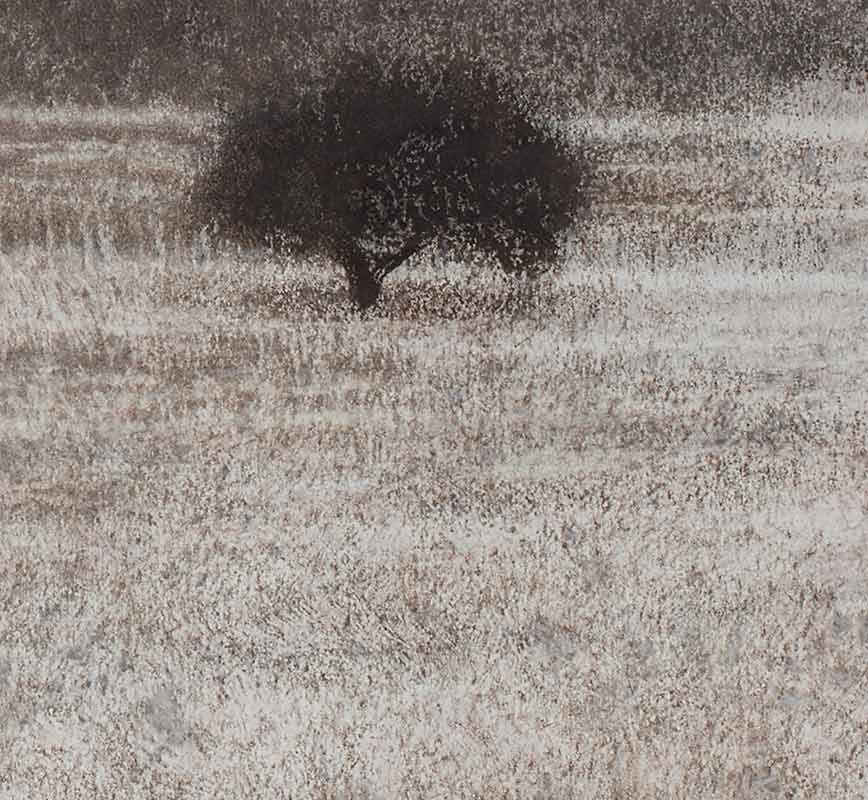
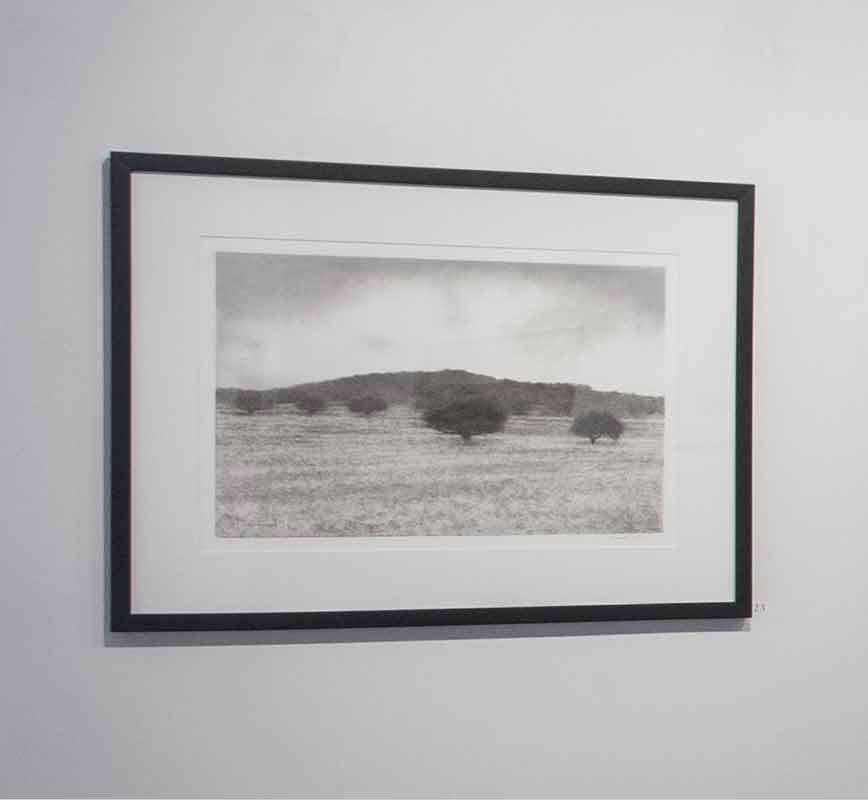
The cypress trees punctuate the olive grove with sharp dark verticals, their narrow forms rising against an overcast sky while the olive canopies spread low and rounded beneath them. Tzannes made this in chalk and charcoal on canvas, a large work with a velvety, granular surface that makes the atmosphere almost tactile: you can sense the damp weight of the Mediterranean overcast, the light flat and diffuse, the grove holding its stillness against a sky that has absorbed all the color from the day.
The cypress trees punctuate the olive grove with sharp dark verticals, their narrow forms rising against an overcast sky while the olive canopies spread low and rounded beneath them. Tzannes made this in chalk and charcoal on canvas, a large work with a velvety, granular surface that makes the atmosphere almost tactile: you can sense the damp weight of the Mediterranean overcast, the light flat and diffuse, the grove holding its stillness against a sky that has absorbed all the color from the day.
George Inness, in the late period that he identified as the source of his most sustained pictorial thinking, believed that the spiritual quality of a landscape was most available when the literal topographic description was least insistent. Atmosphere, not inventory: the grove as a field of feeling rather than a record of specific trees in a specific place. Tzannes has acknowledged Inness and the broader tradition of American tonalism as direct influences on this phase of his work, and the connection is structural. Both practices subordinate the specific fact to the general mood, trusting the tonal field to carry more than description can.
The olive and the cypress have been the emblematic trees of the Mediterranean for three thousand years, and their combination in a single landscape carries an overlay of cultural association that is impossible to entirely separate from the formal experience of looking. The olive is agricultural, communal, long-lived; the cypress is funereal, solitary, vertical. In this grove they coexist, neither dominant, the composition holding the two symbolic registers in balance.