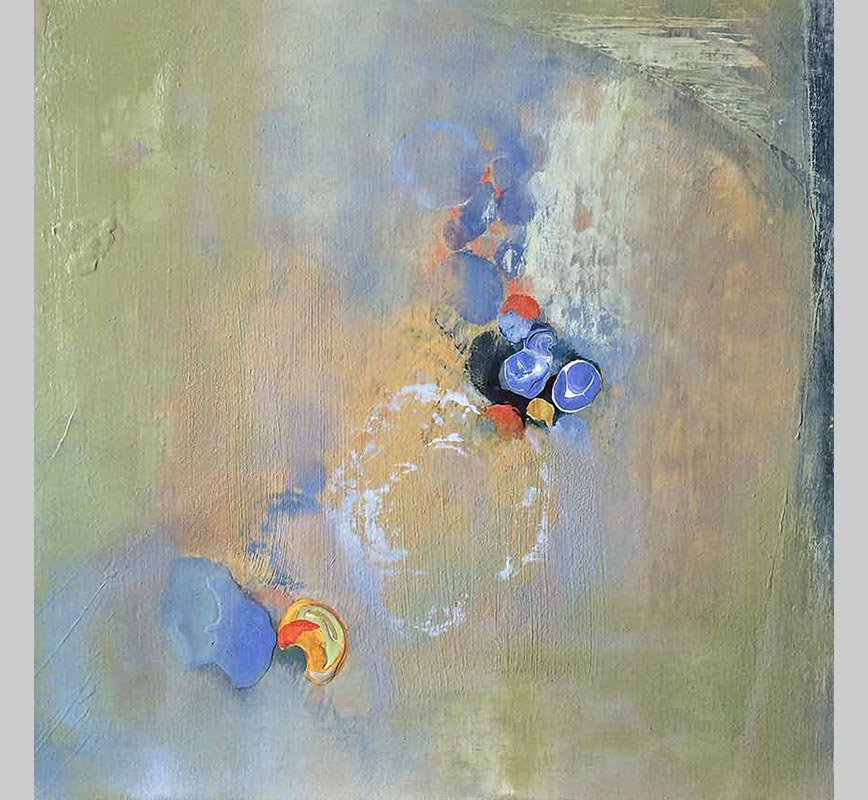
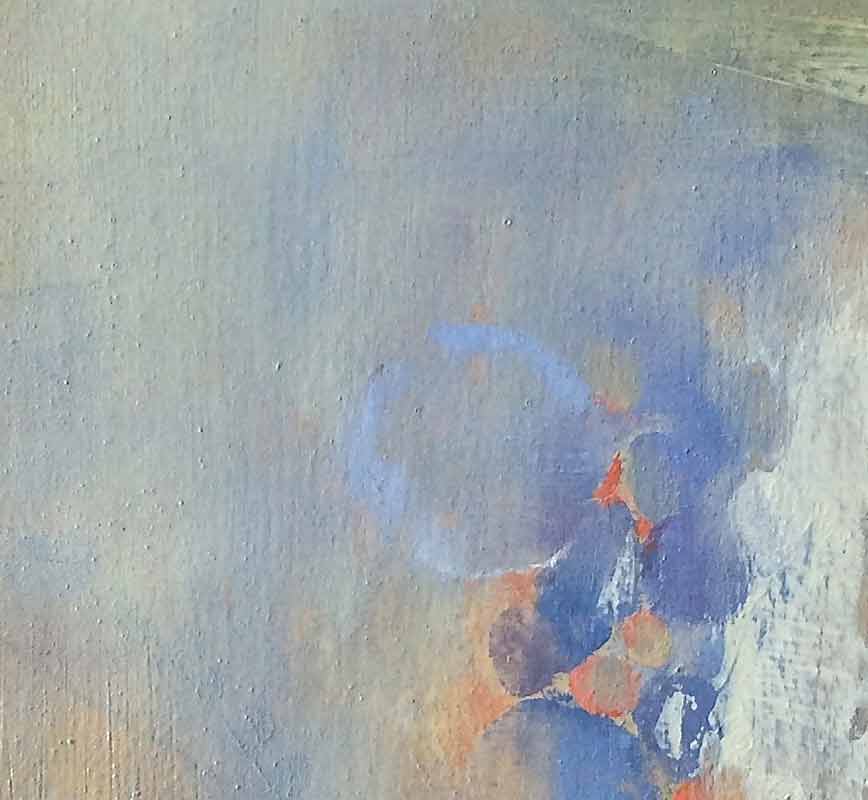
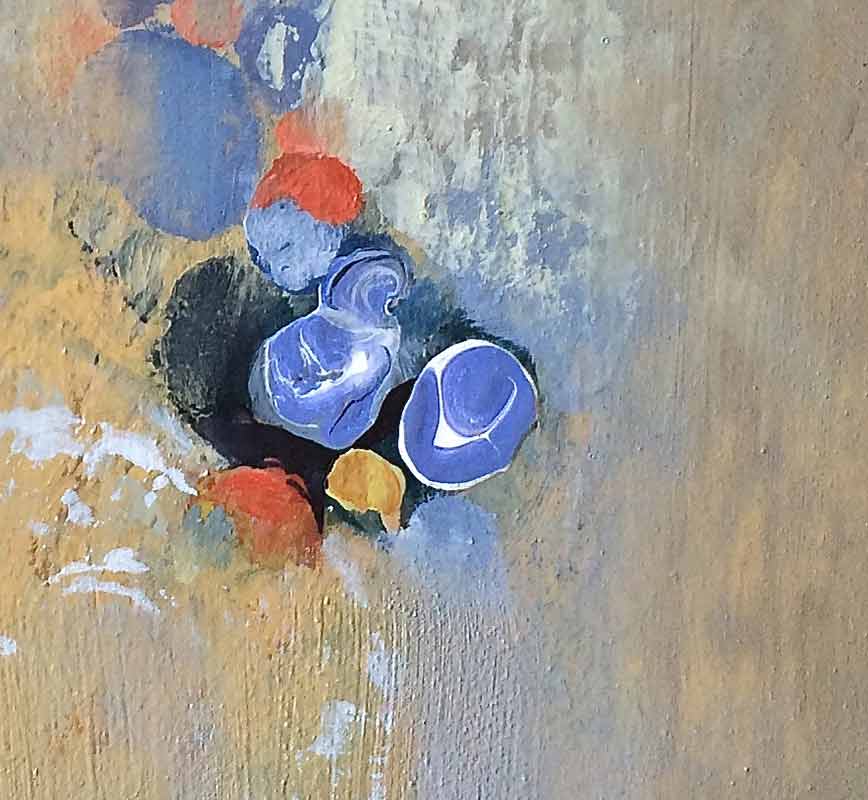
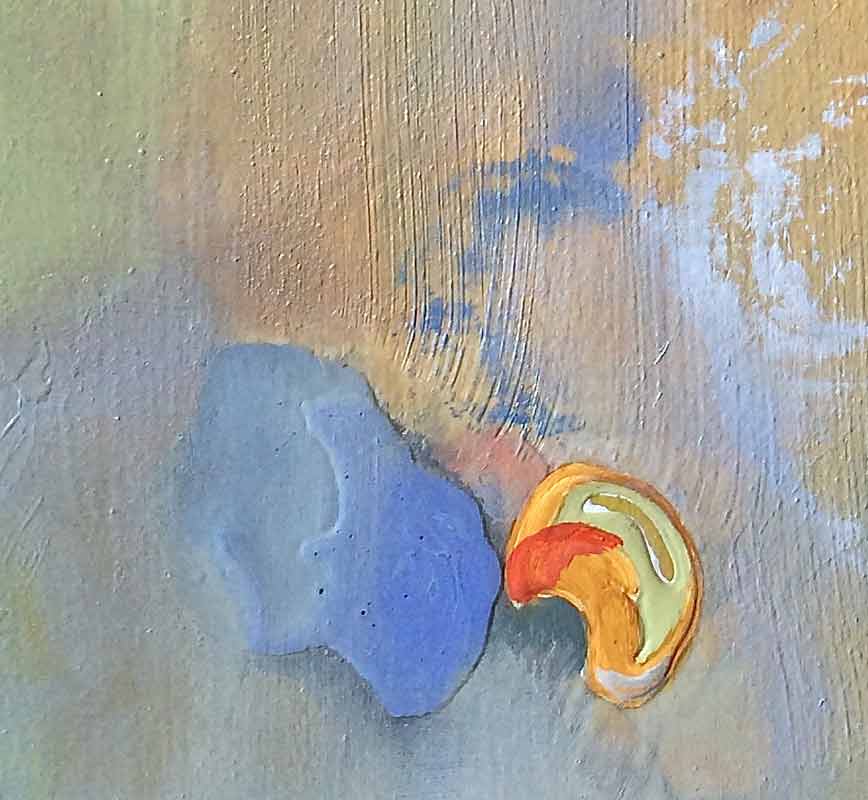
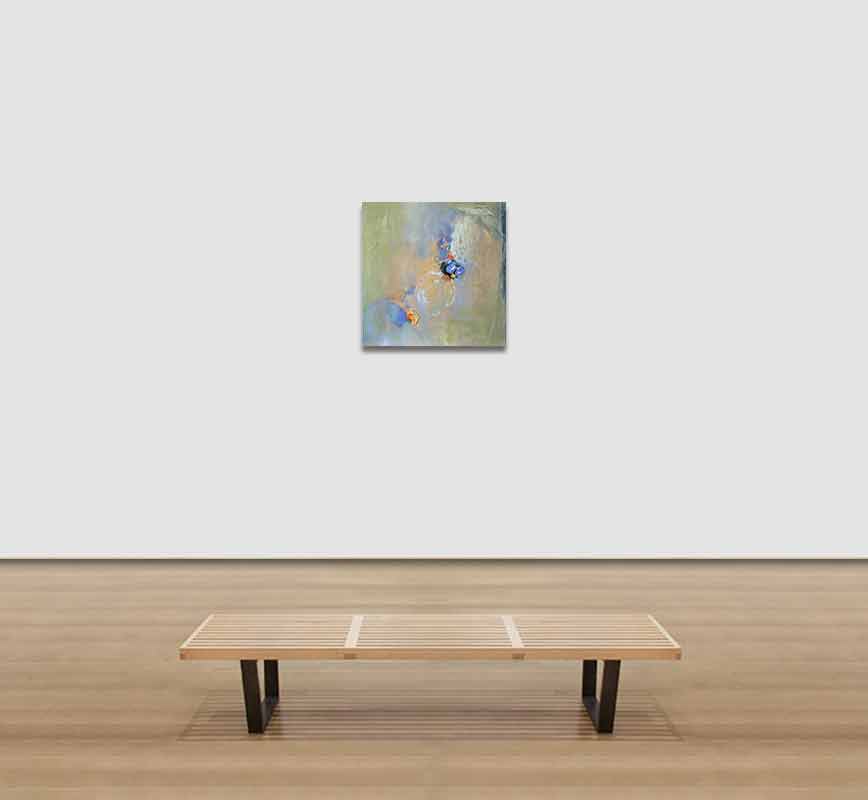
The large pale blue forms in the upper half of Merging Interests press against each other like adjacent planes of light, while the lower passage dissolves into something more liquid: a pool of blue-gray reflection broken by the orange-red incidents scattered through it. There is an architectural clarity to the composition that distinguishes it from Petrov’s atmospheric works; the forms have edges, zones of color abut rather than dissolve, and the whole is organized as if space is being measured rather than evoked.
The large pale blue forms in the upper half of Merging Interests press against each other like adjacent planes of light, while the lower passage dissolves into something more liquid: a pool of blue-gray reflection broken by the orange-red incidents scattered through it. There is an architectural clarity to the composition that distinguishes it from Petrov’s atmospheric works; the forms have edges, zones of color abut rather than dissolve, and the whole is organized as if space is being measured rather than evoked.
Merging Interests works with the compositional logic Richard Diebenkorn’s Ocean Park series established: an architectural decomposition of light into adjacent color planes, where the grid is not absolute geometry but the pragmatic geometry of looking at light through a window. The comparison is about formal logic, not subject matter: planes defined by adjacency, each color zone establishing meaning through relationship rather than intrinsic property.
The title implies convergence with agency: not fields merging but interests, something brought to the encounter. The orange-red incidents, small and precise, are the activated nodes within the cooler architectural field, the specific moments where the meeting becomes charged. The hardness of the color zone boundaries here is a material fact as much as a compositional one: the 2024 surface is built differently than Petrov’s earlier layered glazes, with more assertive incident sitting at the surface rather than embedded within it.