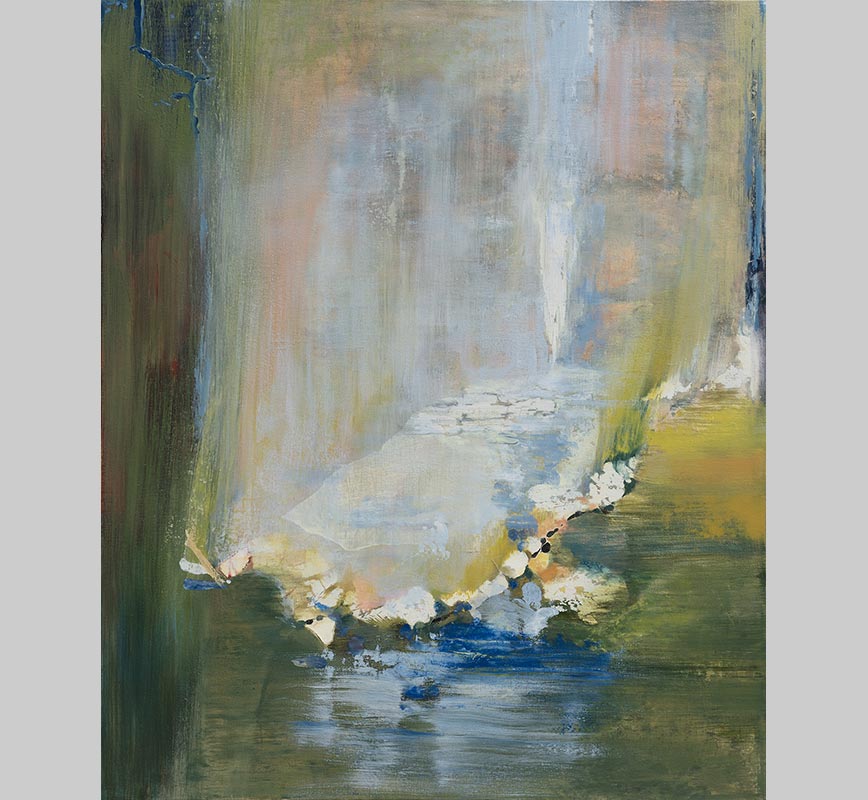
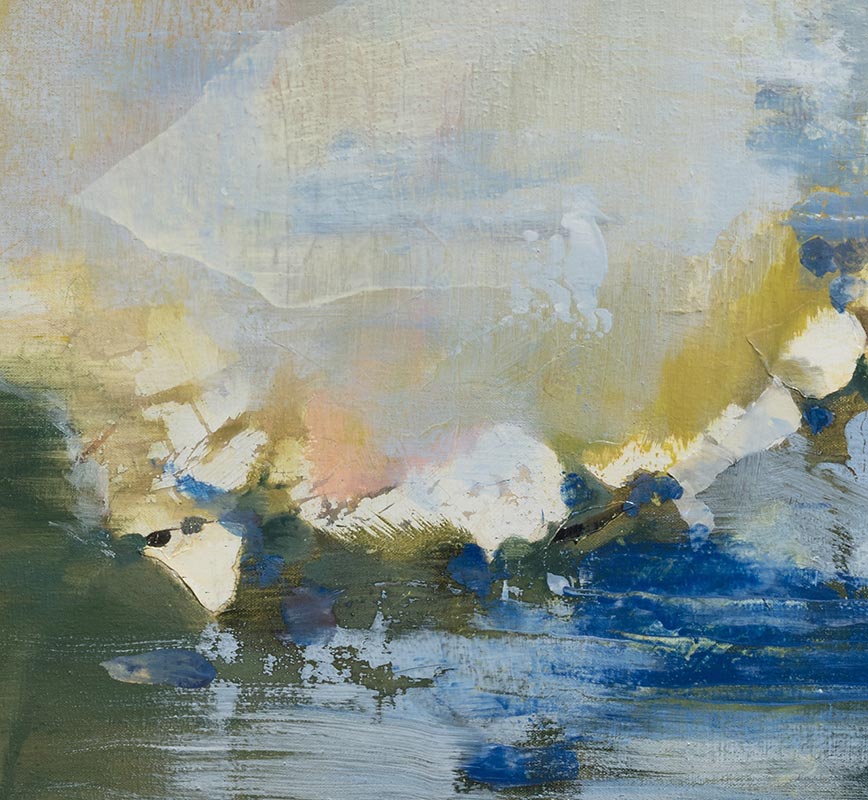
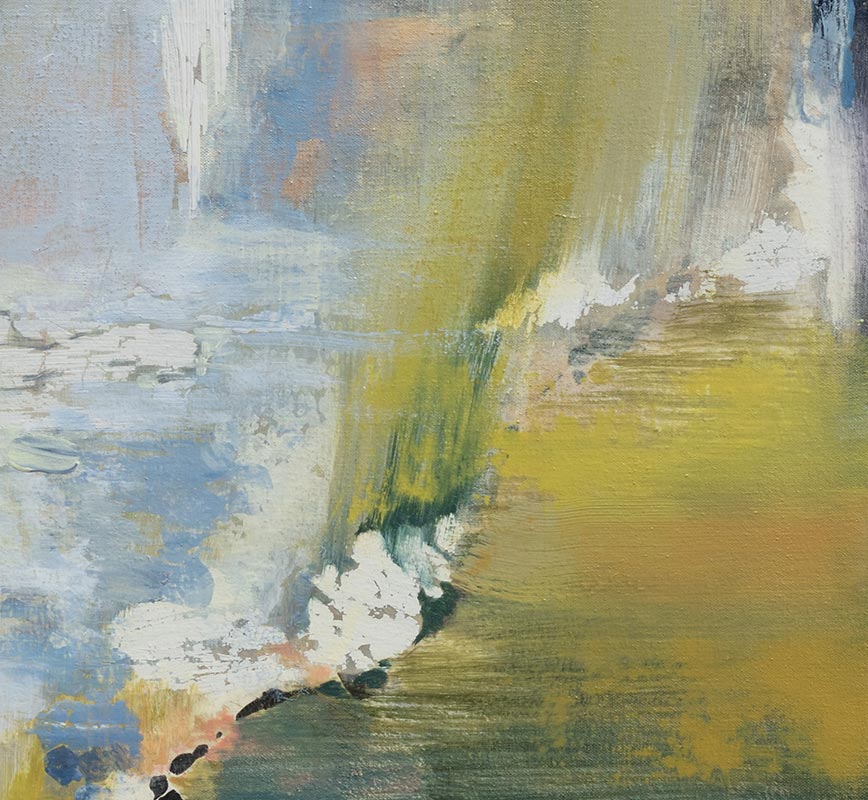
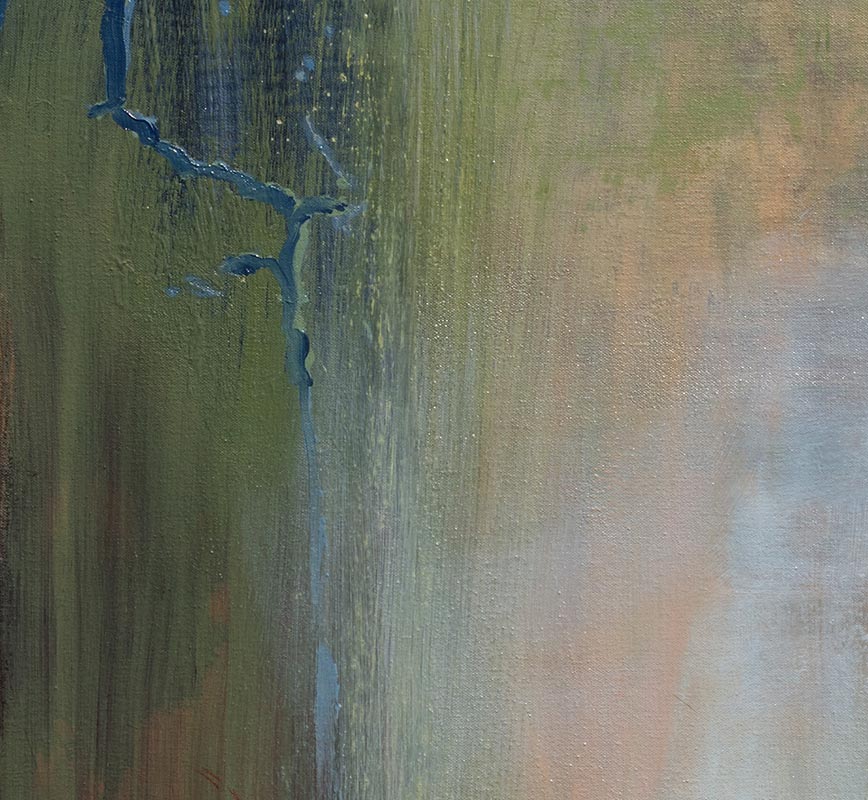
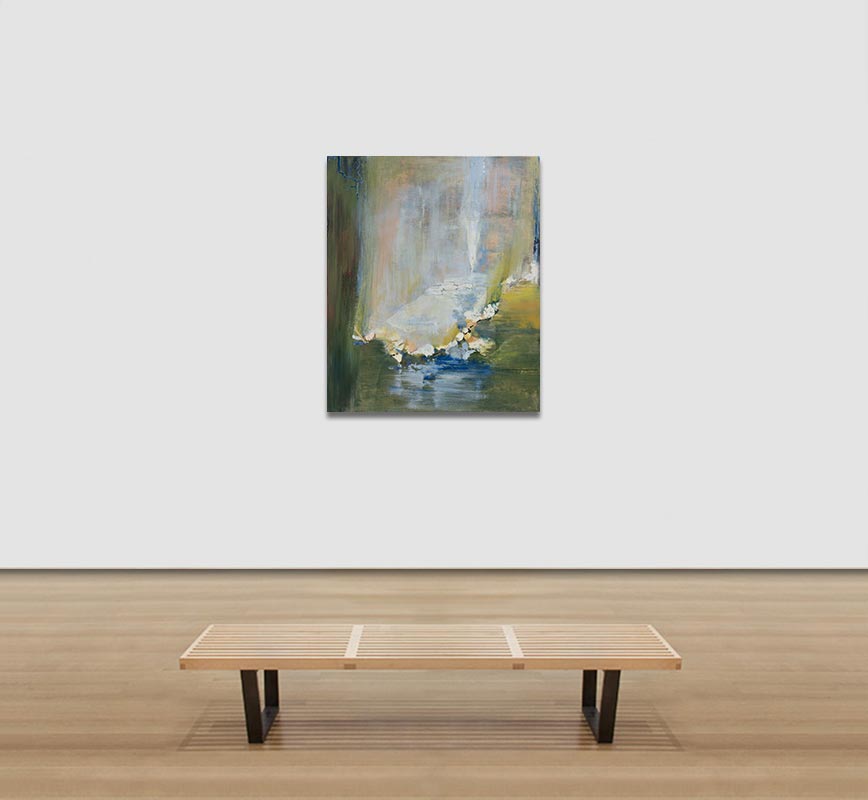
Hidden Attributes divides its canvas across a thermal threshold: the upper half burns with sienna, dark red, and dense orange-purple mass, while the lower half opens into a cool, almost ghostly field of pale blue, lavender, and gray. The division is not symmetrical but structural, the upper zone pressing down while the lower recedes, and the cluster of rounded forms at the center, orange, yellow, blue-white, spheroid, holds the two fields together at the seam.
Hidden Attributes divides its canvas across a thermal threshold: the upper half burns with sienna, dark red, and dense orange-purple mass, while the lower half opens into a cool, almost ghostly field of pale blue, lavender, and gray. The division is not symmetrical but structural, the upper zone pressing down while the lower recedes, and the cluster of rounded forms at the center, orange, yellow, blue-white, spheroid, holds the two fields together at the seam.
Hidden Attributes enacts Hans Hofmann’s push-pull theory of color space at the scale of the entire canvas: warm colors advance, cool colors recede, and a composition organized around this opposition generates spatial energy that is both visual and physical. The principle operates structurally here, the warm upper mass pushing forward while the cool lower field withdraws, and the work lives in the tension between them.
The central cluster of spheroid forms carries a biomorphic quality that connects to a different lineage: the surrealist tradition of organic abstraction reaching through Miró and Arp, and reaching Petrov through the Surrealist formation of his uncle Dmitri. The forms are neither clearly geological nor clearly biological; they occupy the threshold of the unclassifiable, which is exactly what the title names.