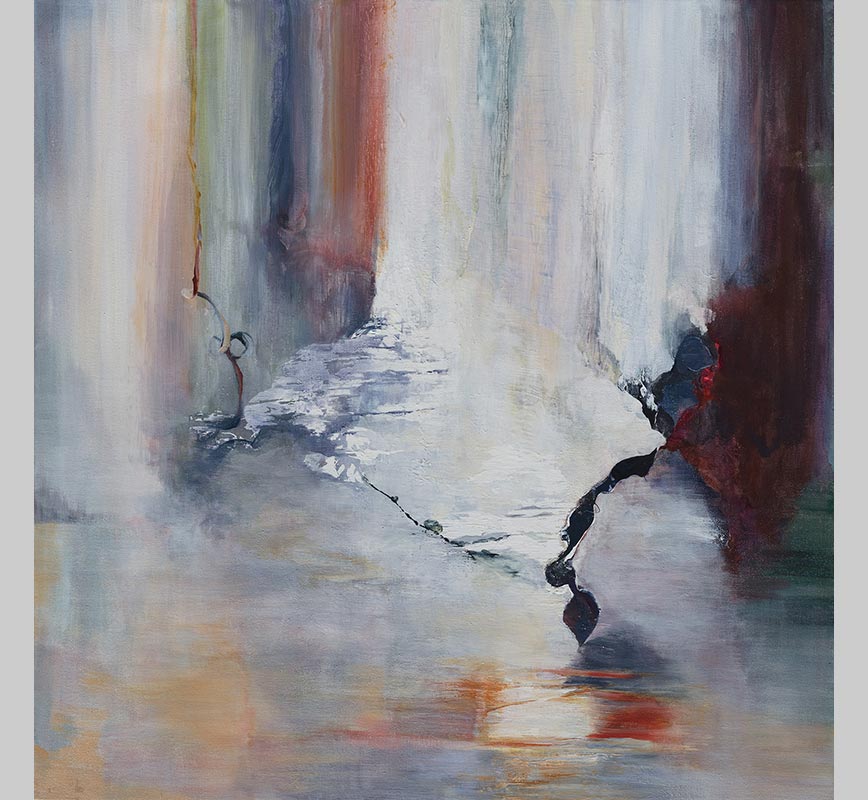
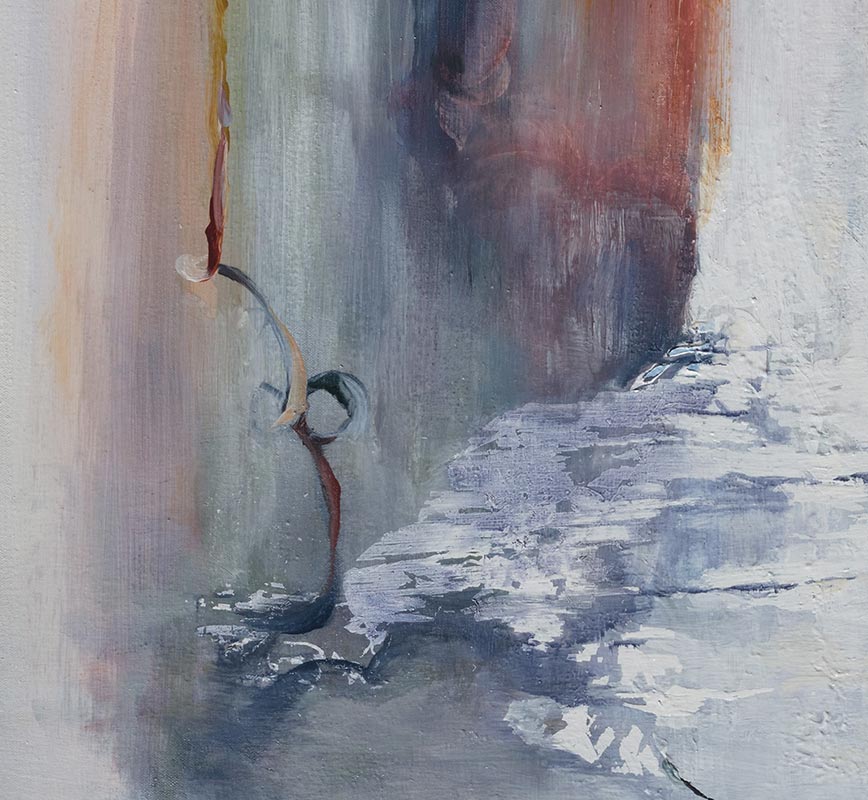
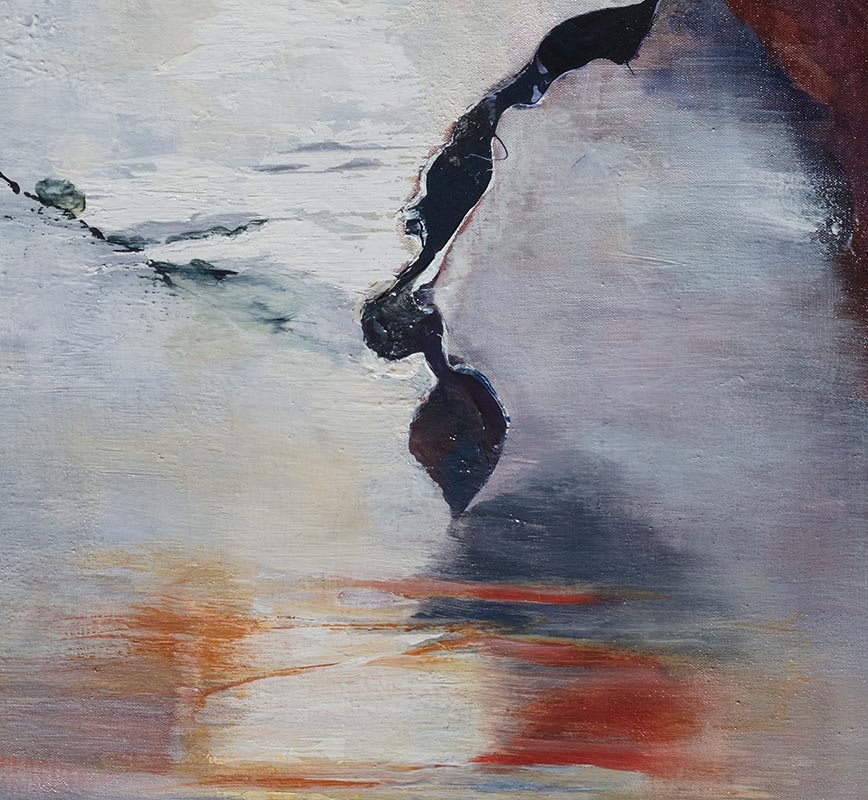
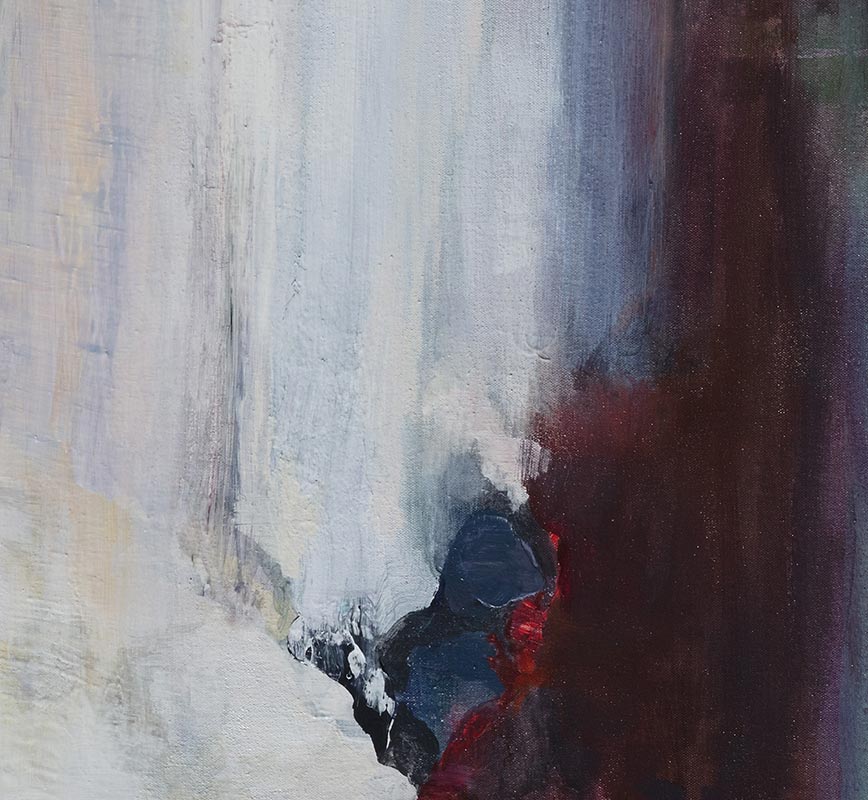
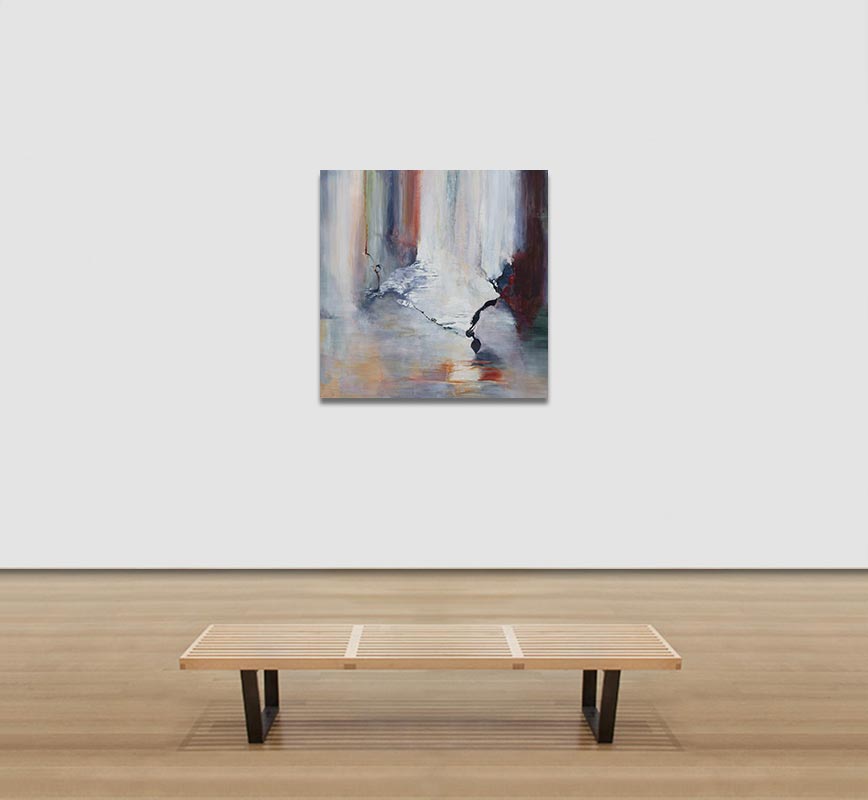
Airplay is organized around a vertical axis of pale blue-green atmosphere through which small orange-red forms drift at irregular intervals: too deliberate to be accidental, too distributed to be clustered. The format amplifies this: at 60 by 40 inches and portrait in orientation, the canvas extends well past normal eye level, and the accent forms are positioned at heights that map to different moments of looking, as if the painting is a sequence of encounters rather than a single view.
Airplay is organized around a vertical axis of pale blue-green atmosphere through which small orange-red forms drift at irregular intervals: too deliberate to be accidental, too distributed to be clustered. The format amplifies this: at 60 by 40 inches and portrait in orientation, the canvas extends well past normal eye level, and the accent forms are positioned at heights that map to different moments of looking, as if the painting is a sequence of encounters rather than a single view.
Airplay works with the governing principle of Cy Twombly’s late paintings: marks distributed across large atmospheric fields with deliberate casualness, the field as space to move through, each element placed as evidence of passage. Petrov’s surface is more built and chromatic than Twombly’s, but the disposition is shared.
The title invokes broadcasting as well as the literal: works put into circulation, signals sent into an indeterminate medium. The orange-red forms are those signals, distinct against the blue-green field but not insistent, drifting rather than demanding. This is a work that makes its argument through lightness, which is a different and more difficult argument to sustain than through weight.