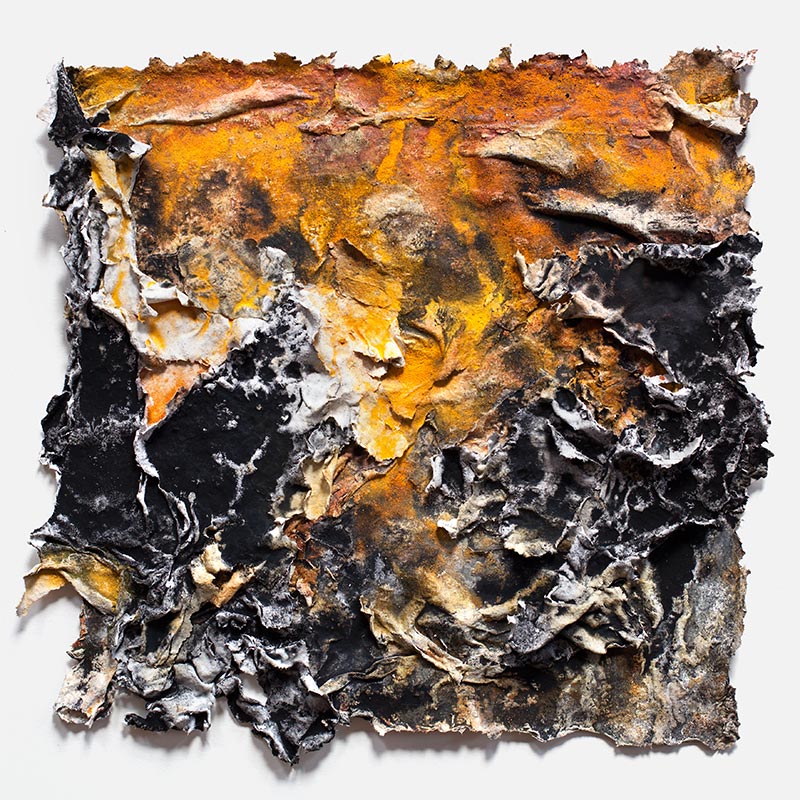
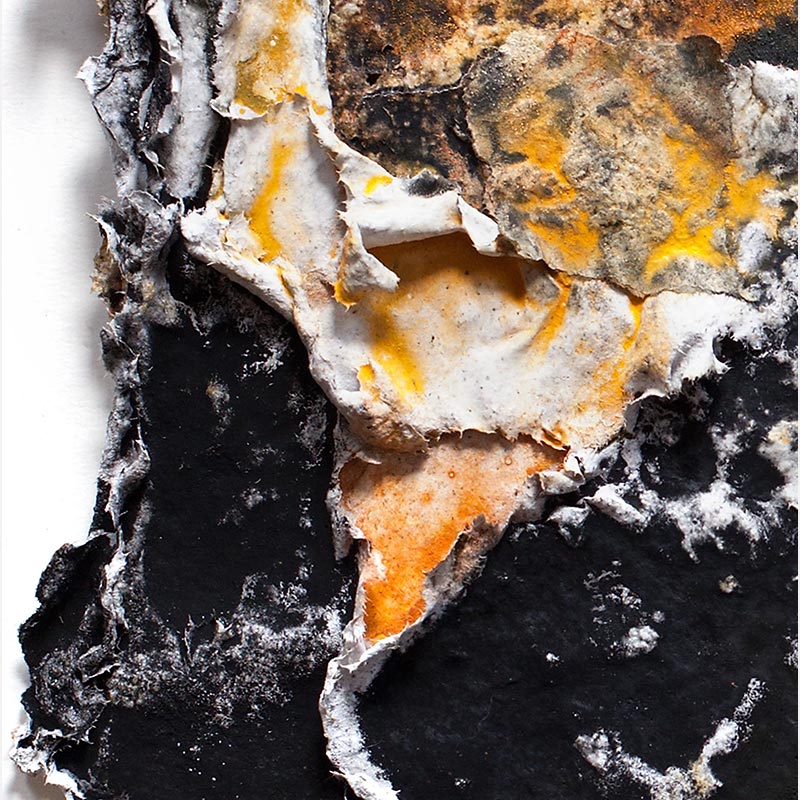
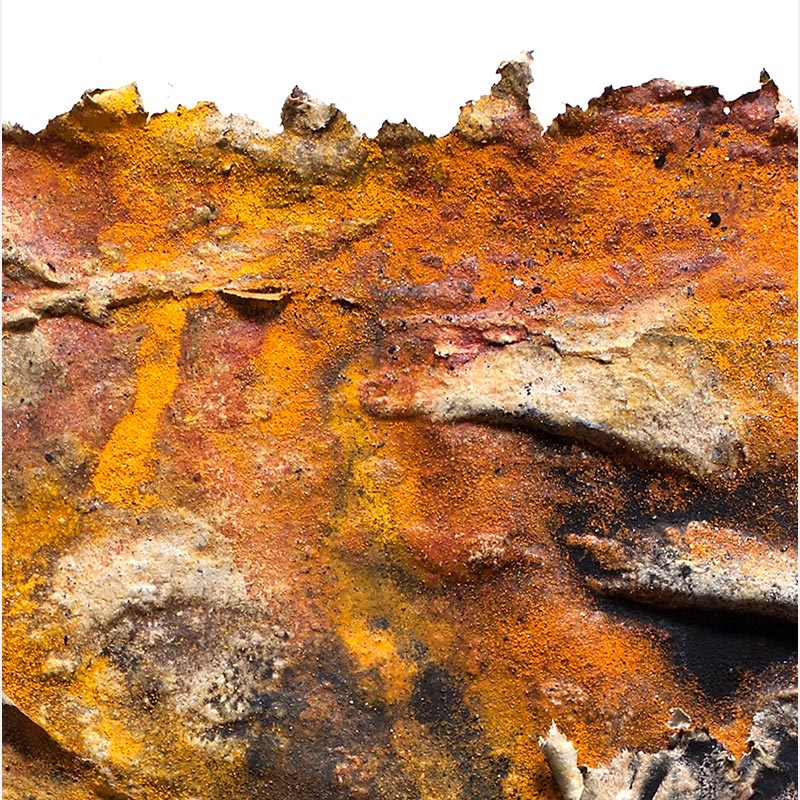
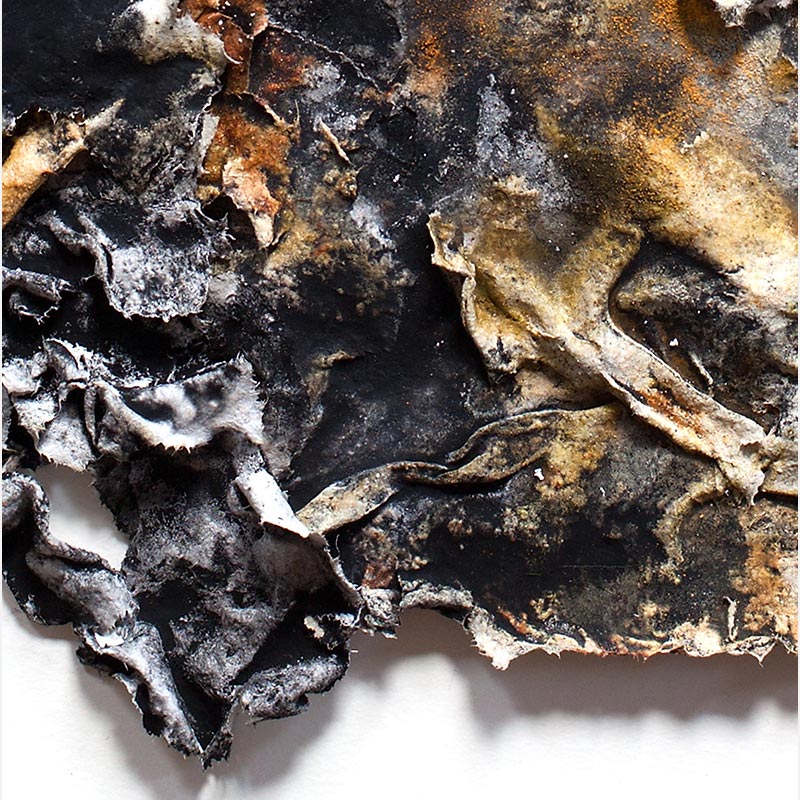
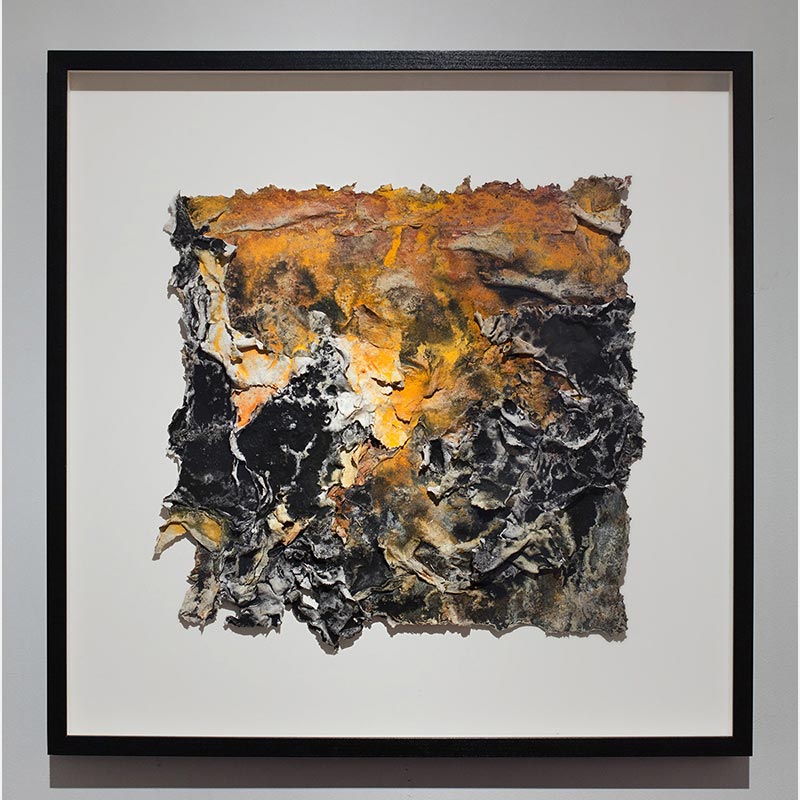
The surface divides itself along a diagonal that feels less like a composition than a confrontation: yellow-gold and orange claim the upper half with the intensity of something burning at full force, while blacks surge from below and press in from every corner with equal authority. Neither yields. The cast paper tears and buckles at every edge, catching light at angles that shift the drama with every step across the room.
The surface divides itself along a diagonal that feels less like a composition than a confrontation: yellow-gold and orange claim the upper half with the intensity of something burning at full force, while blacks surge from below and press in from every corner with equal authority. Neither yields. The cast paper tears and buckles at every edge, catching light at angles that shift the drama with every step across the room.
The diagonal is not a device: it is the structural fact of two irreconcilable forces holding their ground simultaneously, the yellows and oranges building from within, pigment pooling in the cast valleys so that warmth is generated rather than applied. Franz Kline's black and white confrontations established that a surface can make structural opposition its sole subject, neither field subordinate to the other. Here the same conviction operates in thermal rather than tonal terms, the cast paper giving the confrontation a physical depth and weight that paint on canvas alone could not sustain.
Ater, Gilvus et Flavus belongs to the Charta series, works on handmade paper begun in 2009 that form the generative core of Ruggero Vanni's three-dimensional research. In the Charta works, the paper is cast and sculpted before any pigment arrives: structure precedes color, and the topography of the surface is the composition.