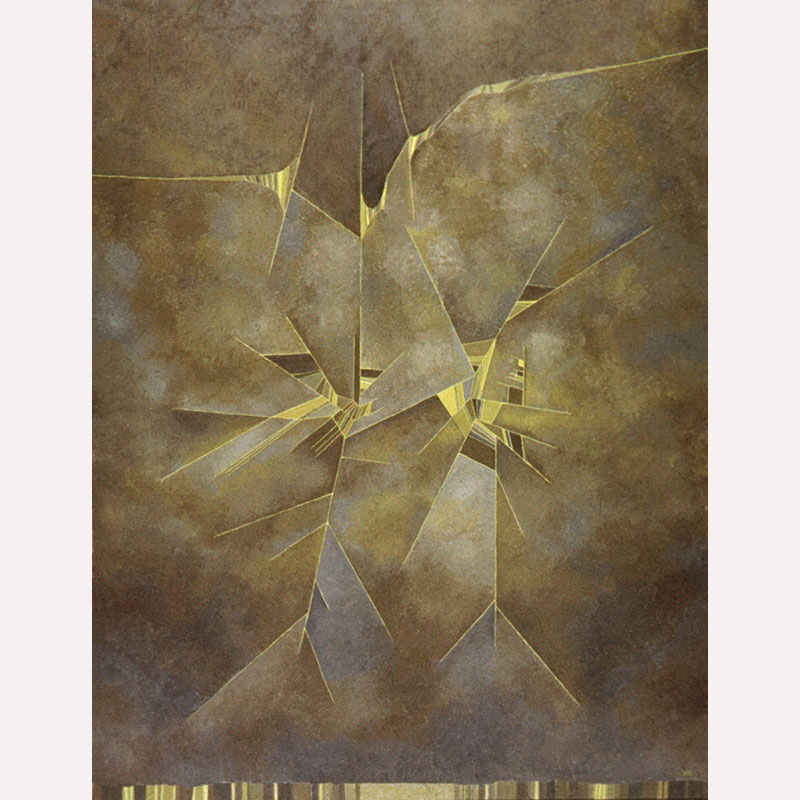
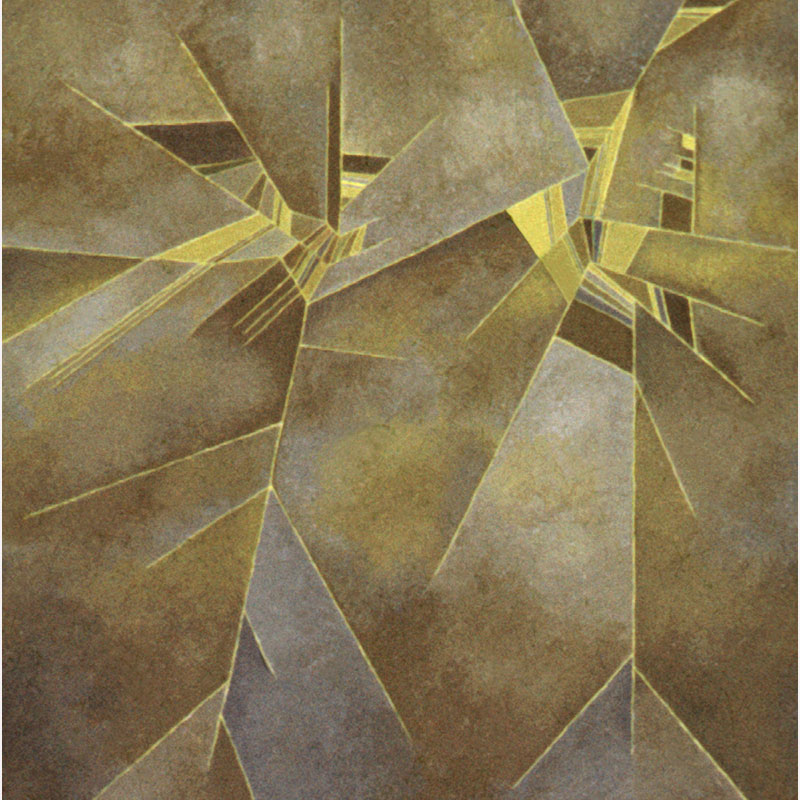
In Tempesta d'estate [Summer Storm], Vanni explores the interplay between luminous structure and a chromatic field charged with tension. The yellow-green expanse, gently modulated through tonal shifts, evokes a suspended stillness. From within this field, two crystalline forms, sharp, angular, and asymmetrical, seem to crystallize organically, as if the painting's energy were generated from within rather than applied from without. Linear elements no longer simply divide space; they exert influence, subtly shifting adjacent tones in a network of interdependent relationships.
In Tempesta d'estate [Summer Storm], Vanni explores the interplay between luminous structure and a chromatic field charged with tension. The yellow-green expanse, gently modulated through tonal shifts, evokes a suspended stillness. From within this field, two crystalline forms, sharp, angular, and asymmetrical, seem to crystallize organically, as if the painting's energy were generated from within rather than applied from without. Linear elements no longer simply divide space; they exert influence, subtly shifting adjacent tones in a network of interdependent relationships.
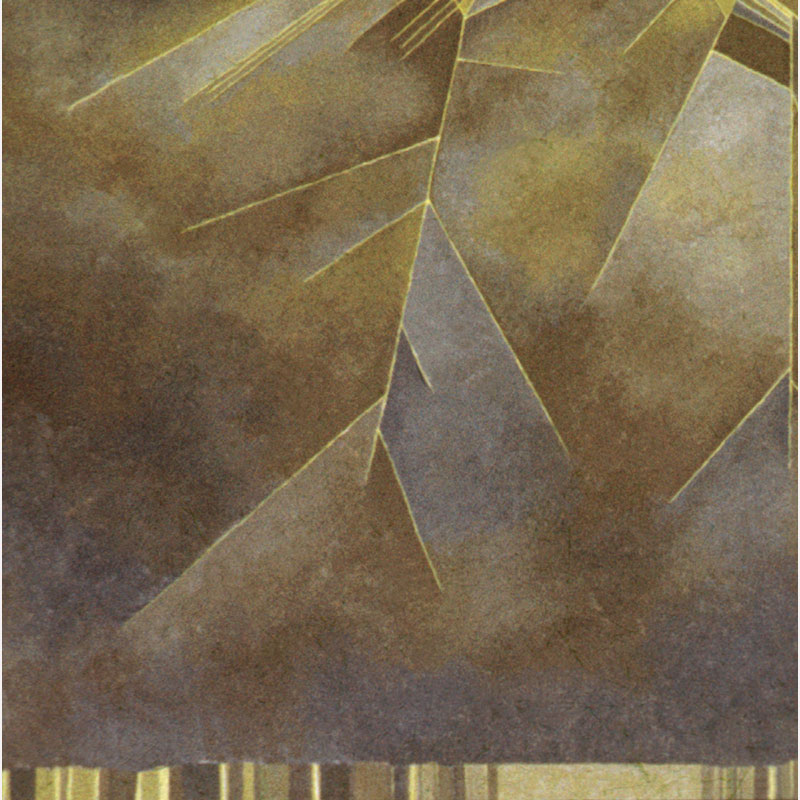
The composition is layered yet restrained, replacing earlier impasto with a more luminous, atmospheric presence. Golden and ochre accents embedded in the central forms reappear in the narrow vertical bands at the painting's base, reinforcing the work's internal unity.
At once luminous and brooding, Tempesta d'estate holds gesture and precision in careful tension. It encapsulates Vanni's ability to suggest not just the trace of a storm but its unseen architecture. The notes to this work identify it as Vanni's last purely geometric canvas, a threshold between the crystalline phase and the Informale investigations that follow.