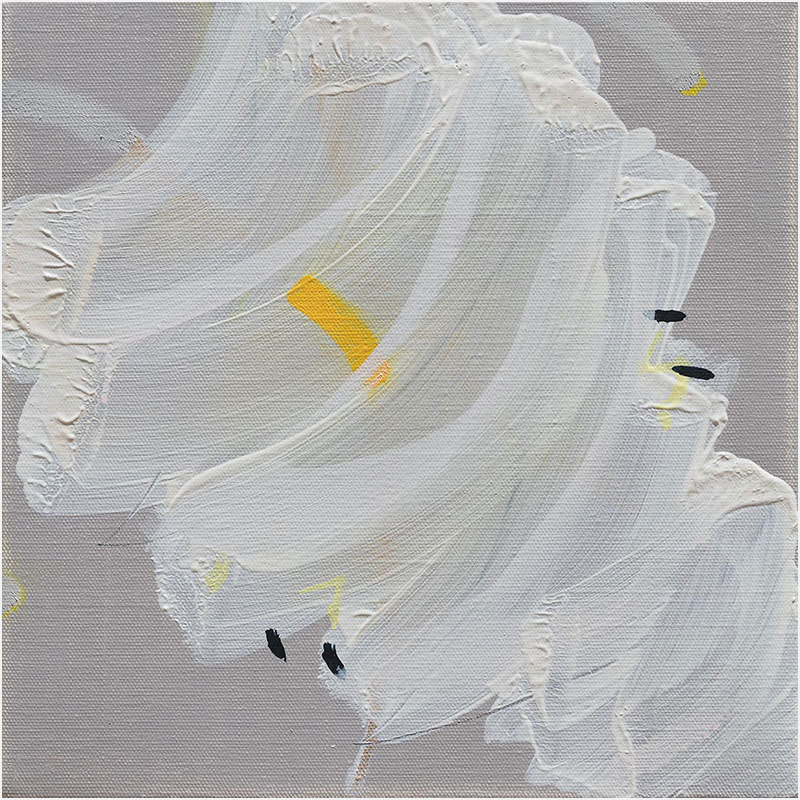
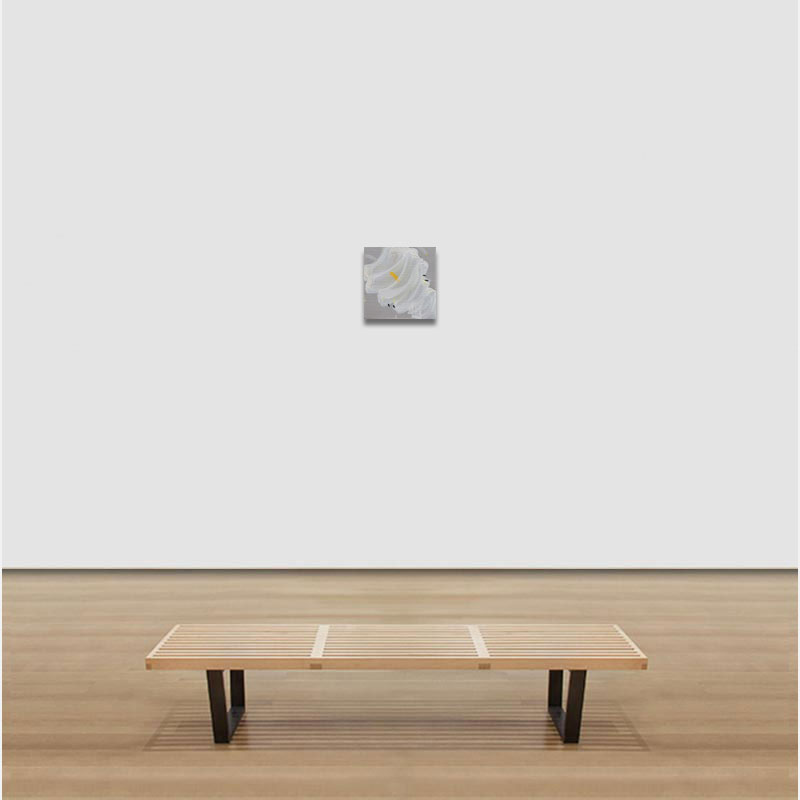
White paint piles up on a grey ground in thick, swirling strokes, ridged and peaked where the brush turned and lifted. A single yellow bar sits inside it, hot and unexpected, and short black dashes flick over the white like punctuation marks. The grey shows through at the margins and in thin veils within the white paint. The surface is buttery and tactile, bright yet low in key, with one pulse of yellow at its middle.
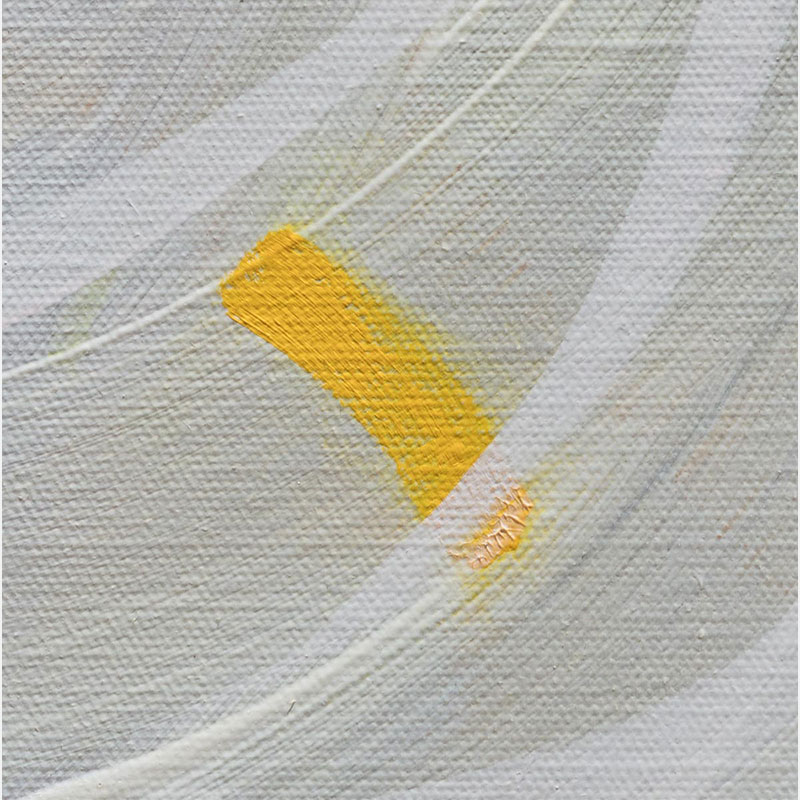
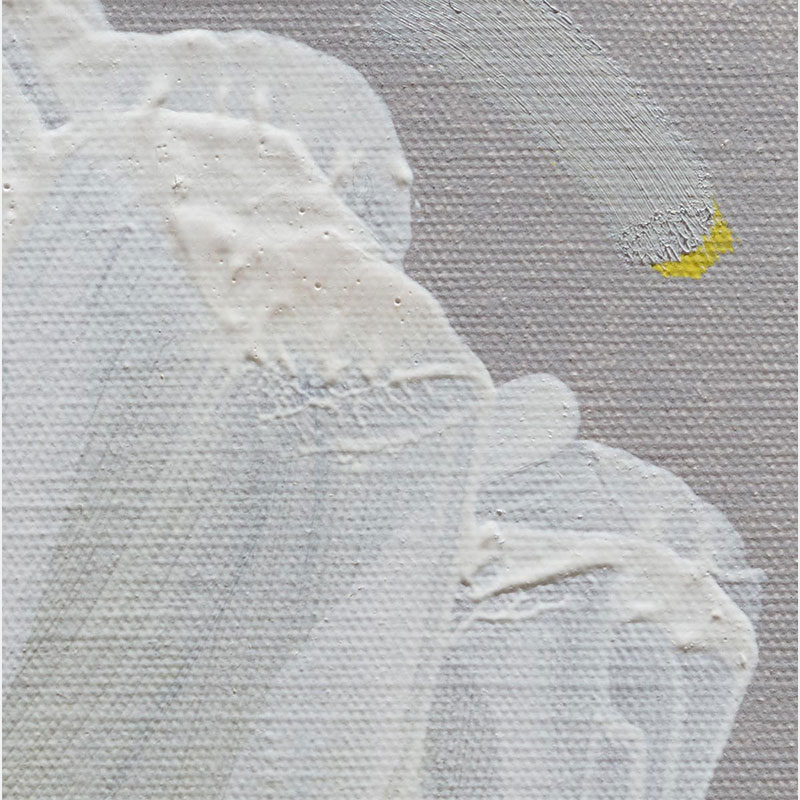
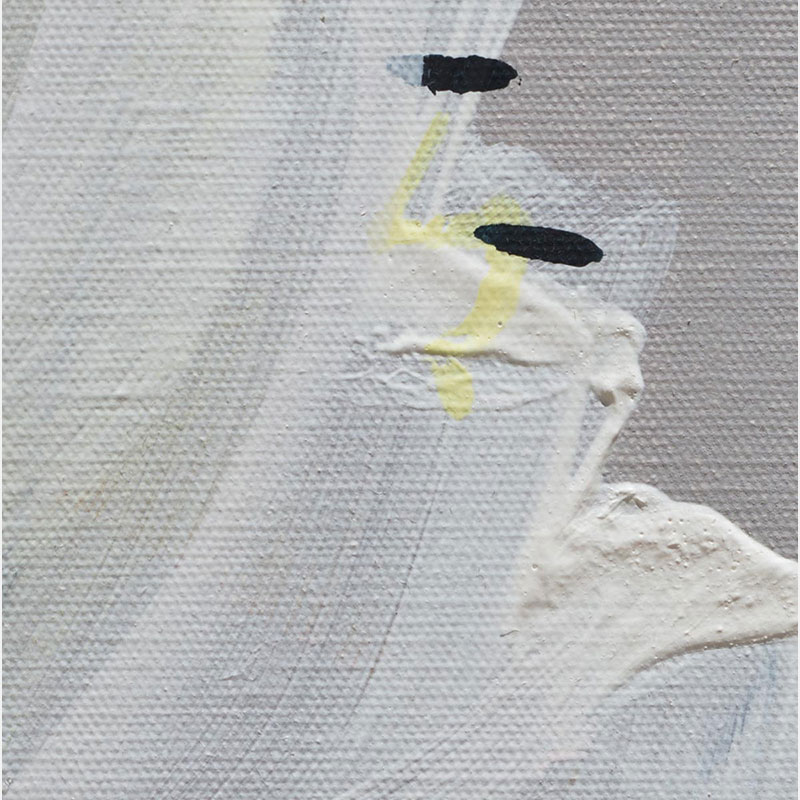
White paint piles up on a grey ground in thick, swirling strokes, ridged and peaked where the brush turned and lifted. A single yellow bar sits inside it, hot and unexpected, and short black dashes flick over the white like punctuation marks. The grey shows through at the margins and in thin veils within the white paint. The surface is buttery and tactile, bright yet low in key, with one pulse of yellow at its middle.
The impasto keeps the brush's work like a cast. Ridges stand where bristles dragged, peaks where the tool lifted, and thin graphite hairlines cross both white and grey. A pale peach tint warms the ridges at the left, so the white is never one white. A faint grey arc lies under the upper left, the ghost of another stroke. The black dashes are the smallest and quickest marks, and the yellow bar is the only one with weight.
In Roberto Caracciolo's painting the handling is the event: how the white was applied, and where it stopped. The grey ground takes part, showing through wherever the white thins. Robert Ryman's white paintings, where the application of paint, the edge, the support and even the wall become integral to composition, share that attention to procedure.