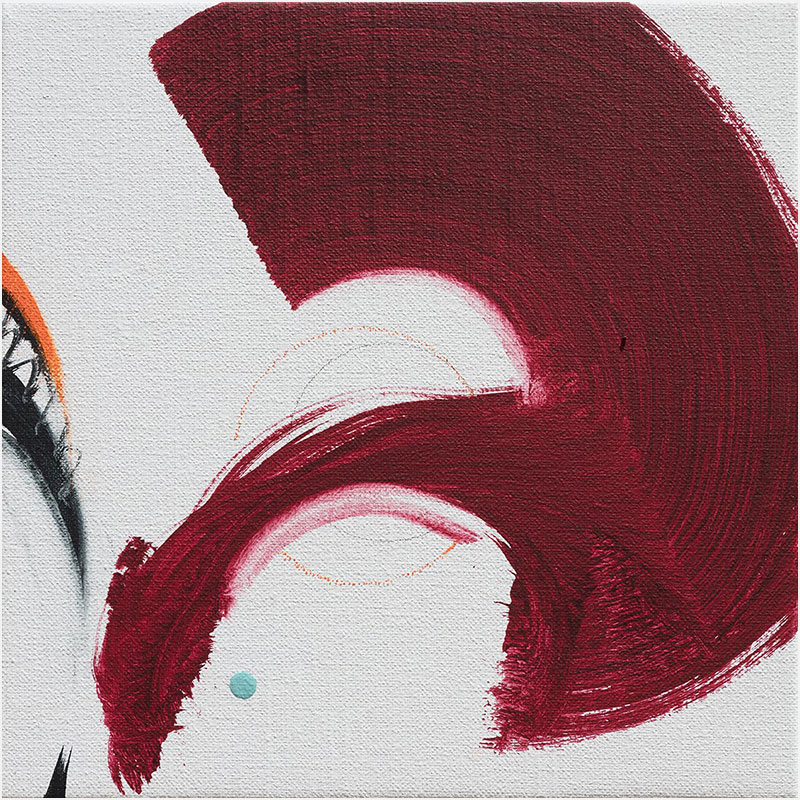
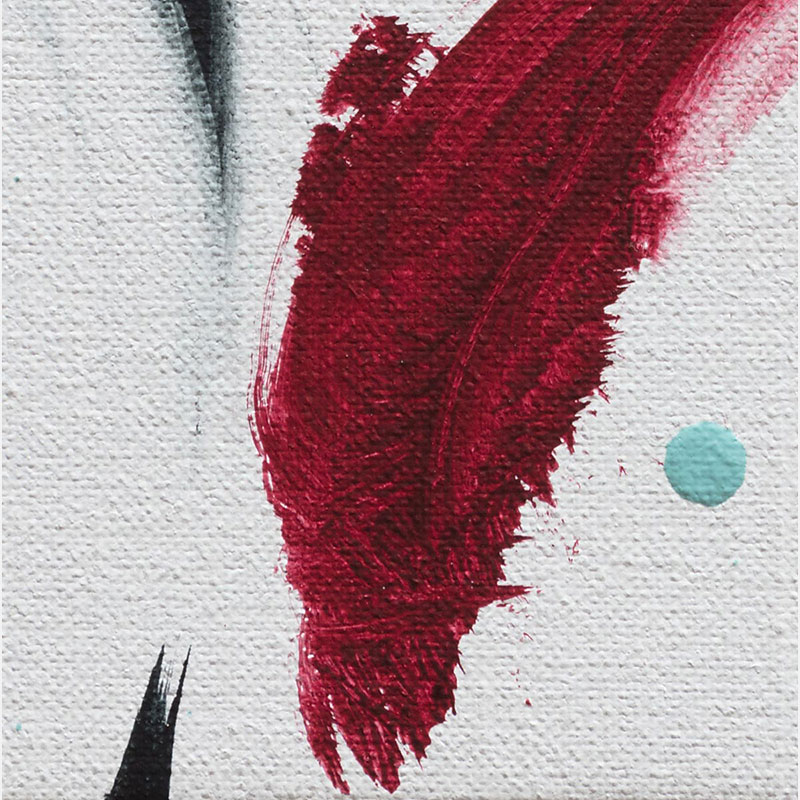
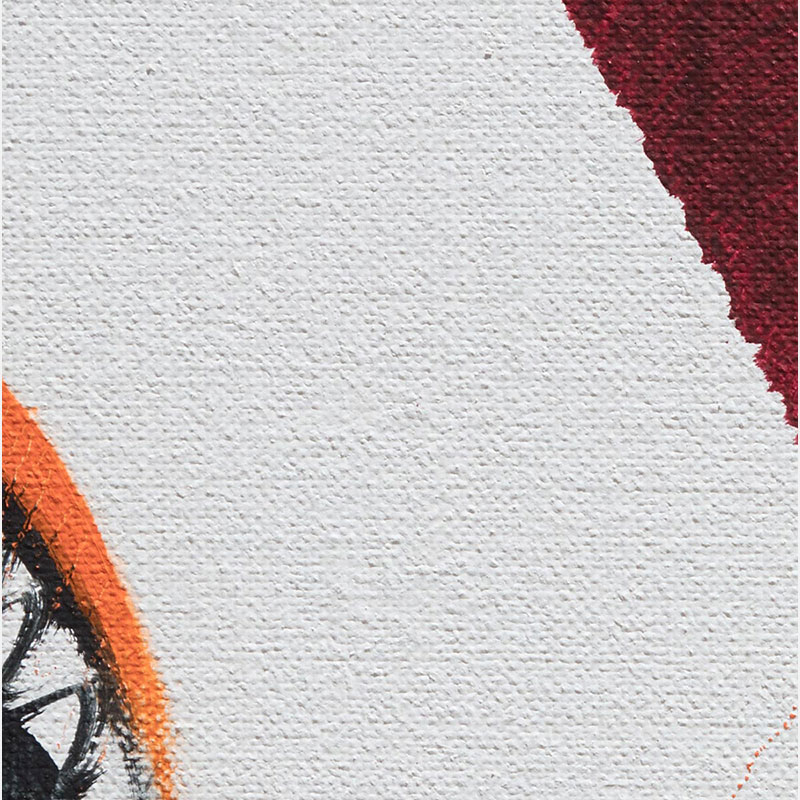
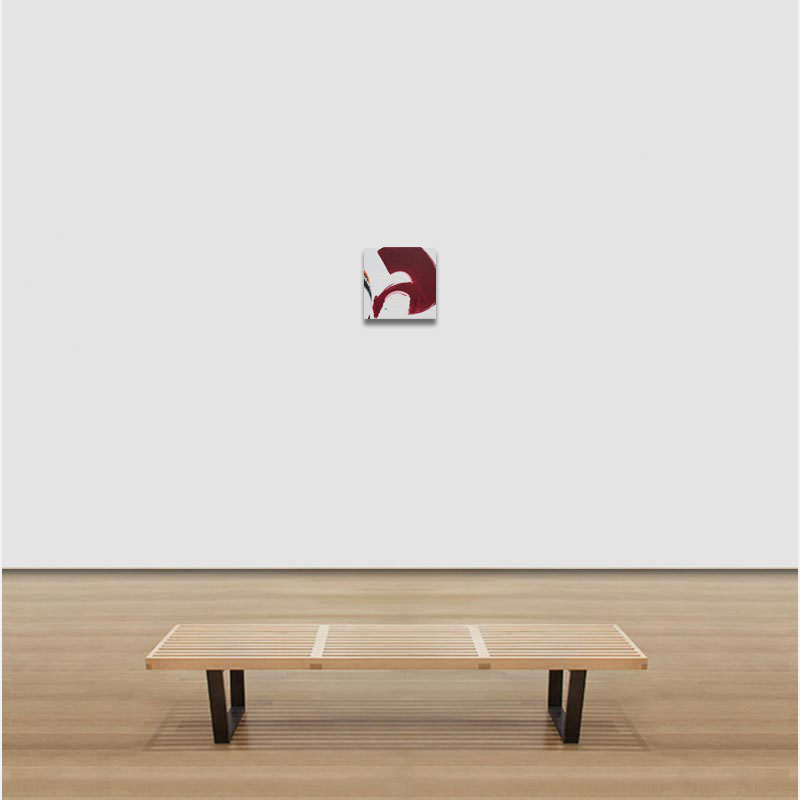
A maroon fan swings across the upper right, thick and dark, then hooks back under itself in a second stroke that scoops the white. Inside the hook, two faint circles, one dotted in orange and one in graphite, sit on the bare canvas. At the left edge an orange arc and a black comb enter, and a single turquoise dot rests below. One large movement wraps itself around a space it leaves empty, weighty and decisive.
A maroon fan swings across the upper right, thick and dark, then hooks back under itself in a second stroke that scoops the white. Inside the hook, two faint circles, one dotted in orange and one in graphite, sit on the bare canvas. At the left edge an orange arc and a black comb enter, and a single turquoise dot rests below. One large movement wraps itself around a space it leaves empty, weighty and decisive.
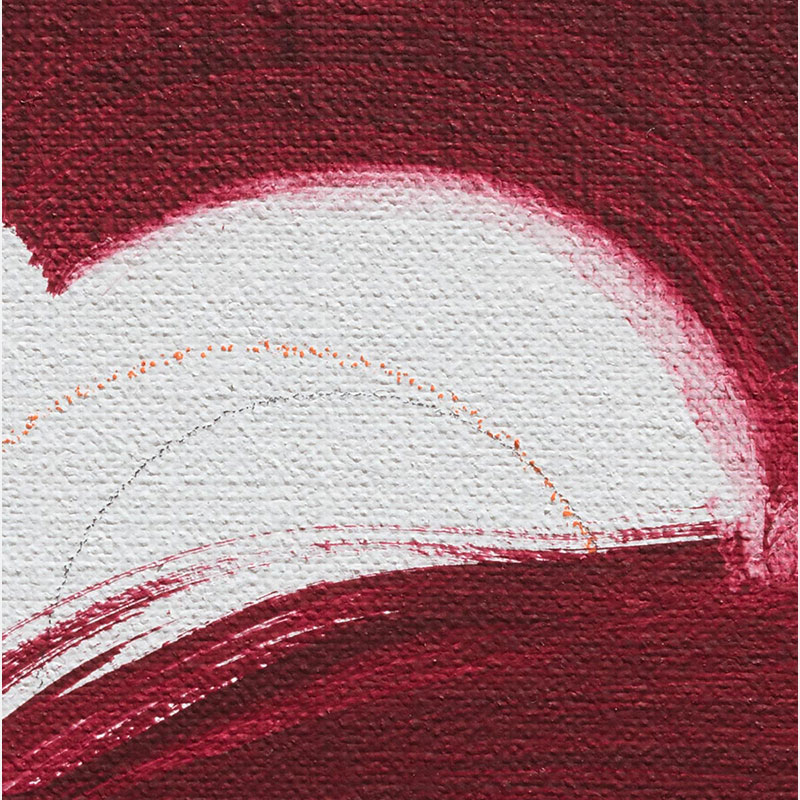
Concentric grooves ridge the fan, and its inner edge curves round the drawn circles. They read as the pivot, a marked centre with the stroke turning round it at a distance. They are barely there, a dotted orange line and a thin graphite one, yet they carry the structure. The second stroke wraps the first instead of correcting it. The comb at the left edge is dry brush at the moment of leaving, and the turquoise dot is the only cool note.
Roberto Caracciolo has called the square grid a limit that enables greater freedom. The drawn circle does that work here. It fixes the radius, and the stroke is made to its measure. The hook closes the gesture without closing the circle, which stays open to the canvas.