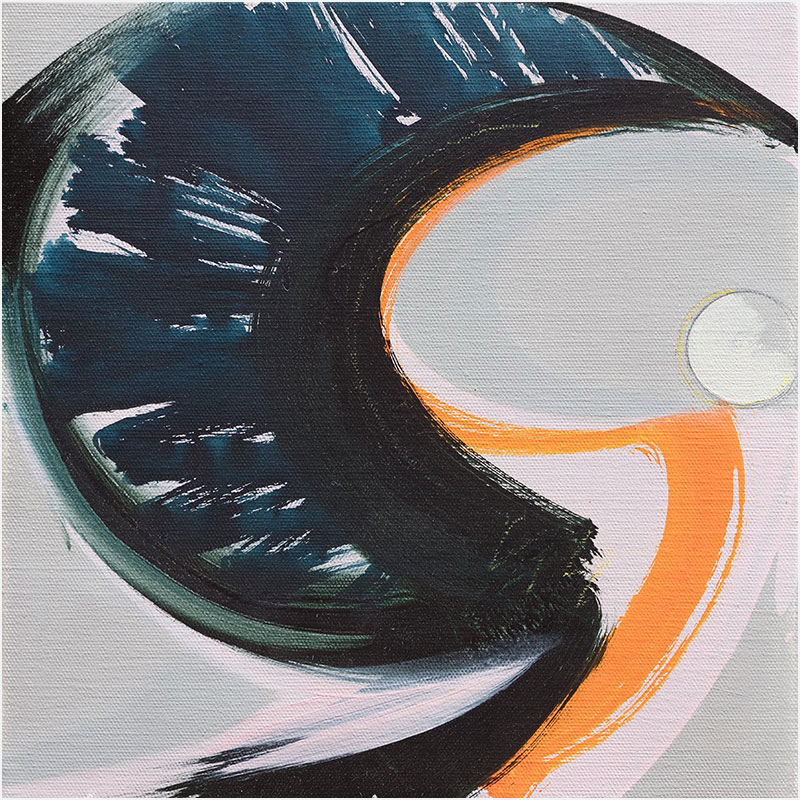
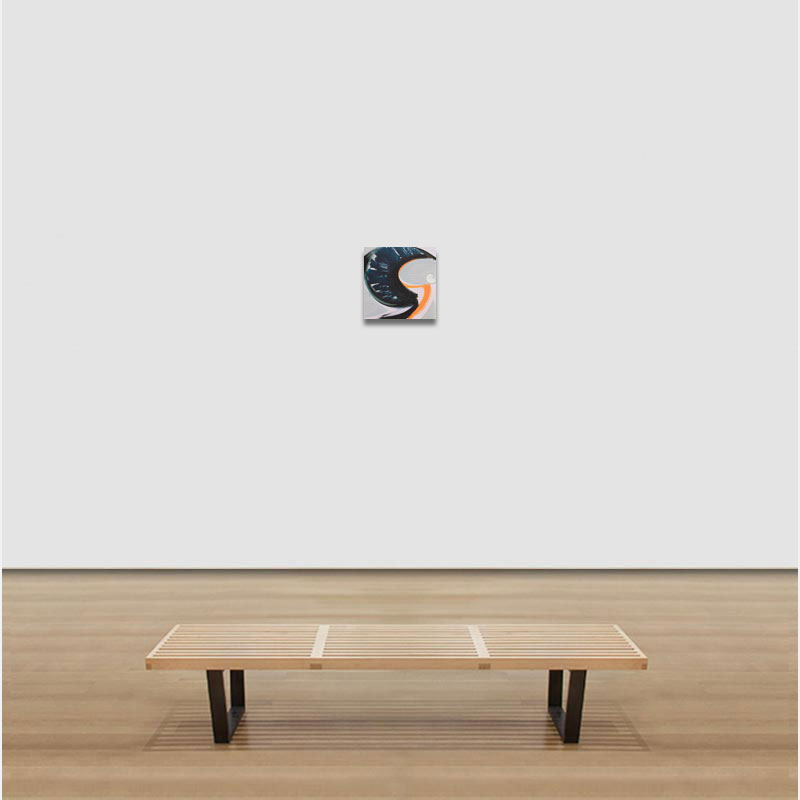
Nocturnal and sudden, a navy-teal crescent streaked with bare ground faces a thick black one. Between them an orange line hooks through the grey in an S, bright as a struck match. At the right edge a pale disc, outlined in yellow, rests on the ground. A rim of pale pink traces the edges of the dark forms. The palette runs from deep water to soot to one hot line, and the whole painting seems lit from within.
Nocturnal and sudden, a navy-teal crescent streaked with bare ground faces a thick black one. Between them an orange line hooks through the grey in an S, bright as a struck match. At the right edge a pale disc, outlined in yellow, rests on the ground. A rim of pale pink traces the edges of the dark forms. The palette runs from deep water to soot to one hot line, and the whole painting seems lit from within.
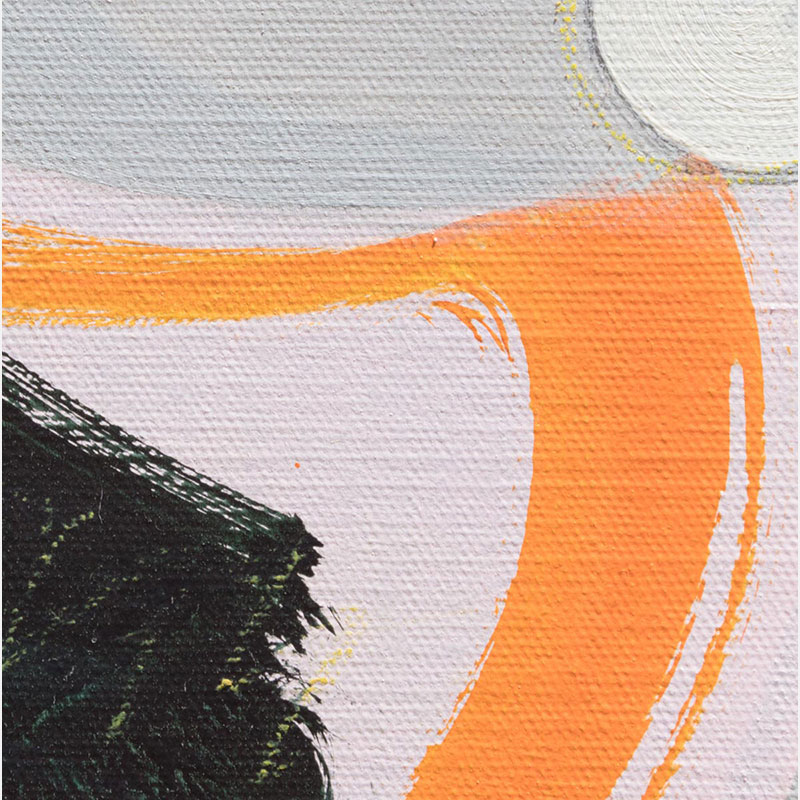
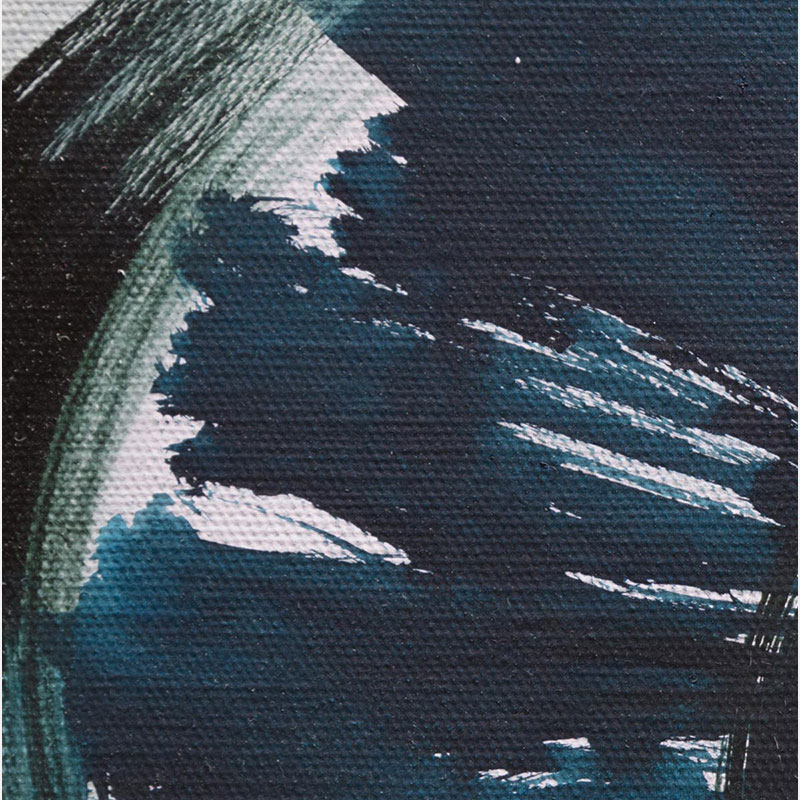
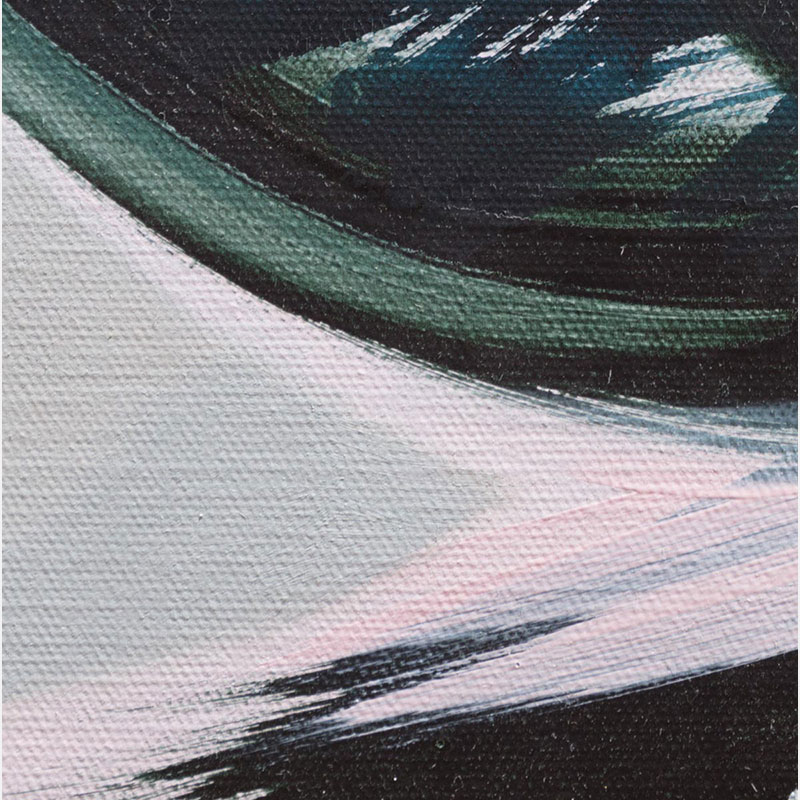
The orange is one long stroke, hooking around the dark masses at full speed. The black crescent frays at its foot where the brush lifted, and the teal shows white where the bristles ran dry. The disc is the one closed form, a thin contour in graphite and yellow, and the strokes curve around it. Grey is ground and mass at once.
Roberto Caracciolo's orange commits to one hook around the dark masses, arrives once and is left to stand. Brice Marden's line paintings, where long, looping calligraphic lines cross the whole field, show the other possibility, a line that never settles.