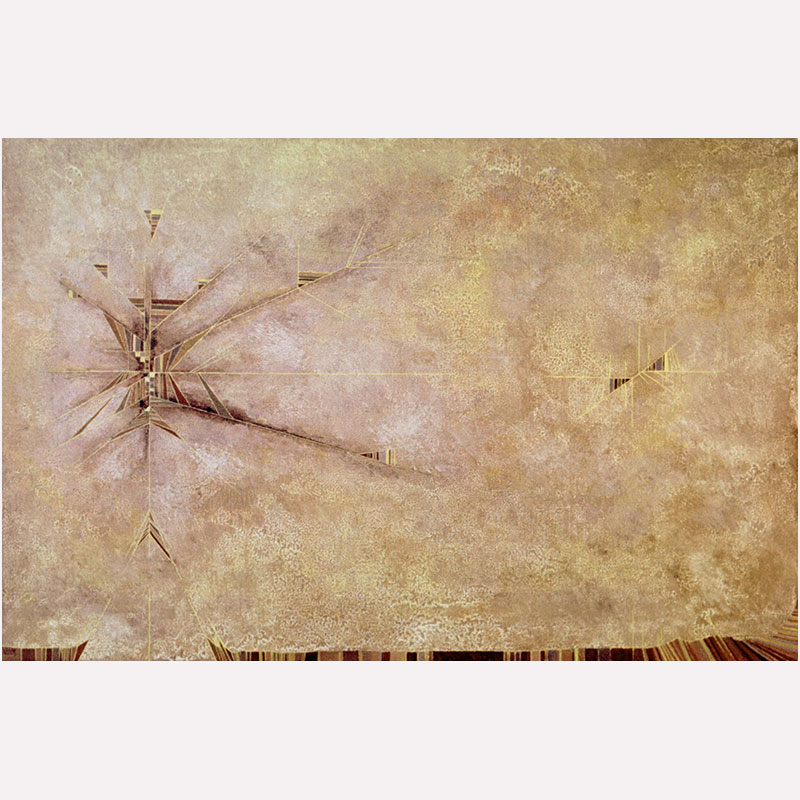
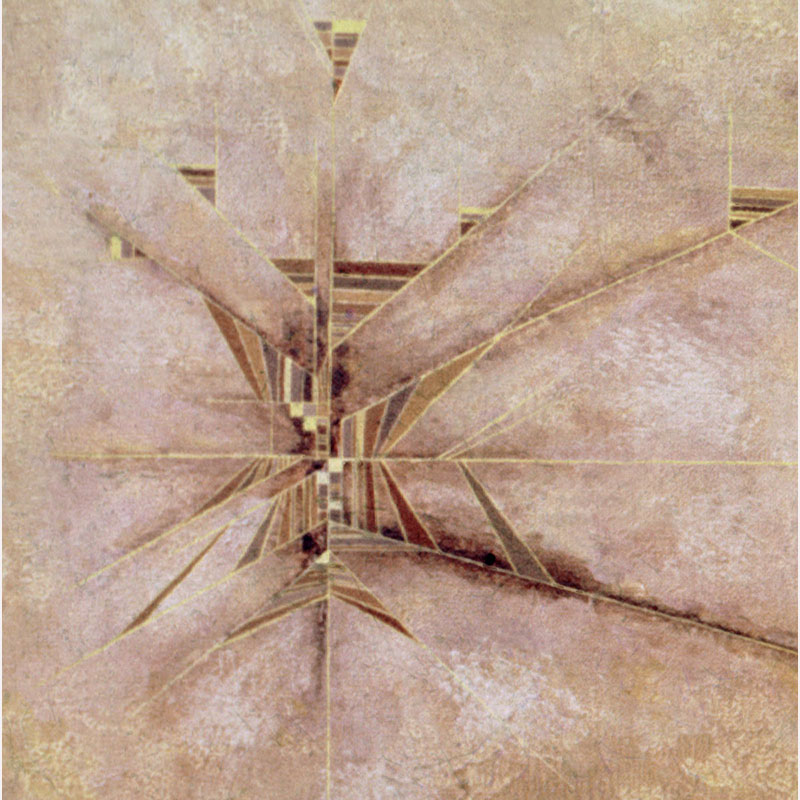
In Alba mitologica [Mythological Dawn], Vanni constructs a suspended architecture of light and linear force above a dense, textured field. The softly luminous palette, primarily warm beige, ochre, and pale rose, marks a departure from the intense hues of earlier works and points toward the restrained tonalities that will define much of his painting in the 1960s. At the left, a radiating crystalline form anchored to the vertical axis draws the eye toward the composition's gravitational center, exerting a visible pull on the surrounding field.
In Alba mitologica [Mythological Dawn], Vanni constructs a suspended architecture of light and linear force above a dense, textured field. The softly luminous palette, primarily warm beige, ochre, and pale rose, marks a departure from the intense hues of earlier works and points toward the restrained tonalities that will define much of his painting in the 1960s. At the left, a radiating crystalline form anchored to the vertical axis draws the eye toward the composition's gravitational center, exerting a visible pull on the surrounding field.
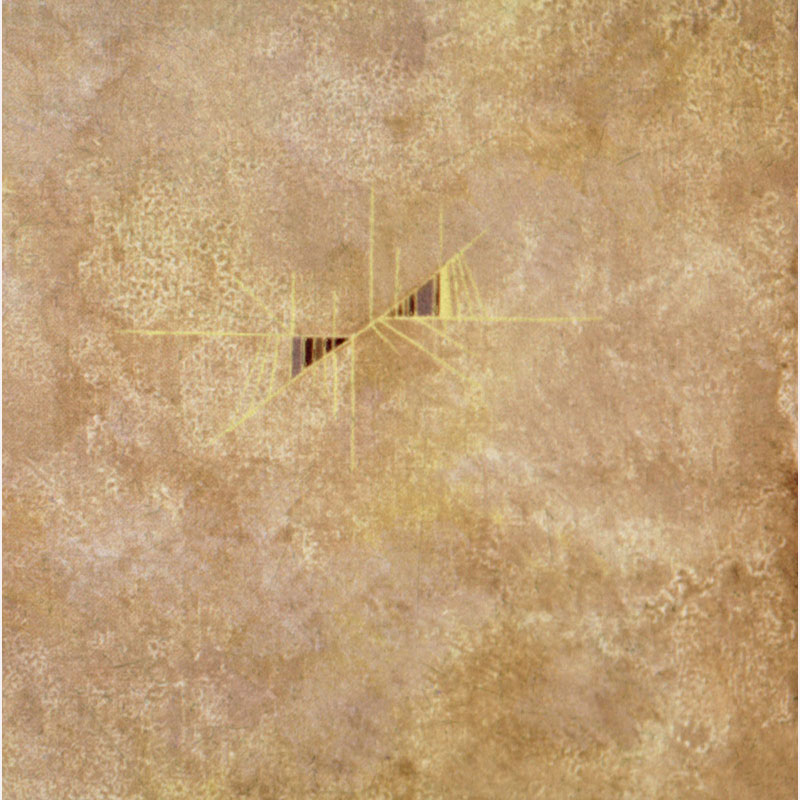
A more delicate echo of this form appears to the right, creating a play of scale and counterbalance. The chromatic field, far from passive, shows extraordinary surface variation created through subtle layering and eroded edges that evoke geological time or ancient fresco.
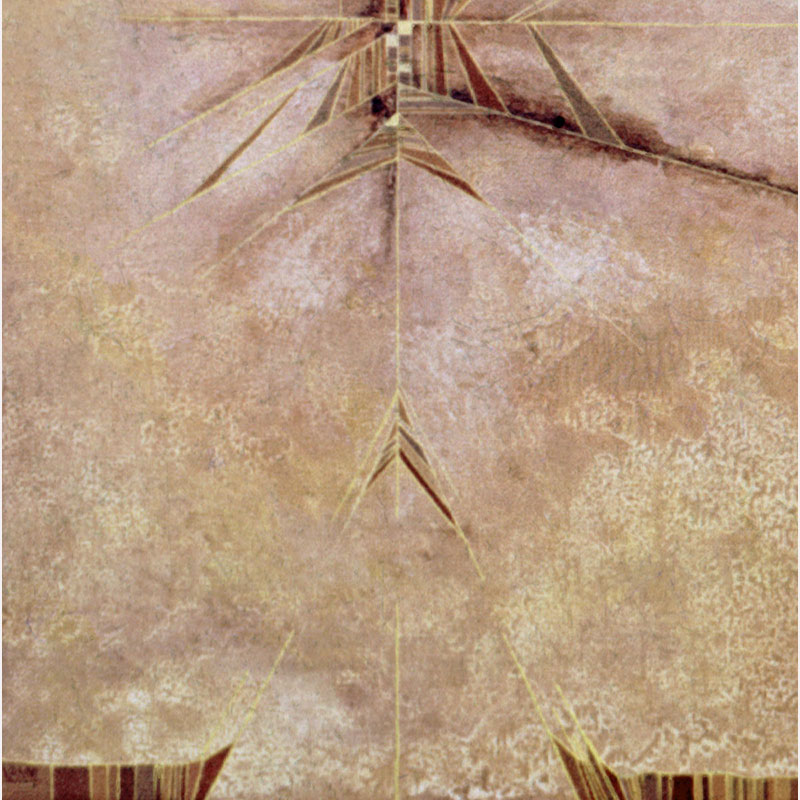
Along the lower margin, a vertical strip structure that in earlier works functioned as a compositional footnote now actively participates in the internal logic of the painting. Rather than existing outside the main composition, it anchors and mirrors the geometry above, breaking the earlier hierarchy between structure and margin. Alba mitologica concludes this body of work not with closure but with transformation. The restrained palette, spatial clarity, and tonal resonance signal a new direction, where the metaphysical presence of form emerges through its very restraint. The heightened texture and graphic restraint align with Vanni's exposure to the material tactility of Action Painting in New York, yet his interest remains structural and symbolic, more attuned to Klee's visual poetics than to the spontaneity of De Kooning or Pollock.