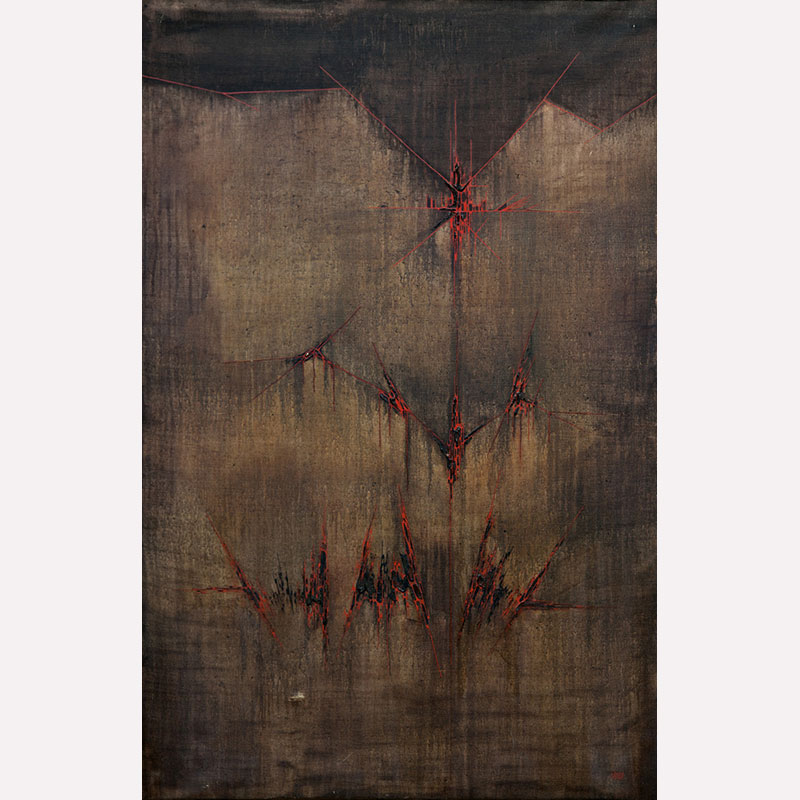
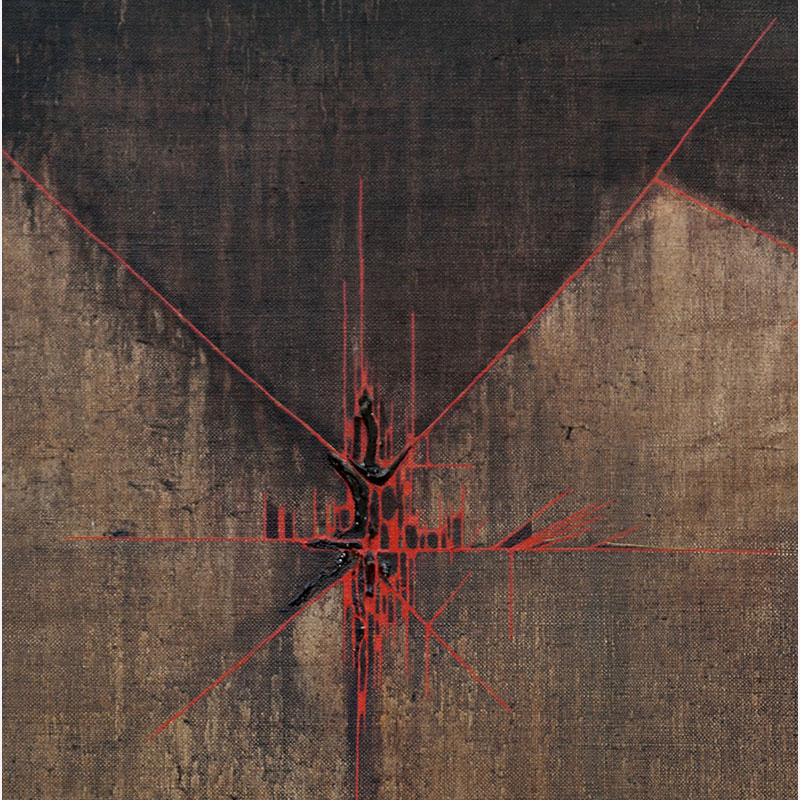
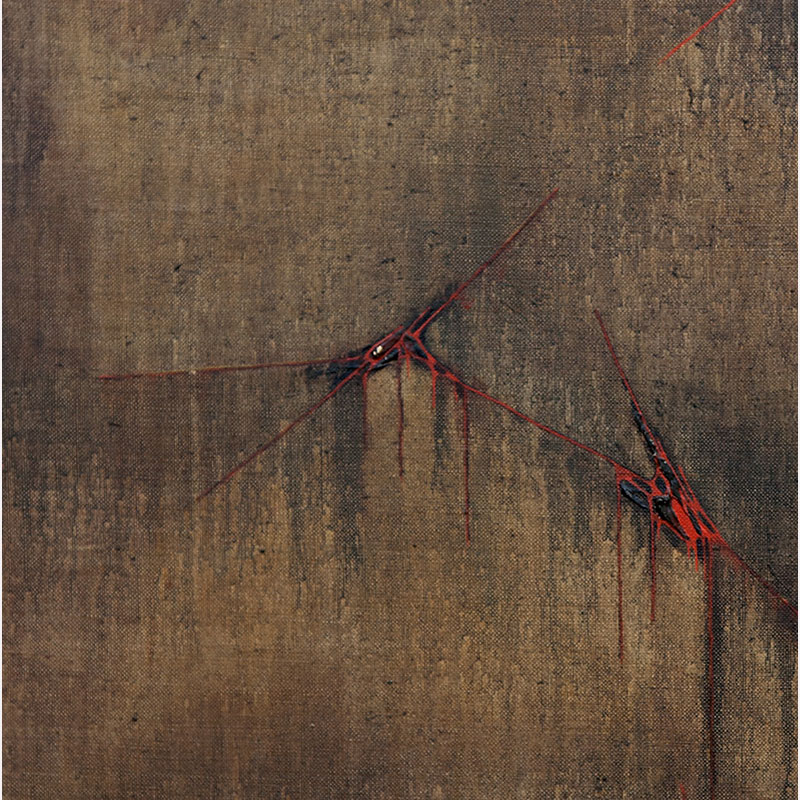
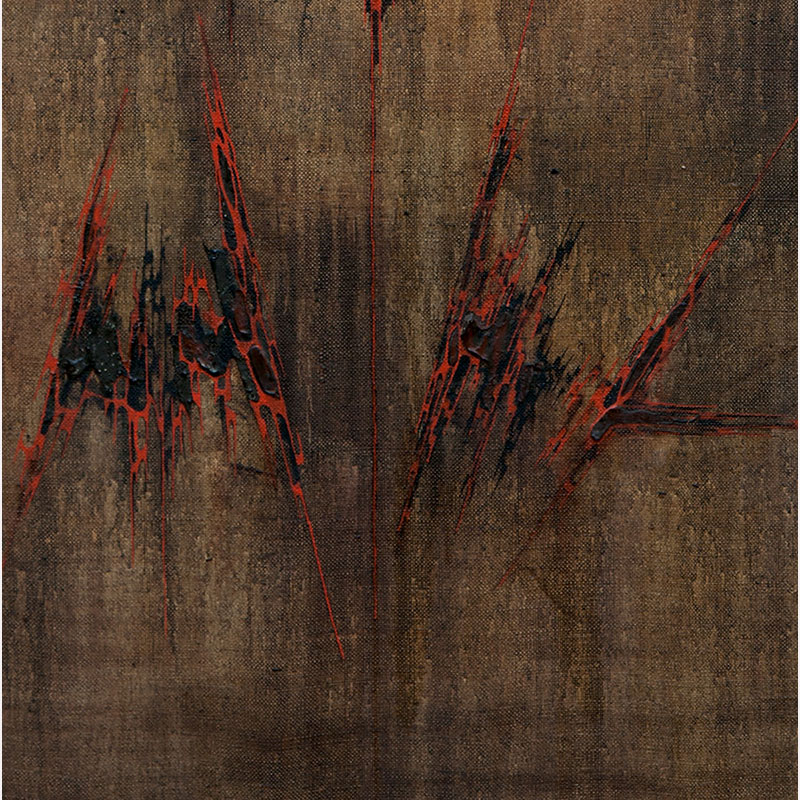
In Evocazione [Evocation], Vanni thickens the material register of his language. The surface becomes darker, denser, and more tactile, not as a backdrop but as a full participant in the painting's structure. Here, Vanni intervenes on a field of impastoed pigment with incised red lines and structures that seem to both emerge from and cut into the surface, like live electrical filaments etched into burnt earth. The earlier floating geometries are now embedded, their outlines melted into the substance of the work itself.
In Evocazione [Evocation], Vanni thickens the material register of his language. The surface becomes darker, denser, and more tactile, not as a backdrop but as a full participant in the painting's structure. Here, Vanni intervenes on a field of impastoed pigment with incised red lines and structures that seem to both emerge from and cut into the surface, like live electrical filaments etched into burnt earth. The earlier floating geometries are now embedded, their outlines melted into the substance of the work itself.
The force lines no longer describe movement across space but appear to originate from within the very matter of the painting. Vanni eliminates any separation between figure and ground: everything seems forged from the same elemental material, as if captured at different states of tension, compression, or ignition. The field does not host the forms; it is the form, continuously in flux, structured by scars, tremors, and eruptions.
Evocazione signals the beginning of a transition. Texture becomes not simply surface treatment but a mode of expression in itself. What once appeared diagrammatic now verges on alchemical, with image and matter fused into a single, unfolding process. The heightened impasto and dynamic linear tensions suggest an awareness of the broader postwar shift toward material presence, though Vanni's approach remains introspective and syntactic, more aligned with a structured ambiguity than pure gesture.