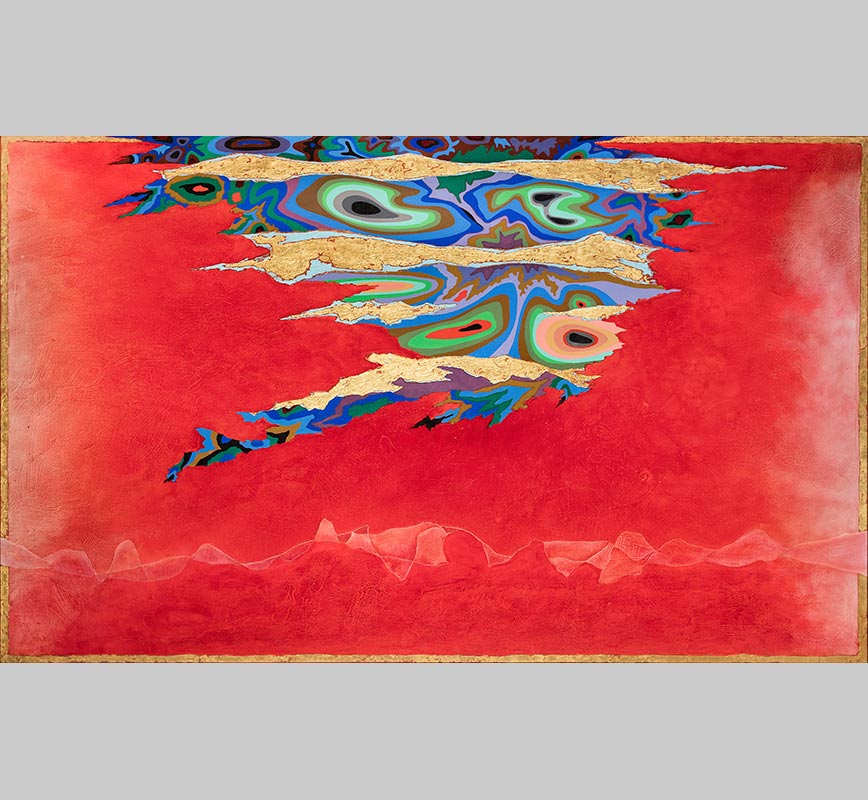
Descrizione di una Corrente [Description of a Current], 1954
Oil on Canvas
17.7 x 25.6 in
45 x 65 cm
Private Collection, Mondragone, Italy
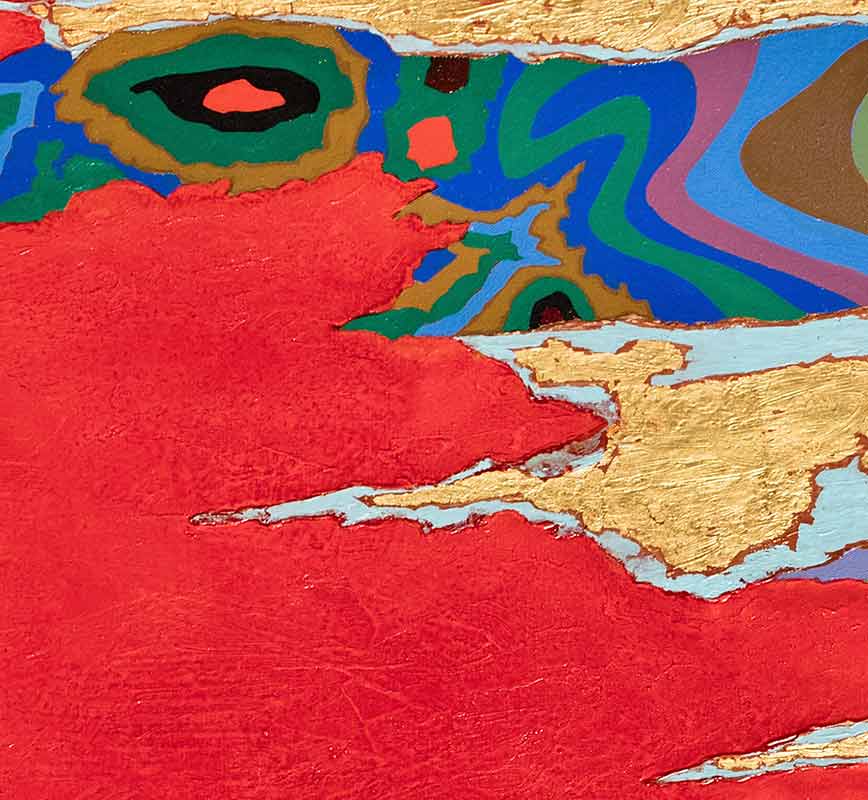
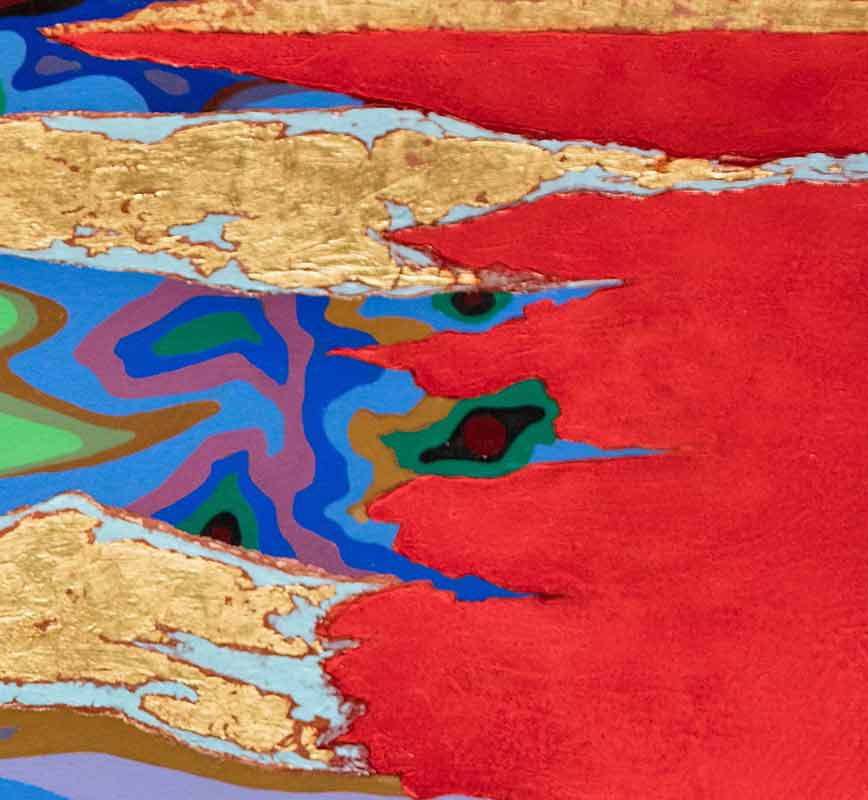
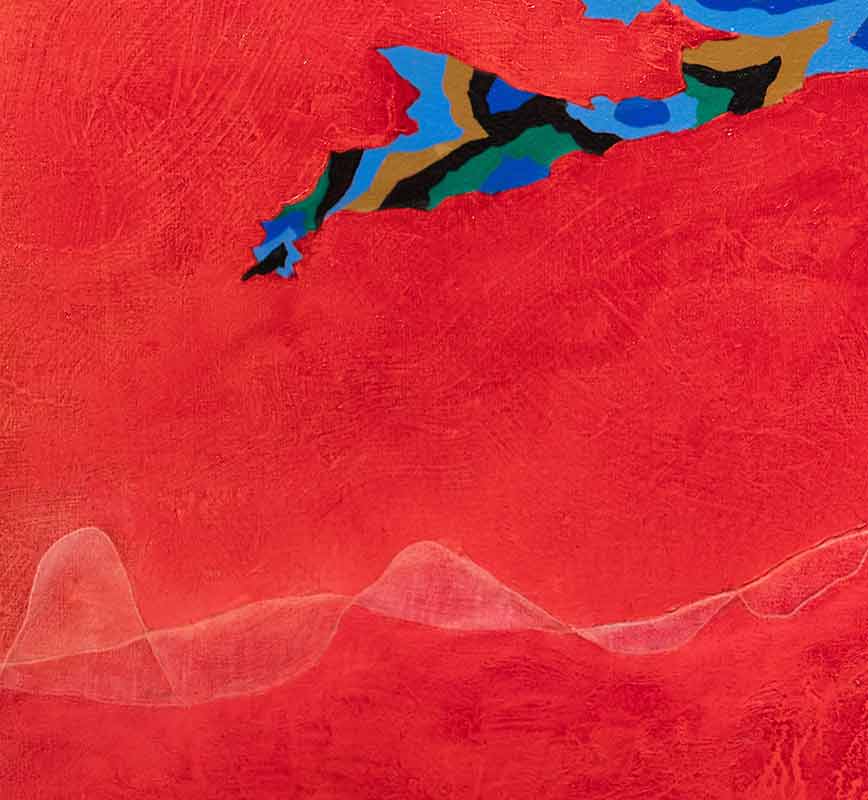
In Descrizione di una corrente [Description of a Current], Vanni expands the prismatic vocabulary first developed in the Yale paintings, introducing a pulsing rhythm of dots that overlays and animates the underlying structure. While the faceted planes remain, they are no longer stable. A new energy moves through the painting, less a composition than a field in motion. The chromatic tesserae in red, violet, orange, and indigo are traversed by a network of dashes and dots signaling an internal current.
In Descrizione di una corrente [Description of a Current], Vanni expands the prismatic vocabulary first developed in the Yale paintings, introducing a pulsing rhythm of dots that overlays and animates the underlying structure. While the faceted planes remain, they are no longer stable. A new energy moves through the painting, less a composition than a field in motion. The chromatic tesserae in red, violet, orange, and indigo are traversed by a network of dashes and dots signaling an internal current.
Vanni described this force as "subterranean pulsations": a pressure that seems to push and bend the geometry from within rather than impose itself from without.
The influence of Albers is still present, especially in the chromatic relationships and precise modulation of color. But the sensibility has shifted. Here, color becomes kinetic, perceptually unstable, vibrating across surfaces that simultaneously hold and disrupt it. The dot matrix, echoing Divisionist technique yet stripped of figuration, creates a vibration that reads as both optical and conceptual. Where earlier works constructed still structures shaped by color, this one introduces the idea of painting as a system of tensions: form not fixed but carried along by the invisible logic of a current.