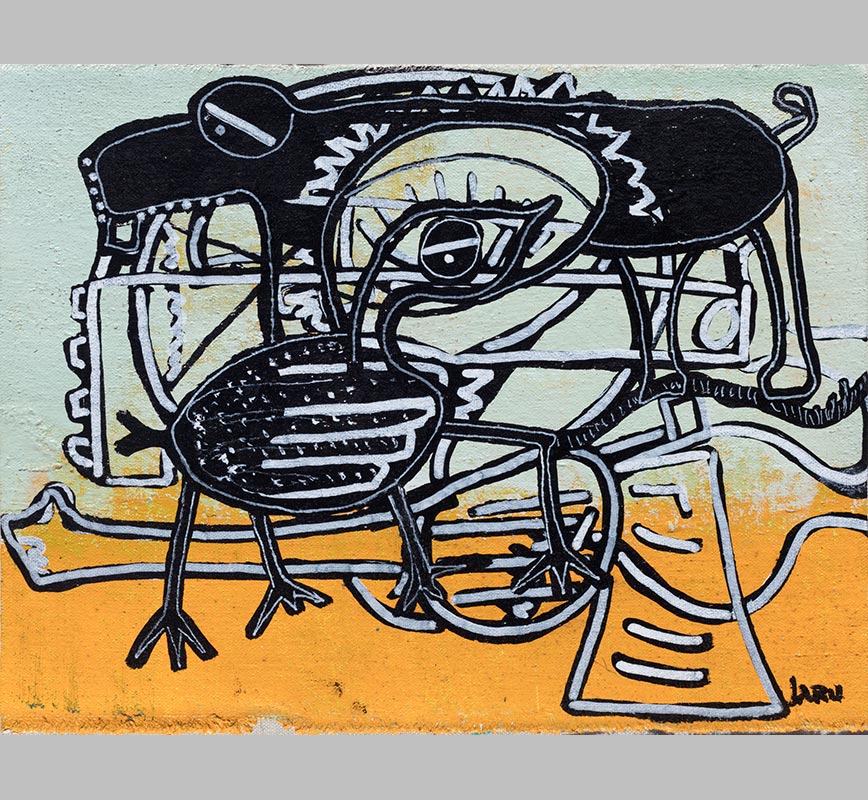
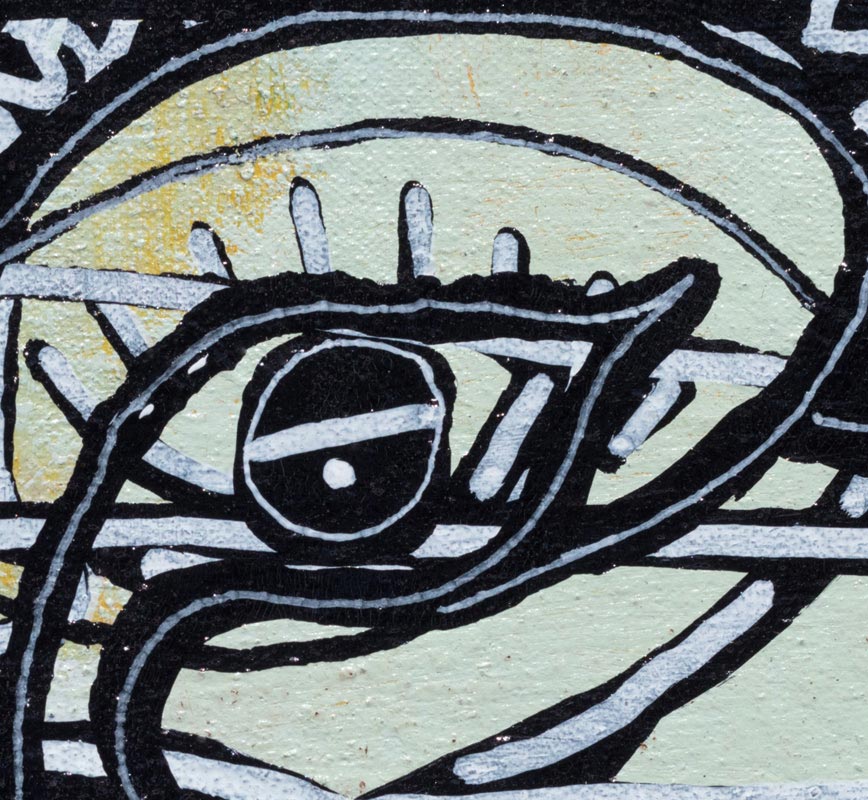
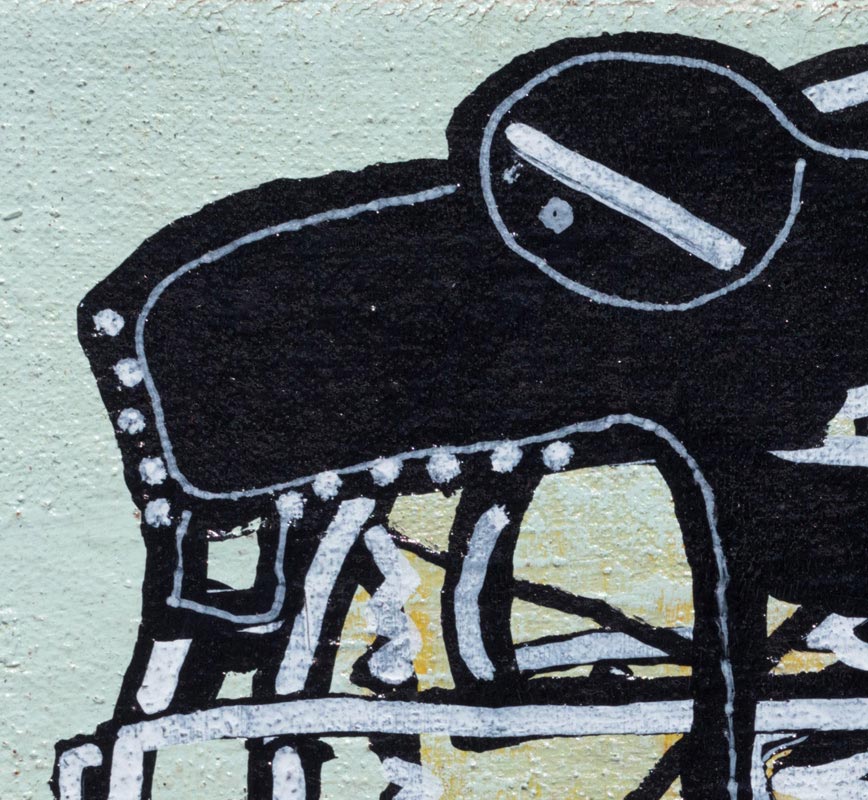
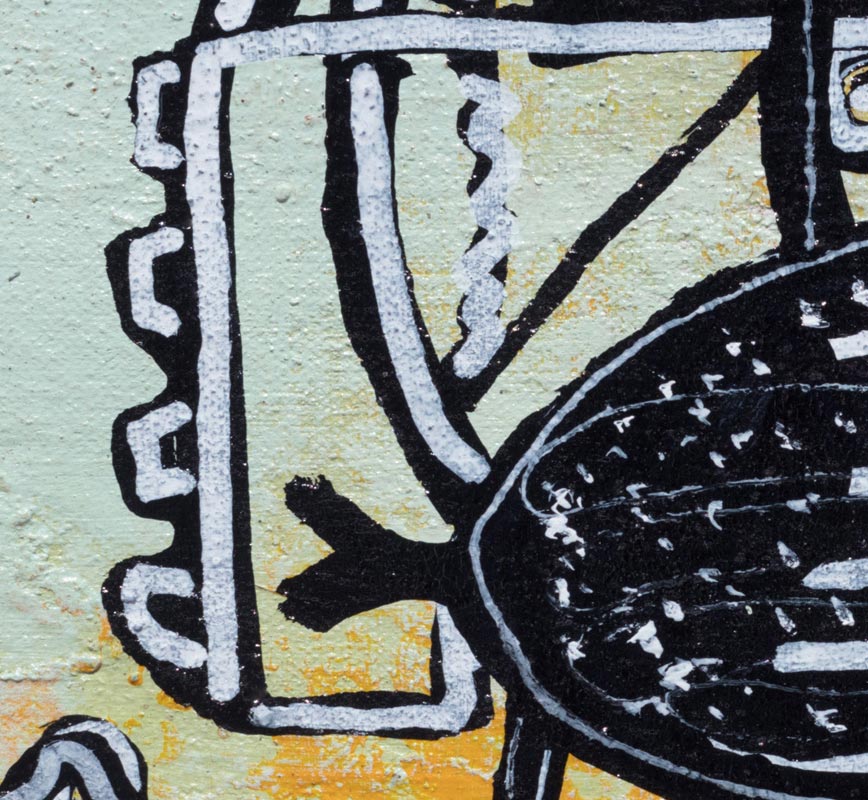
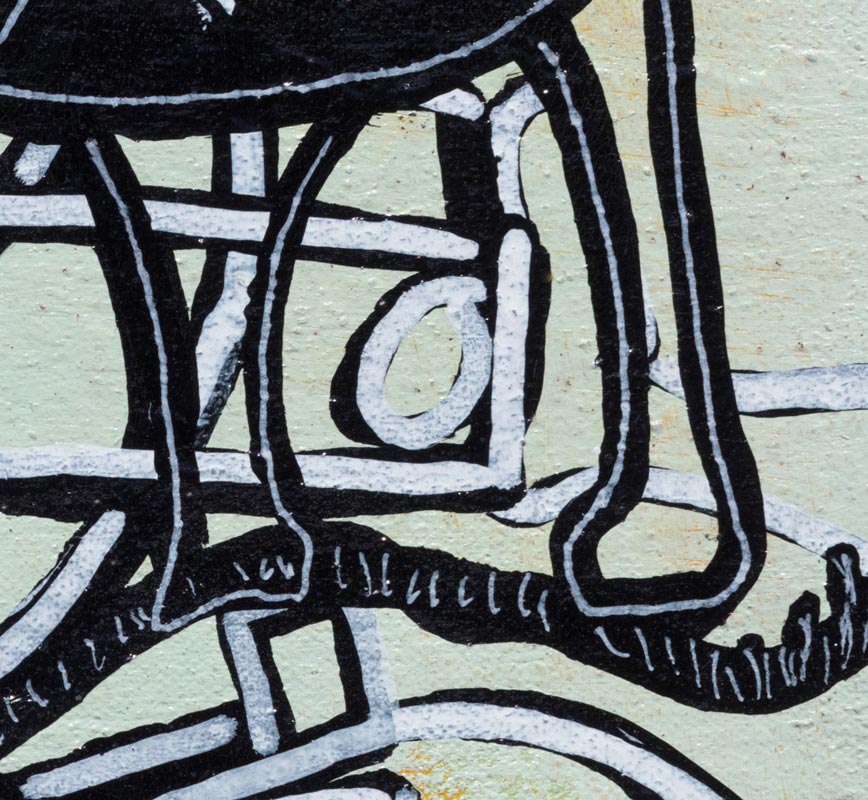
Germ Goes Fishing fills its surface with the energy of a world in perpetual motion: fish at the bottom, creatures reaching for objects mid-composition, a looming figure with an extended arm casting bait across the upper field. The speech bubbles, “Wet and Wild,” “Build to Hold,” distribute themselves like overheard commentary from participants in a game whose rules no one has fully explained. The composition captures the precise sensation of the world the series describes: everyone fishing, no one certain what they are fishing for.
Germ Goes Fishing fills its surface with the energy of a world in perpetual motion: fish at the bottom, creatures reaching for objects mid-composition, a looming figure with an extended arm casting bait across the upper field. The speech bubbles, “Wet and Wild,” “Build to Hold,” distribute themselves like overheard commentary from participants in a game whose rules no one has fully explained. The composition captures the precise sensation of the world the series describes: everyone fishing, no one certain what they are fishing for.
The fishing metaphor carries full satirical weight. Fishing requires patience, the right bait for the right target, and the acceptance that some days you catch nothing. It is also a waiting game: positioning yourself correctly and waiting for the environment to deliver or not. The looming figure with the extended arm has decided to act rather than wait, which in Jaru’s mythology is not necessarily the advantaged position.
The formal playfulness of Germ Goes Fishing is the vehicle for its critique, not a softening of it: serious argument delivered through a visual language that looks as if it is playing, the chase always the same, the outcome never settled, everyone fishing anyway. George Herriman’s Krazy Kat elevated the comic strip to genuine art by treating the absurd logic of its world with complete formal seriousness; Jaru works in this tradition with a subject that is entirely his own.