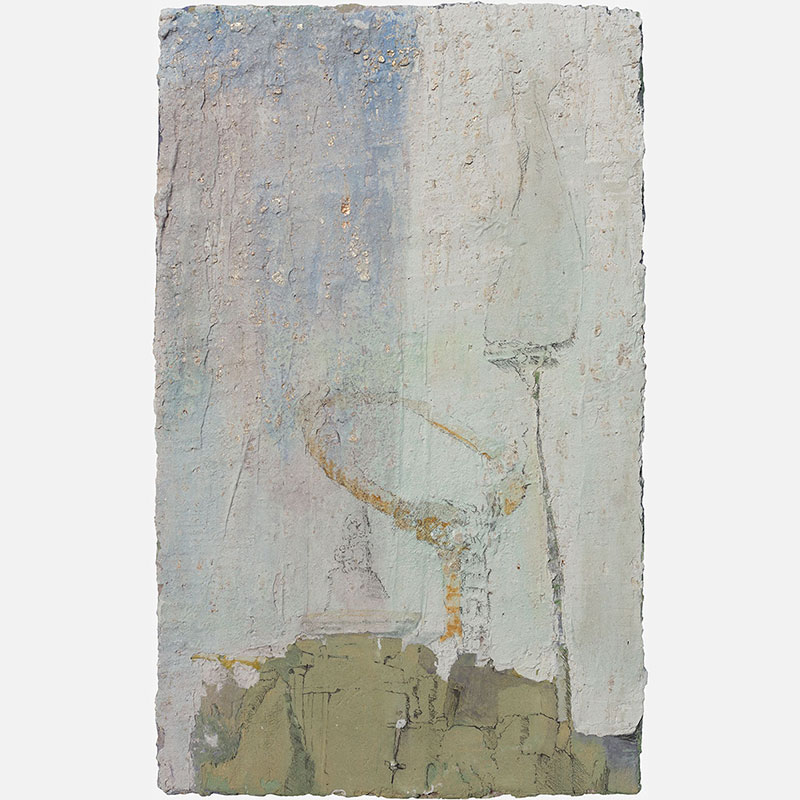
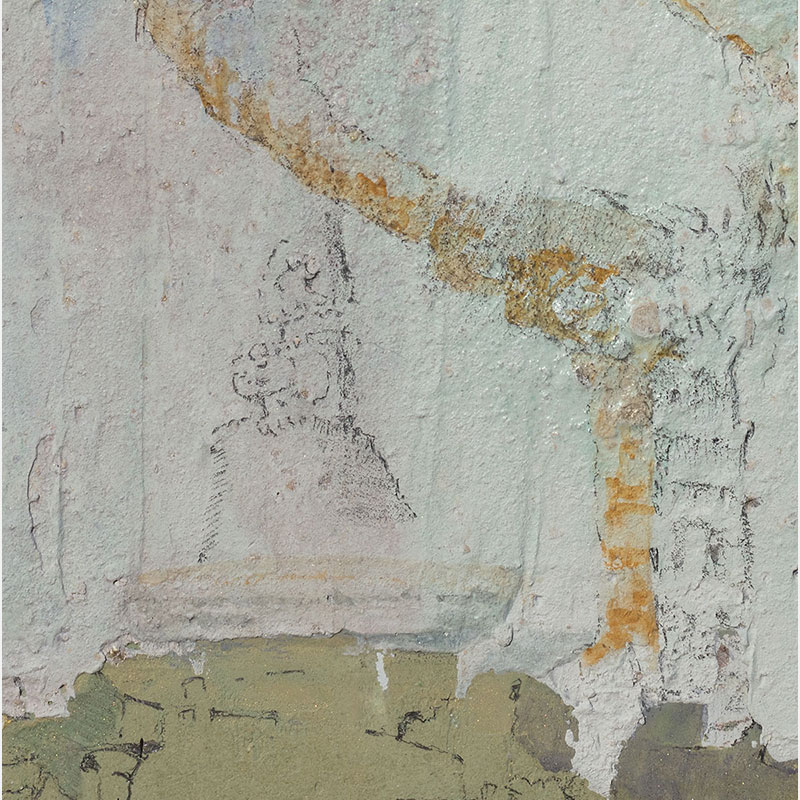
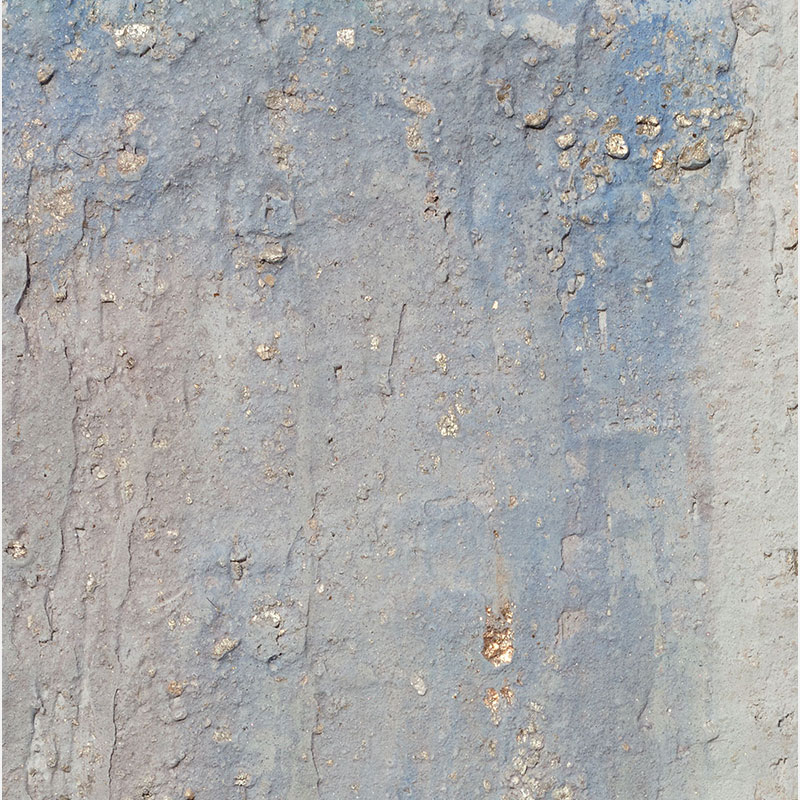
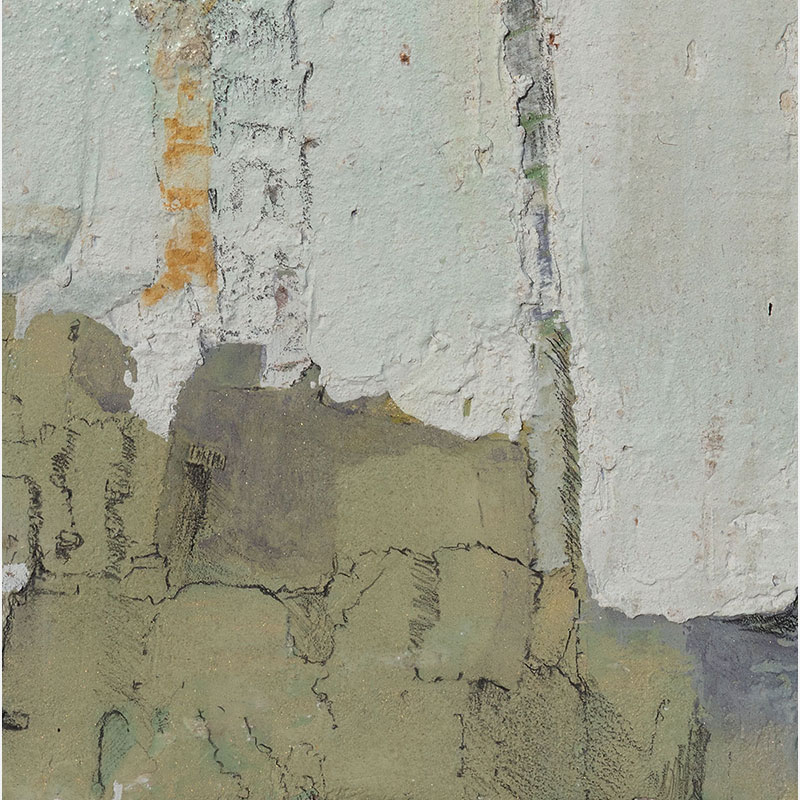
In Catching Equilibrium, Gregory Kitterle distills balance into a quiet fresco composition of pale greys, greens, and powdery blues. A delicate arch curves upward across the surface, meeting a faintly sketched vertical form that seems to hover between stability and collapse. The fresco's granular texture and subtle fissures lend the work an archaeological presence, as if it were a remnant retrieved from a wall long exposed to air and light. Kitterle transforms fragility itself into structure, finding stillness within erosion.
In Catching Equilibrium, Gregory Kitterle distills balance into a quiet fresco composition of pale greys, greens, and powdery blues. A delicate arch curves upward across the surface, meeting a faintly sketched vertical form that seems to hover between stability and collapse. The fresco's granular texture and subtle fissures lend the work an archaeological presence, as if it were a remnant retrieved from a wall long exposed to air and light. Kitterle transforms fragility itself into structure, finding stillness within erosion.
The fresco medium operates here as more than technique: it is the argument. Pigment absorbed into lime becomes part of the wall's mineral structure, inseparable from its support, unable to be lifted or restored without destroying the image. The arch and vertical trace in Catching Equilibrium are not drawn on a surface but deposited into one, which means that their apparent fragility is in tension with their actual permanence. Kitterle describes this as "the point just before things shift," a threshold state; the fresco medium is the one medium that holds the threshold without resolving it.
Agnes Martin's work pursues a structurally comparable inquiry through different means: pencil lines and tonal washes accumulated across large surfaces to produce a state of visual equilibrium that is never static, always held in the tension between the mark's precision and the surface's absorption. The imaginary architecture of ancient Roman fresco, particularly the trompe-l'oeil arches and vistas painted on Pompeian walls, deployed the same spatial ambiguity: structures that appeared to extend the room into a larger space, hovering between the actual wall and the world beyond it. Luca Signorelli's Orvieto cycle works in the same logic. Kitterle's arch in Catching Equilibrium inherits this layered tradition: ancient in its material, contemporary in its inquiry, a form deposited into the only medium capable of making that claim permanent.