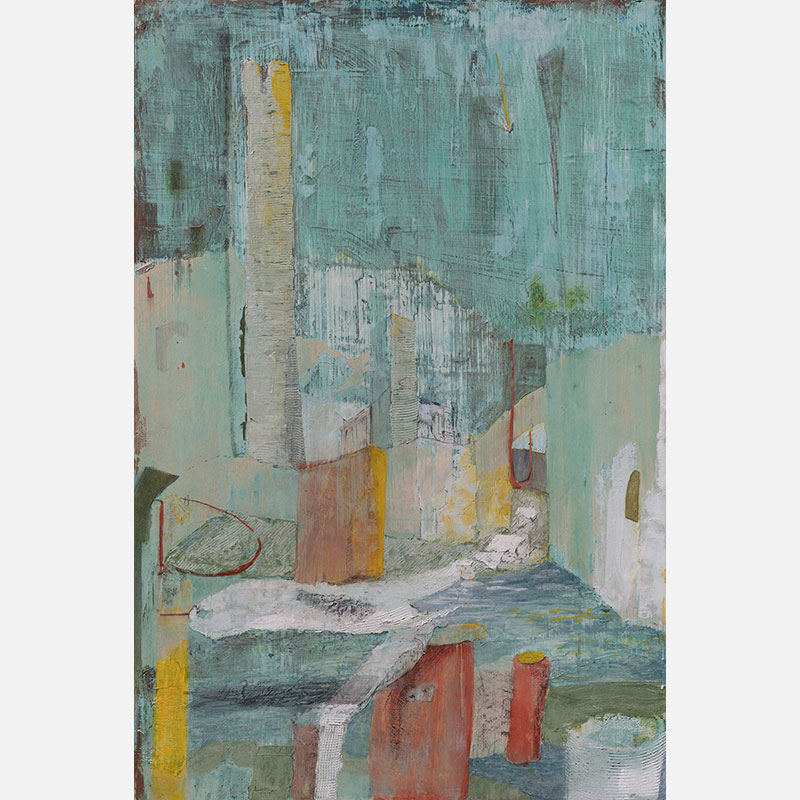
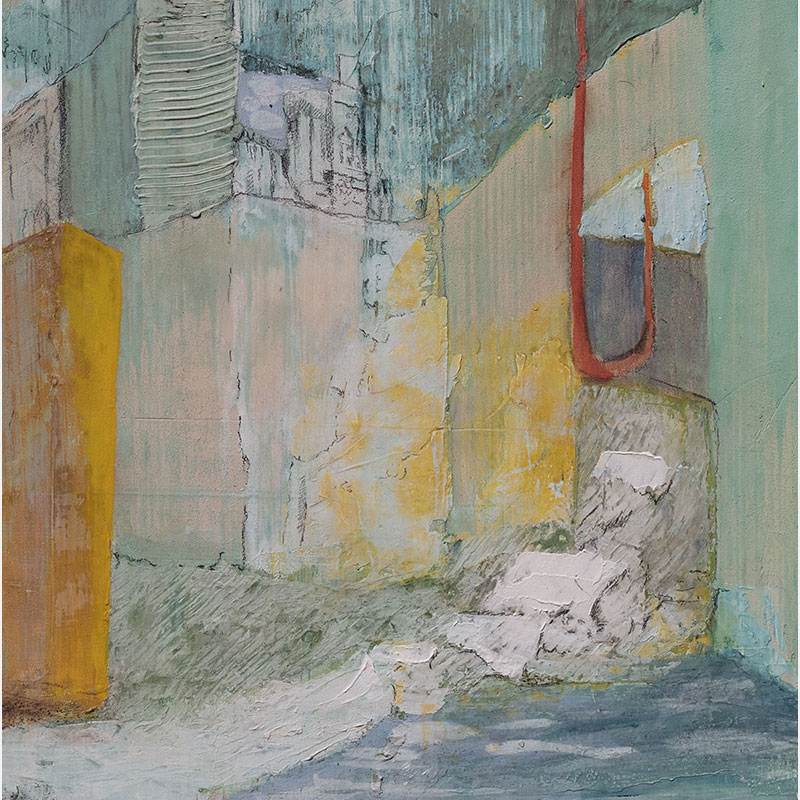
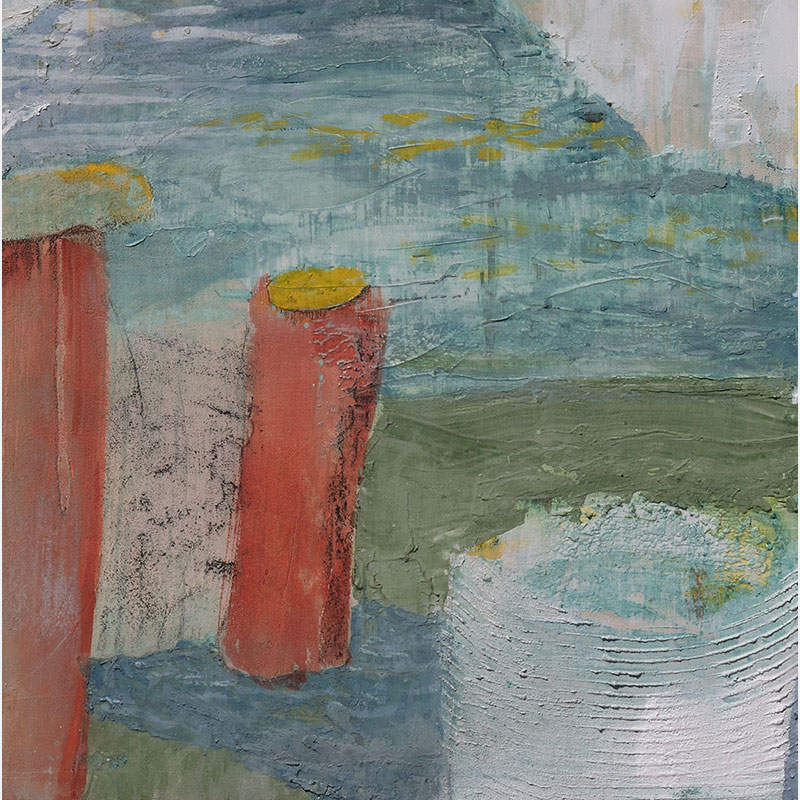
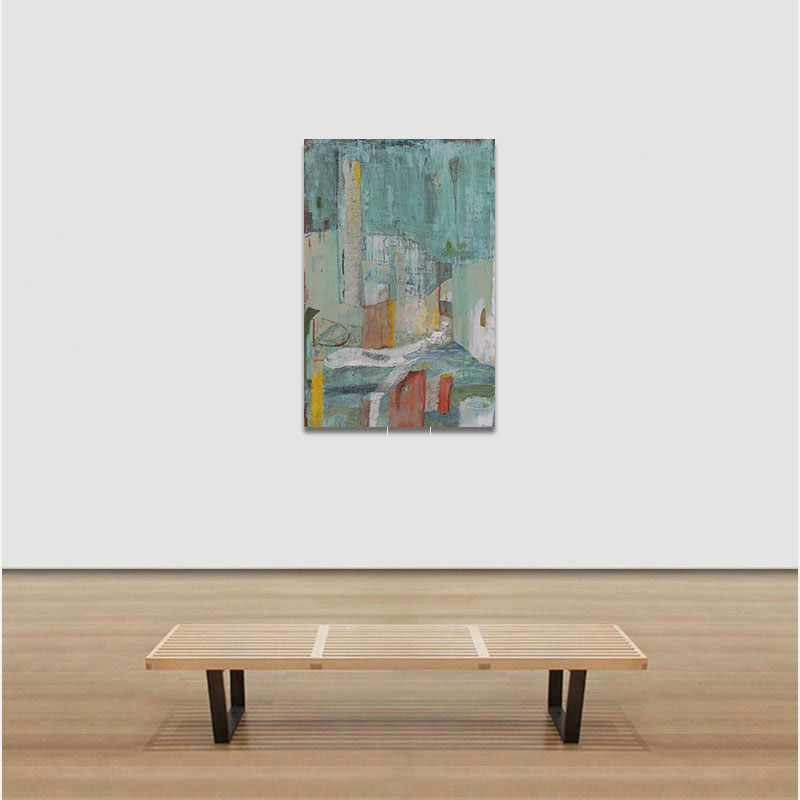
Patina Experiment #9 takes the archaeological logic of Kitterle's fresco practice to its limit: the surface has been scraped, layered, and marked by traces of repair until it reads as unearthed rather than made. Muted reds, ochres, and turquoise emerge against each other in a composition that cannot be described as a landscape or an abstraction without both terms applying simultaneously. The sense is of a wall section excavated from a structure that was already halfway gone.
In Patina Experiment #9 takes the archaeological logic of Kitterle's fresco practice to its limit: the surface has been scraped, layered, and marked by traces of repair until it reads as unearthed rather than made. Muted reds, ochres, and turquoise emerge against each other in a composition that cannot be described as a landscape or an abstraction without both terms applying simultaneously. The sense is of a wall section excavated from a structure that was already halfway gone.
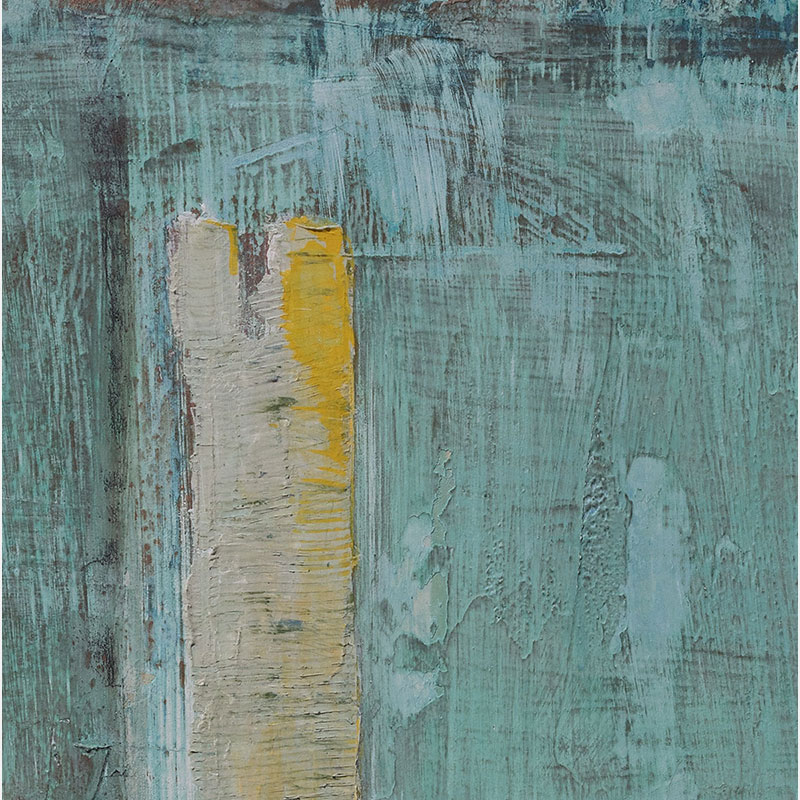
The patina process, which introduces a chemical reaction rather than an applied coating, is the key technical development this work represents. Unlike pigment, which is applied and controlled, patina is activated: the artist initiates the reaction but does not determine its exact form. The turquoise passages across the surface are not painted; they are the result of oxidation, verdigris produced when copper compounds meet the plaster environment. This is a material that carries time within its physical constitution in a way no ordinary pigment can.
The Arte Povera tradition, and specifically the practice of Jannis Kounellis, provides the critical vocabulary for this: matter that does not depict time or reference history but carries it as a physical property. Kounellis used oxidized iron, coal, and materials of deliberate industrial origin in works that made the aging of matter into a subject in itself. Kitterle reaches the same territory through a different tradition: the fresco-maker's knowledge that the surface changes after it is finished, that what is deposited in lime continues to live. Patina Experiment #9 makes that continuation visible.