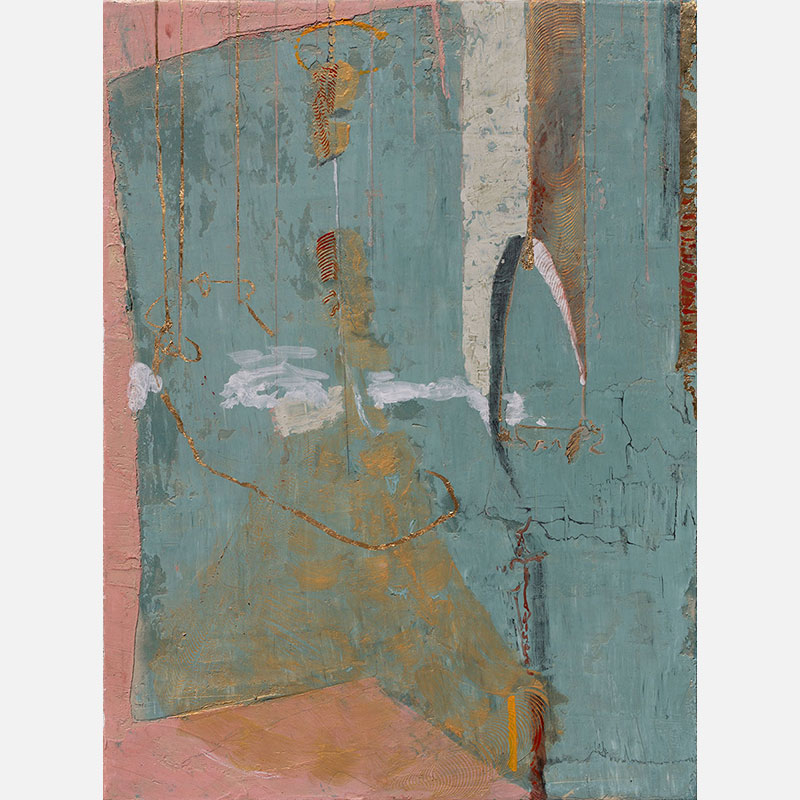
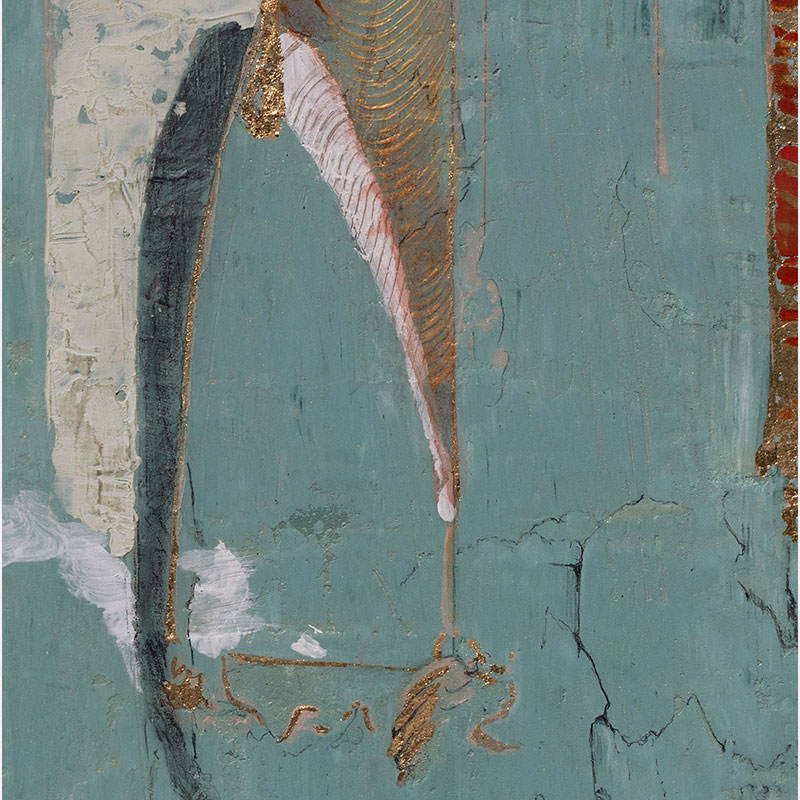
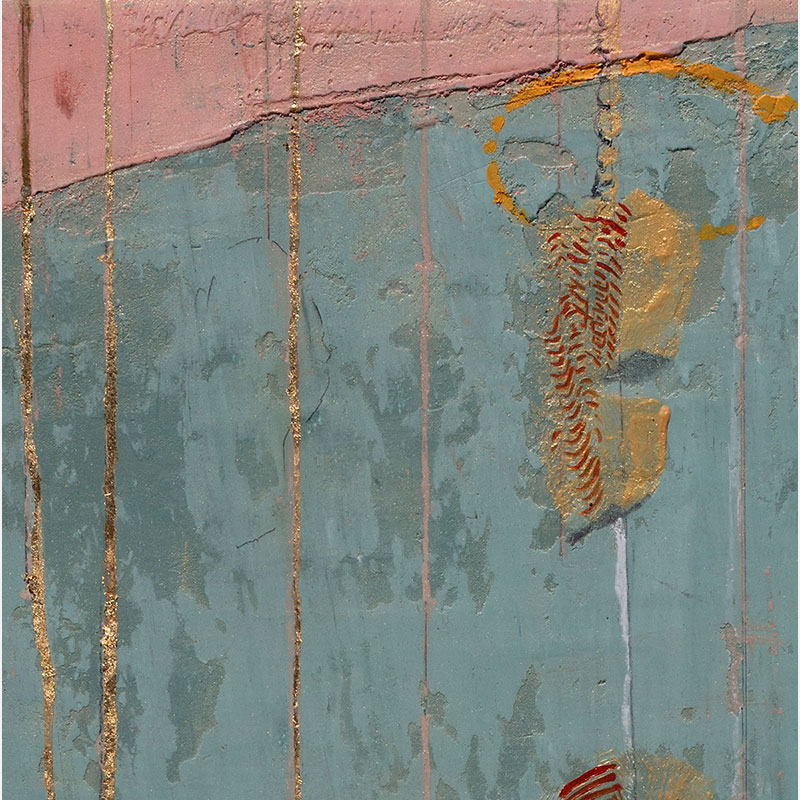
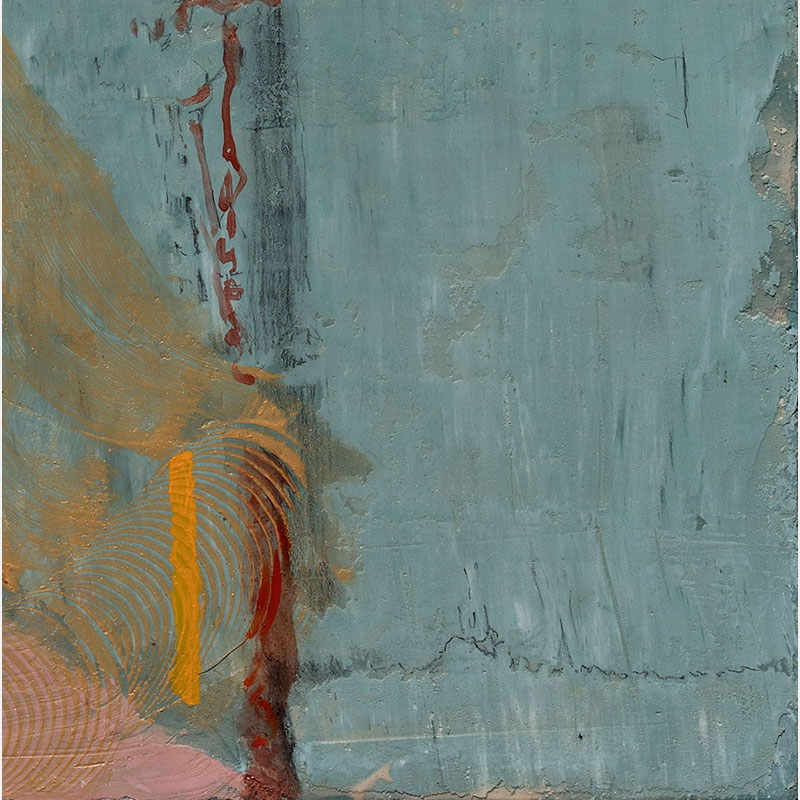
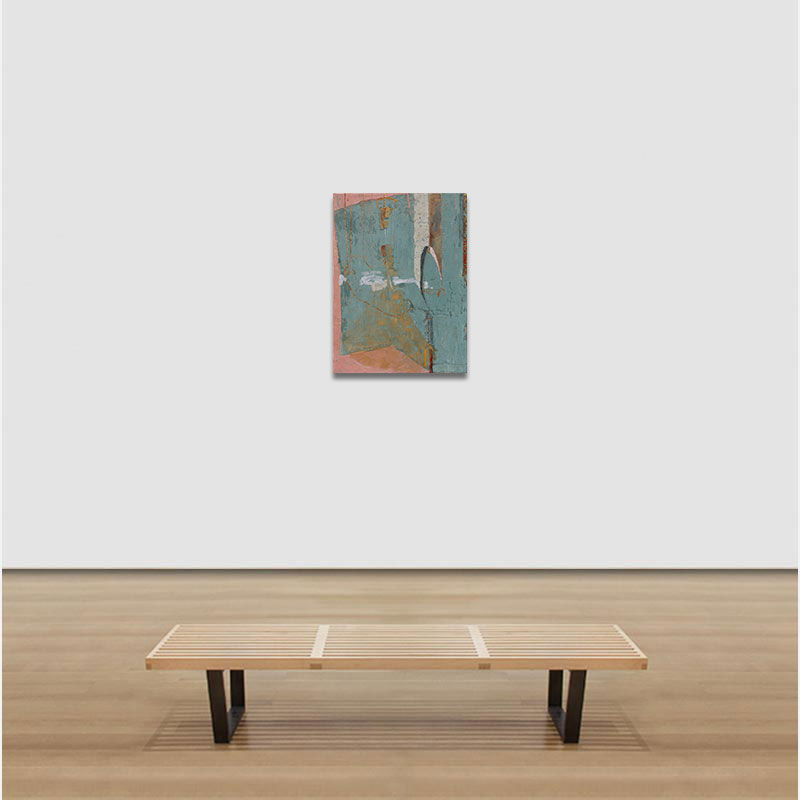
In Flat Space, Gregory Kitterle arranges planes of teal and rose into a composition that feels both architectural and lyrical. Drips, combed textures, and floating linear traces hang like suspended notations, while ochre and white passages suggest fleeting figures dissolving into the surface, a visual language closer to palimpsest than picture. The painting resists traditional illusionism: instead of depth, Kitterle offers a stage where materiality and apparition meet, collapsing spatial certainty into poetic ambiguity.
In Flat Space, Gregory Kitterle arranges planes of teal and rose into a composition that feels both architectural and lyrical. Drips, combed textures, and floating linear traces hang like suspended notations, while ochre and white passages suggest fleeting figures dissolving into the surface, a visual language closer to palimpsest than picture. The painting resists traditional illusionism: instead of depth, Kitterle offers a stage where materiality and apparition meet, collapsing spatial certainty into poetic ambiguity.
The title operates as a critical provocation: space is the dimension the painting claims to deny, and its subject is the investigation of what remains when spatial recession is refused. Executed in fresco on canvas mounted on panel, the work's matte, mineral surface belongs to the same material logic as the ancient walls at Pompeii, where the image is absorbed into the plaster and cannot be separated from it. The flatness is not a stylistic choice but a material condition: lime plaster does not permit the illusory recession of oil glazing; what is deposited stays at the surface, permanently.
The marks that float across the teal and rose ground, linear traces, combed textures, ochre notations, carry the character of inscription rather than drawing: marks made by an instrument against a surface, legible as intention without yielding specific content. Giovanni di Paolo, whose spare linear figures appear in the context of similarly shallow, compressed spatial zones, maintained legibility of mark while refusing spatial fullness, a form of presence-without-illusion that Kitterle's fresco grammar shares. Jasper Johns's encaustic surfaces operate on a comparable principle: marks and images held in a compressed field of accumulated wax, the surface neither transparent nor opaque, each layer partially visible through the one above. Brice Marden's Cold Mountain series brings this into a directly analogous register: calligraphic marks in a flat pictorial field that oscillates between inscription and abstraction, between sign and gesture. Flat Space enacts the same oscillation in the fresco medium.