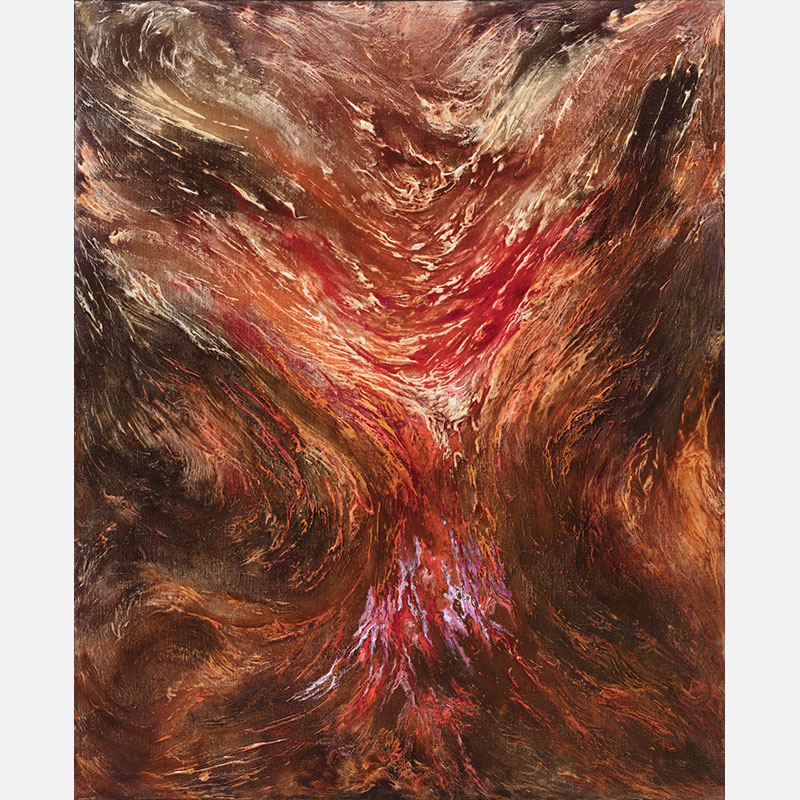
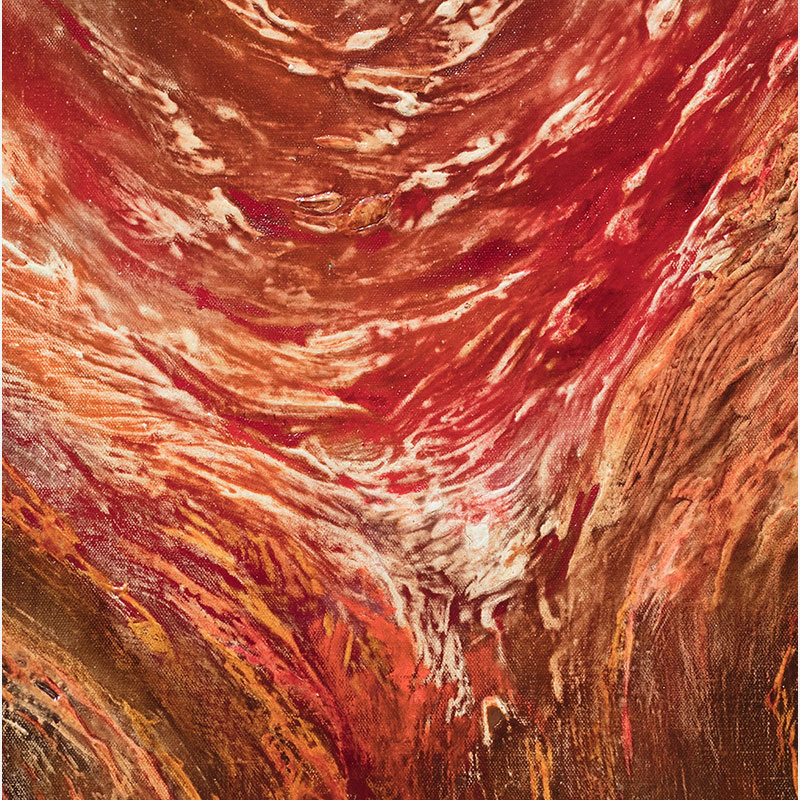
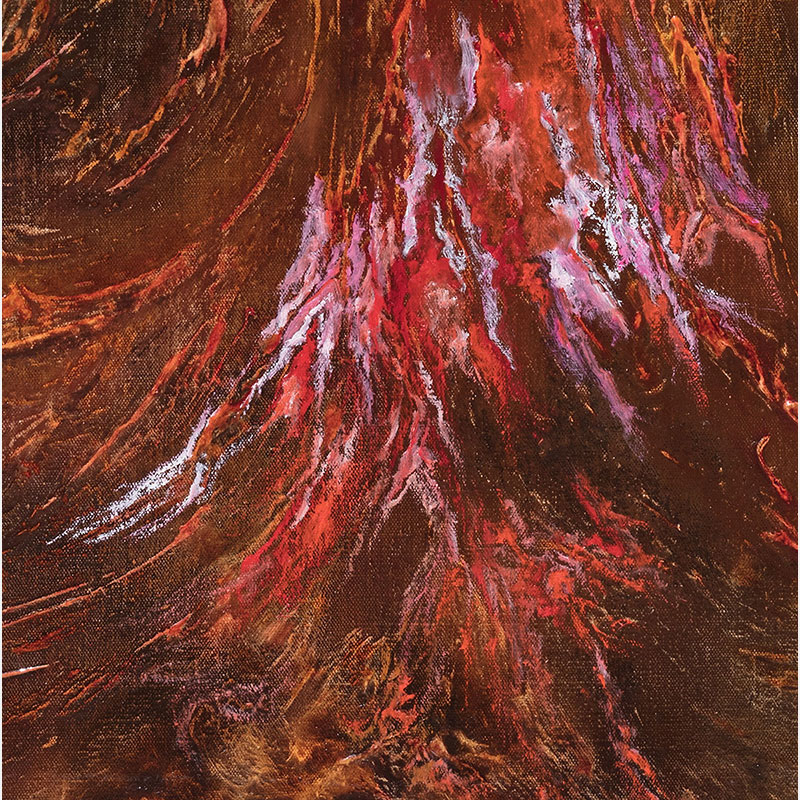
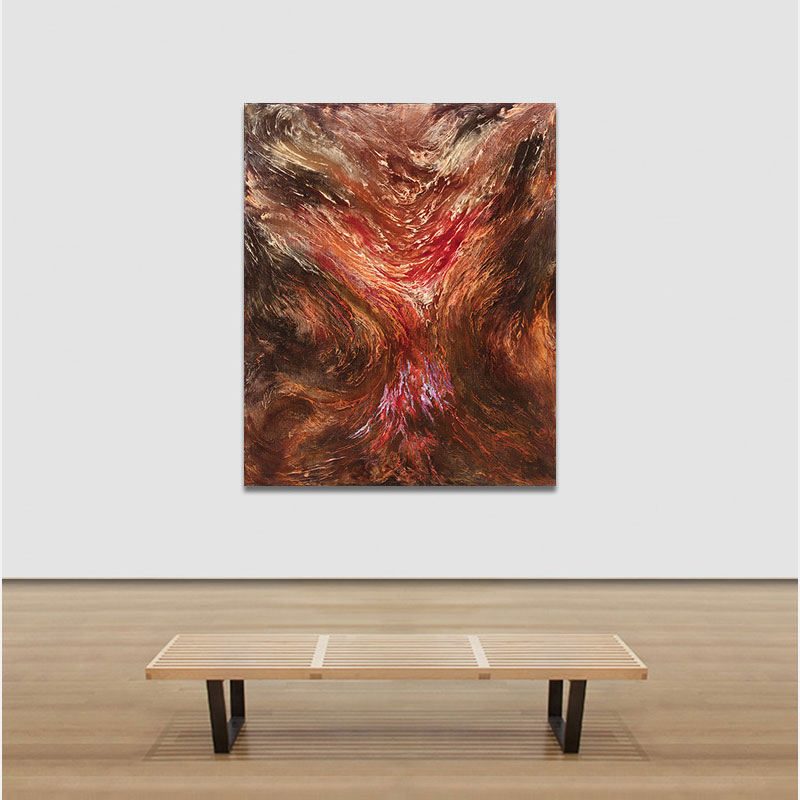
A single column of red and fiery orange rises from the base and widens as it climbs, pulling the eye upward into an ascent that finds no ceiling. White catches light at the upper periphery, the force dispersing outward as it reaches its full height. The surrounding browns churn in their own turmoil, drawn like everything on the surface into the same upward current in a painting to be entered rather than observed.
A single column of red and fiery orange rises from the base and widens as it climbs, pulling the eye upward into an ascent that finds no ceiling. White catches light at the upper periphery, the force dispersing outward as it reaches its full height. The surrounding browns churn in their own turmoil, drawn like everything on the surface into the same upward current in a painting to be entered rather than observed.
Dynamism through upward movement rather than recession into depth, the eye carried by a force that deflects off the edges rather than arriving at a terminus, connects this painting to what Tintoretto developed in his large vertical canvases. Here the ascent of reds and oranges, building from the base as pure chromatic force, becomes the narrative itself, no figures needed to carry the pathos.
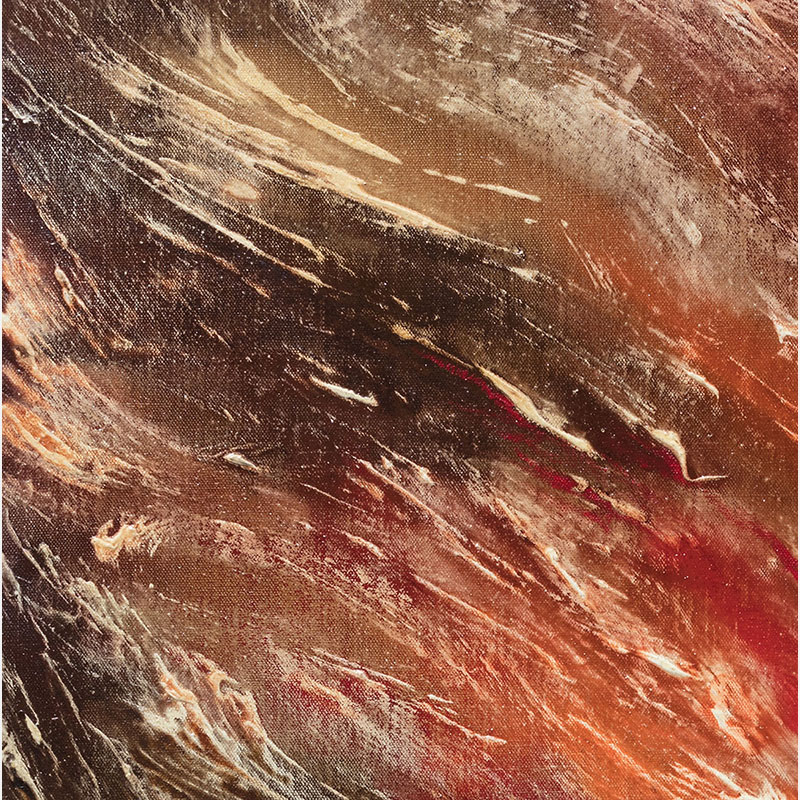
The white glimpses at the upper periphery are built at the same material density as the surrounding oranges, luminosity treated as matter, the white becoming the most extreme point of the warm scale rather than its negation. Through entirely different means, this choice arrives where Robert Ryman spent a career, at the conviction that white carries the full weight of matter and surface. The title is plural, multiple simultaneous forces feeding a single column in the volcanic register of the practice at its most concentrated. The turmoil on the surface is the artist’s interpretation of a world in violent transformation.