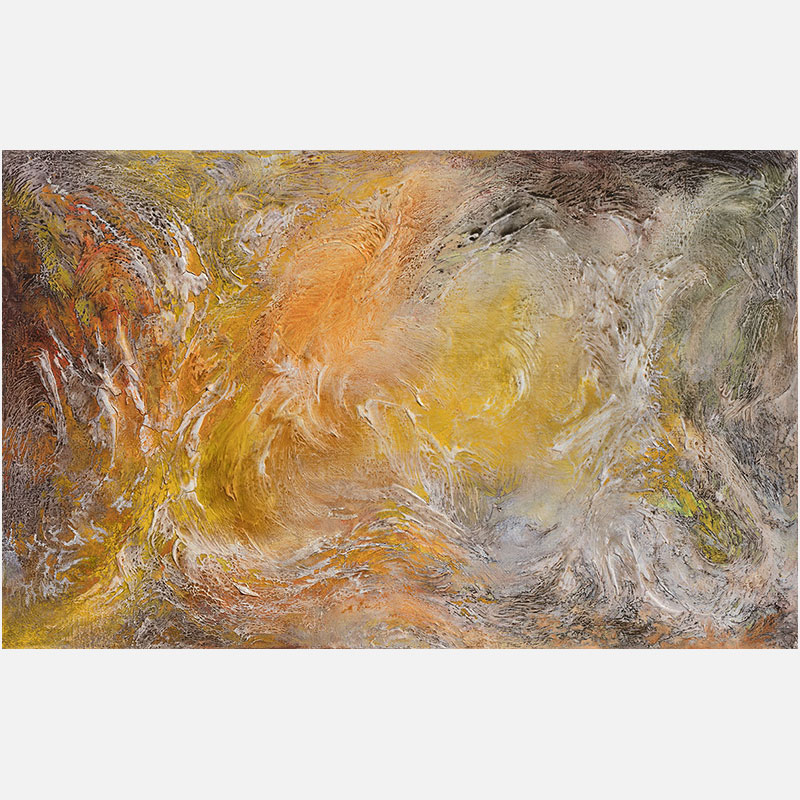
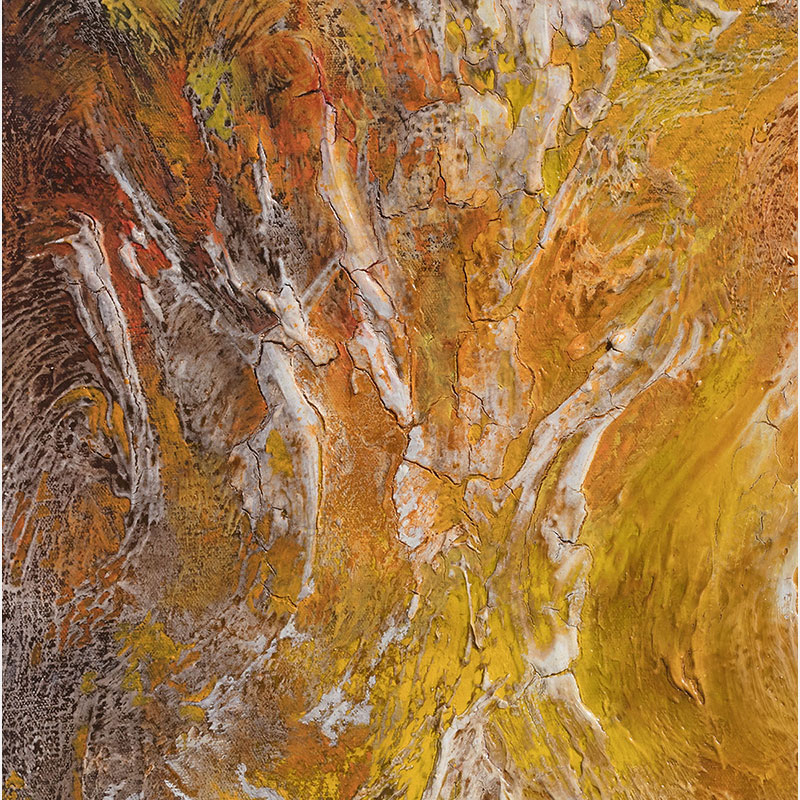
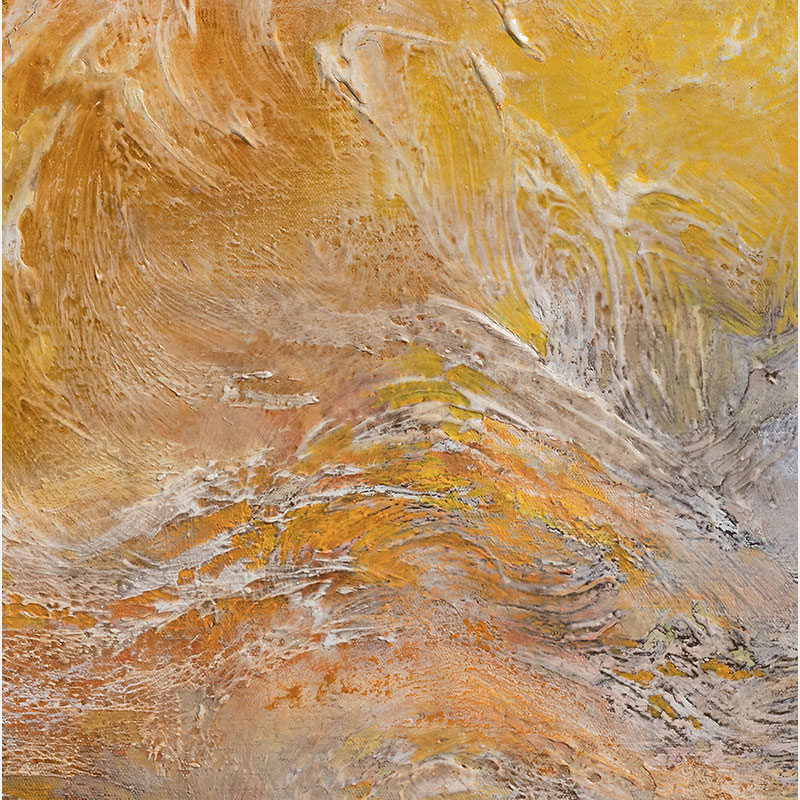
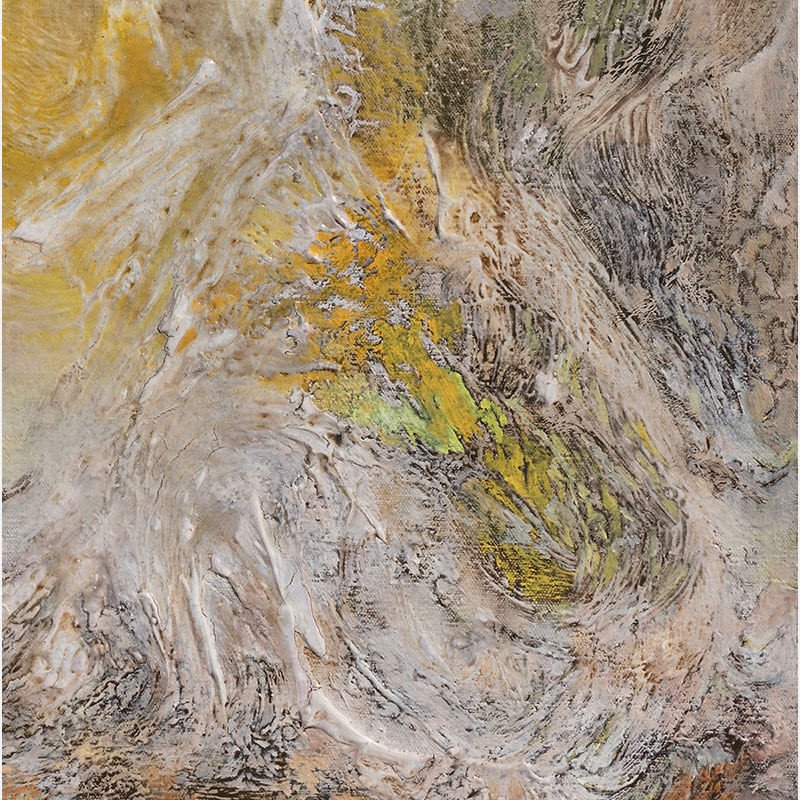
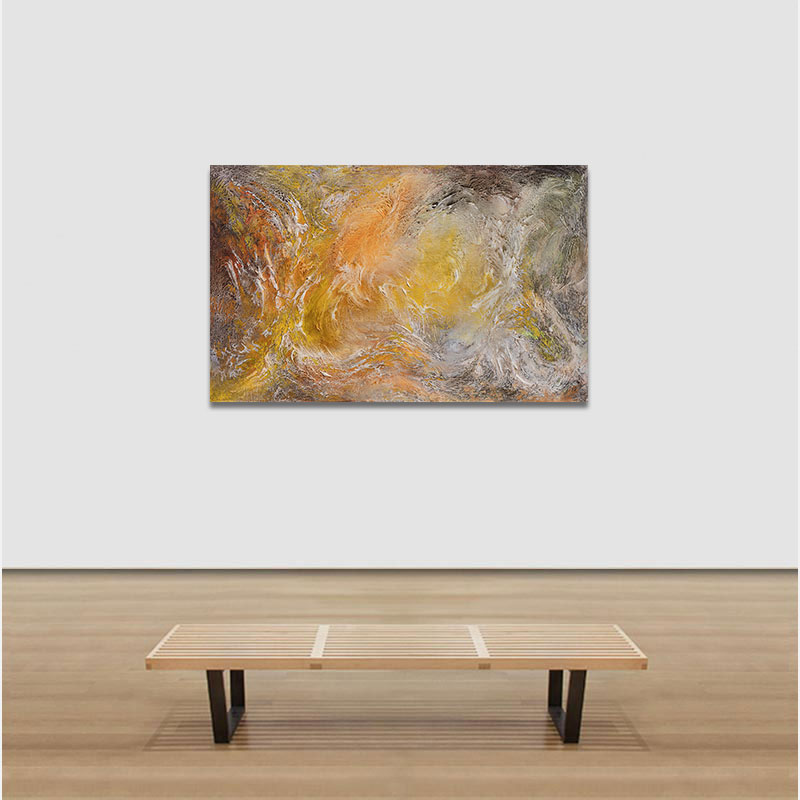
Luminous yellows and oranges gather at the left and center in wide, turning arcs, and a branching form of white impasto warms within them to the first rays of the sun. At the right its kindred shape stands in cool gray-greens still pervaded with frost, the same form at a colder hour. The warmth is real and the air around it is cold, both hours held in the same breath across a threshold no edge marks.
Luminous yellows and oranges gather at the left and center in wide, turning arcs, and a branching form of white impasto warms within them to the first rays of the sun. At the right its kindred shape stands in cool gray-greens still pervaded with frost, the same form at a colder hour. The warmth is real and the air around it is cold, both hours held in the same breath across a threshold no edge marks.
The contact zone between warm and cool is the most active passage on the canvas. Each branching form takes its temperature from what surrounds it, yellows burning hotter where they press against the gray-greens, the grays cooling further where they pull away from the warmth, and the polarity holds at the moment before one overtakes the other.
What separates the two forms is the hour, and isolating the hour is what Monet spent whole series doing, in the haystacks and the Rouen Cathedral canvases, one motif returning at different seasons and times of day until light itself became the subject. Monet kept those hours apart, one condition to a canvas. Here the sunlit form and the frost-bound form share a single surface, white impasto mingling with color as it does in the Rouen facades, each temperature held at full material weight, the two hours pressed together instead of following one another.
This Mane Hiemale, winter morning in Latin, has a peaceful atmosphere in contrast with several of Ruggero Vanni’s turbulent contemporary canvases, where volcanic episodes read as a reaction to a present climate of multiplying, self-inflicted crises. Here light held at two temperatures without conflict is the other response such a world produces: a longing for stillness.