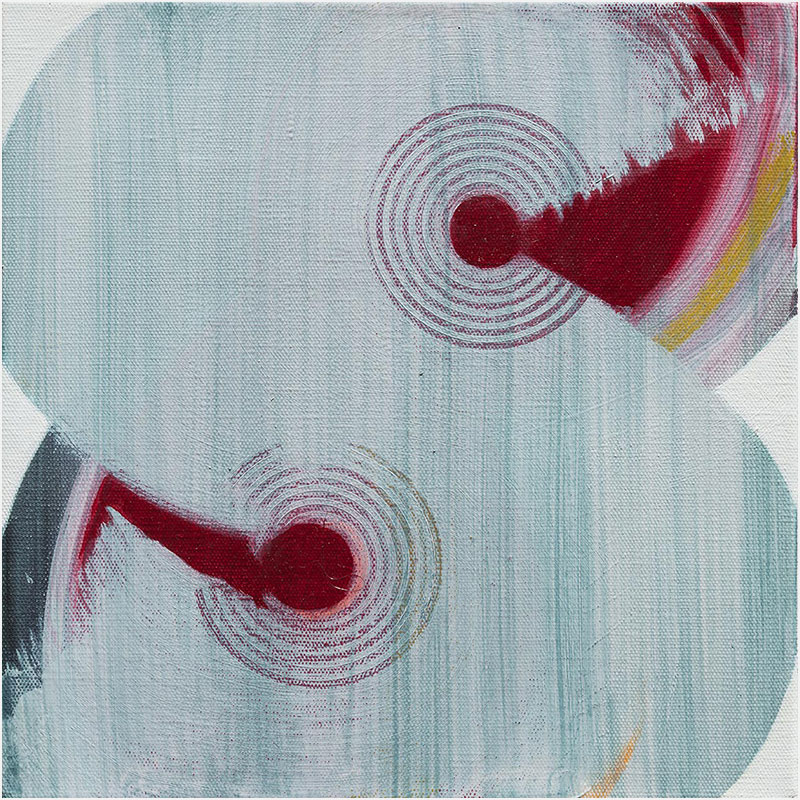
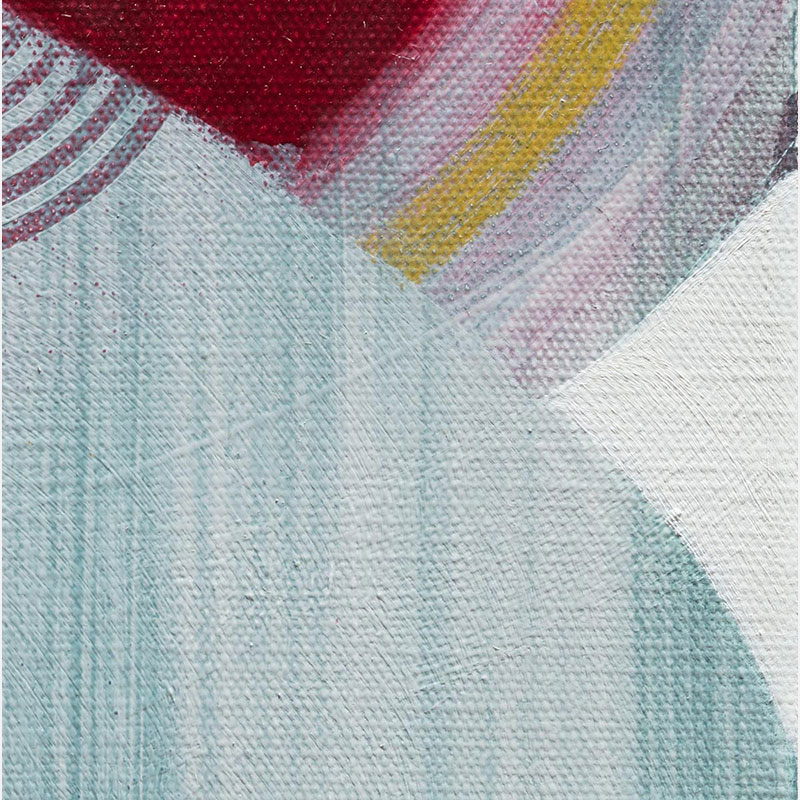
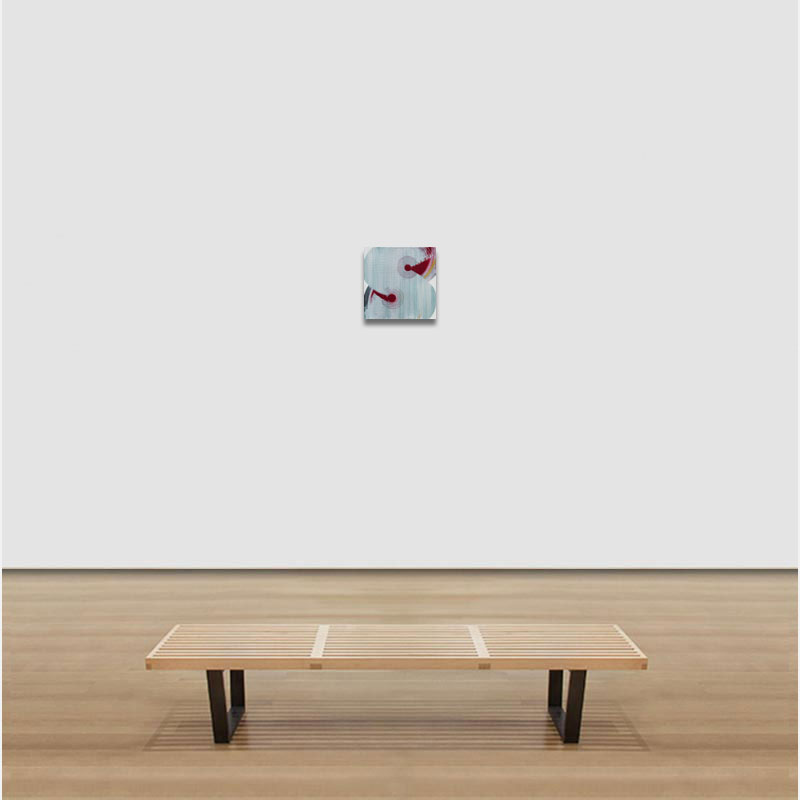
Two pale blue-grey discs overlap in a loose figure eight, their surfaces dragged into fine vertical streaks. In each, a crimson dot sits at the centre of a ring of grooves. It trails a tapering wedge that swings out to the edge of the canvas. Yellow runs along one rim, dark grey gathers at the other, and bare white shows where the discs part. The diagram stays in plain view, and its cool exactness has a hypnotic pull.
Two pale blue-grey discs overlap in a loose figure eight, their surfaces dragged into fine vertical streaks. In each, a crimson dot sits at the centre of a ring of grooves. It trails a tapering wedge that swings out to the edge of the canvas. Yellow runs along one rim, dark grey gathers at the other, and bare white shows where the discs part. The diagram stays in plain view, and its cool exactness has a hypnotic pull.
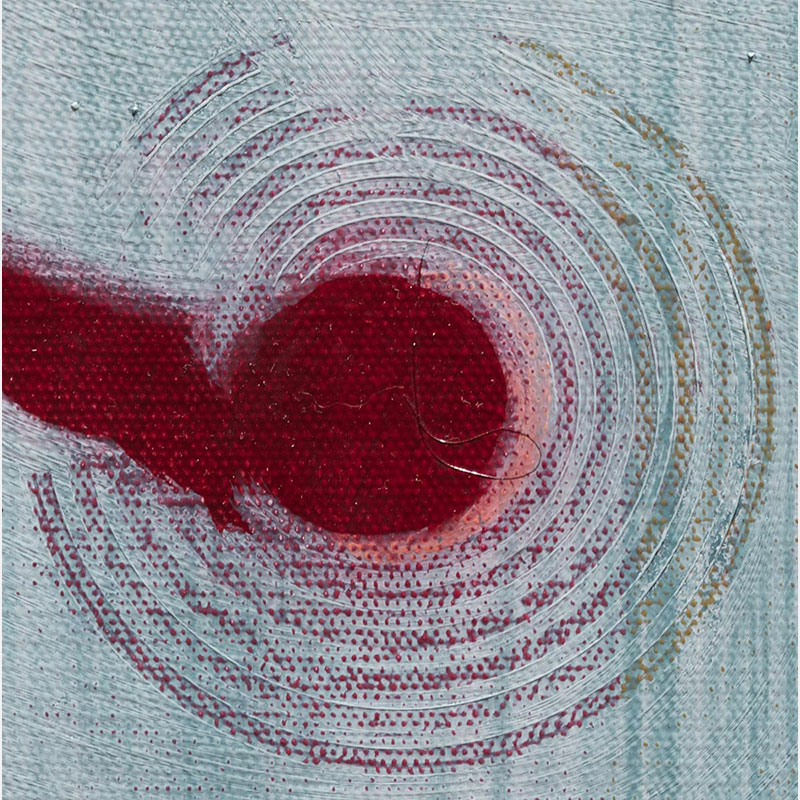
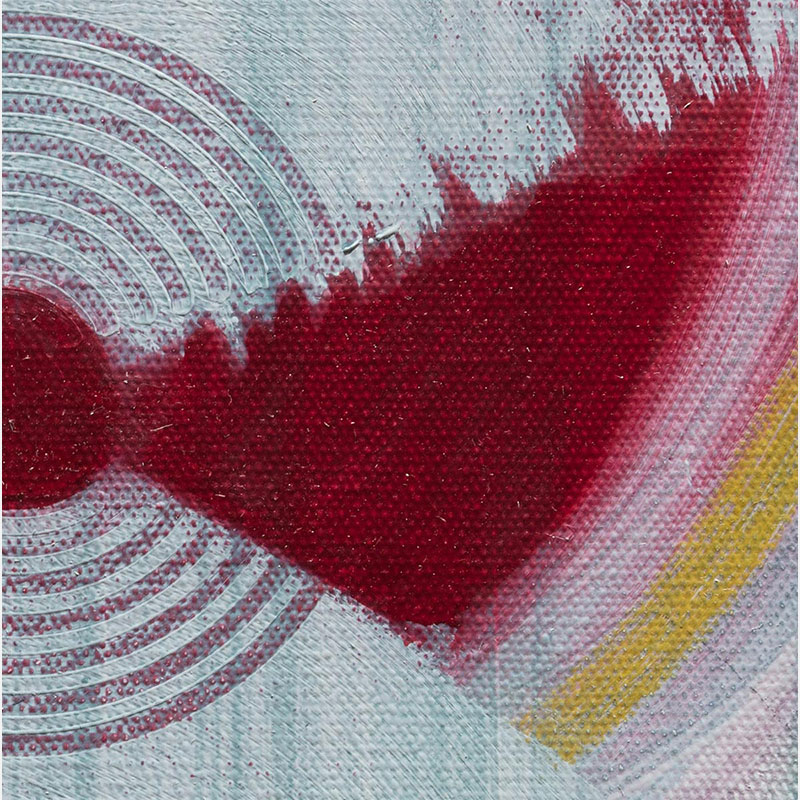
A crimson dot marks the centre, concentric grooves are scored around it, and the wedge of red thins to a point where the swing ended. Pivot, radius and arc are all visible. The vertical streaking of the discs runs across the rings, so a drag downward and a turn about a point share the surface. The lower ring set answers the upper at a different angle.
Kenneth Noland's Circle paintings build a target from concentric bands of colour around a centre. Roberto Caracciolo's rings carry a tail. The centre here is a place where a tool turned, and the wedge is its record.