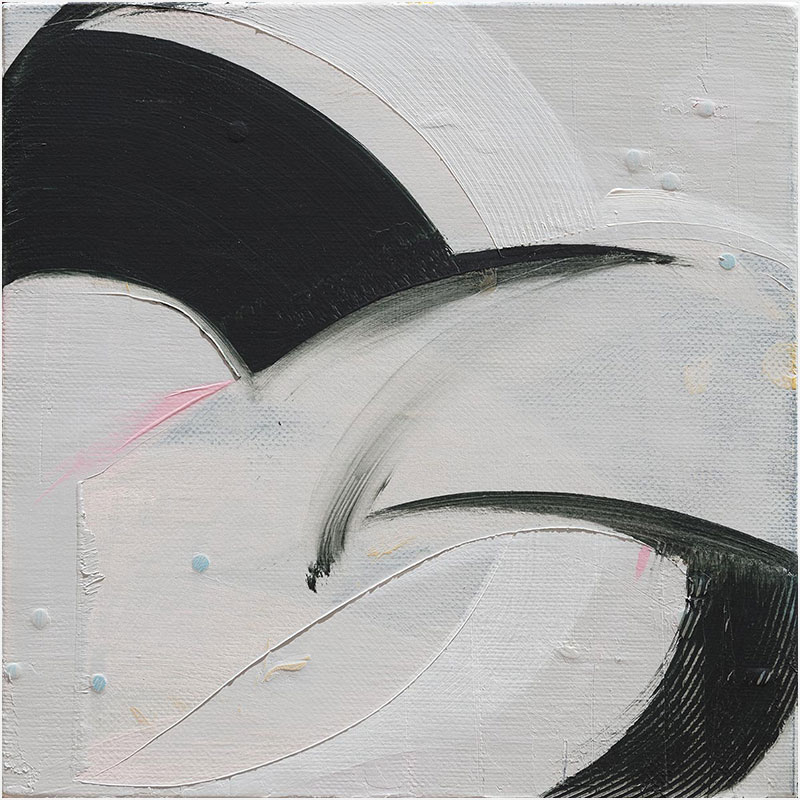
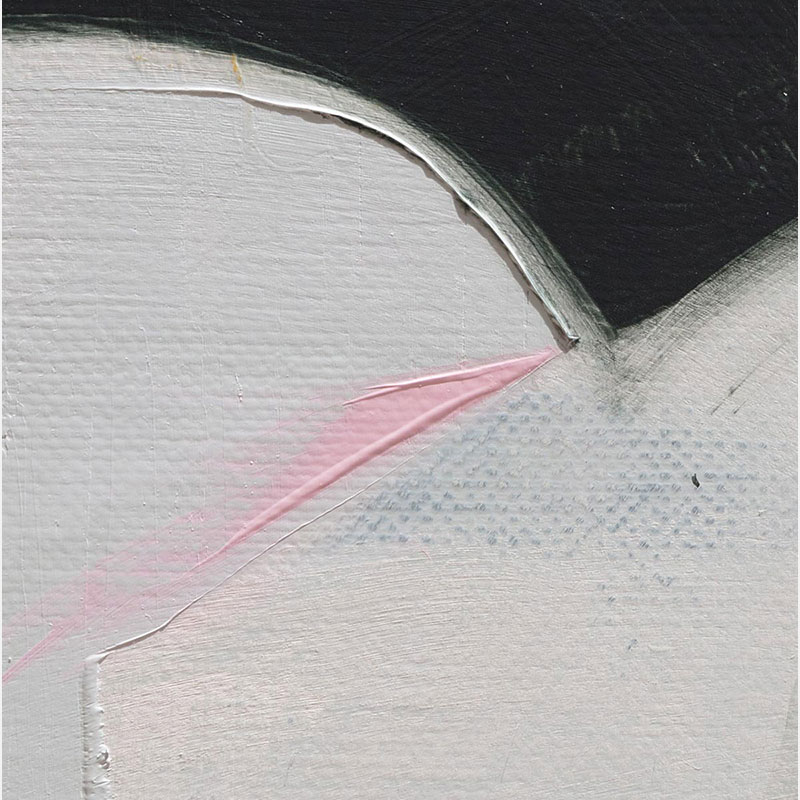
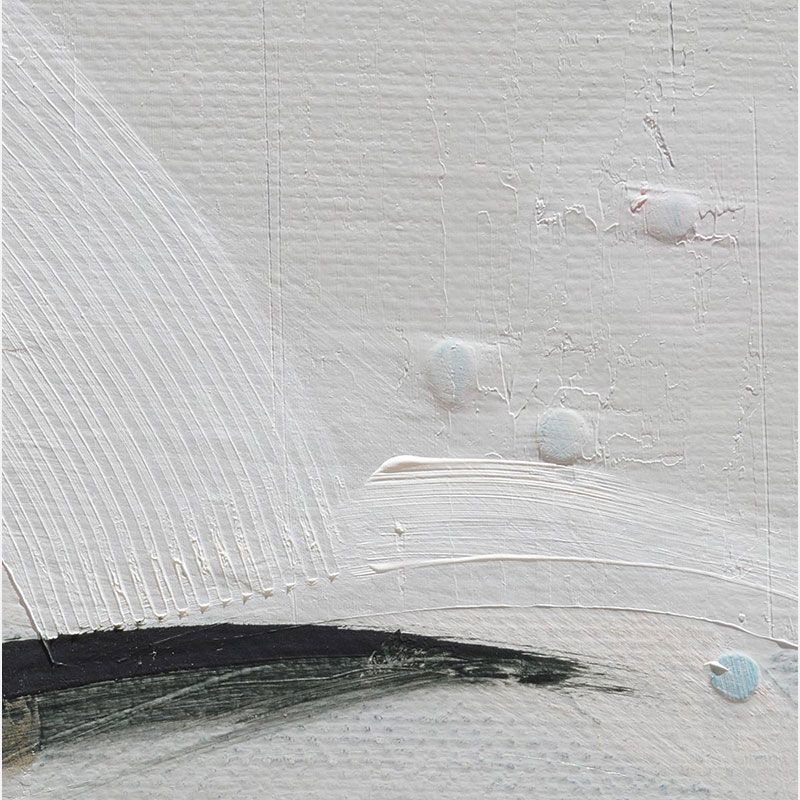
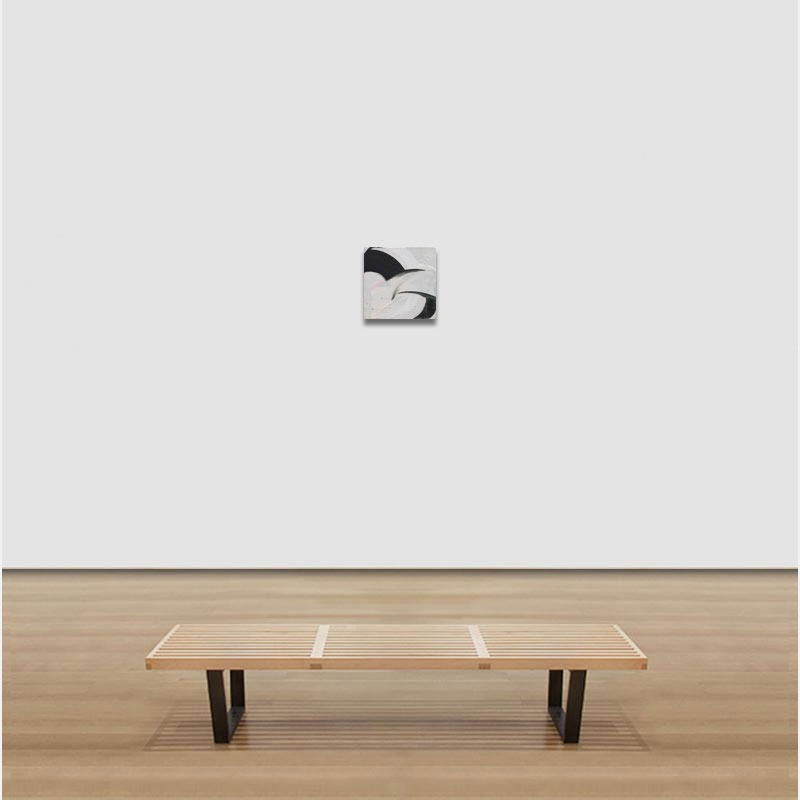
Black wedges cross a pale ground, each thinning to a hair where the brush leaves the canvas. Between them there is almost nothing. A few pale blue dots sit well apart, a streak of pink marks a tip, and raised white ridges trace the edges in relief. The black carries weight and speed at once. It moves fast and stays cool, a flash at the corner of the eye that never quite finishes going by.
Black wedges cross a pale ground, each thinning to a hair where the brush leaves the canvas. Between them there is almost nothing. A few pale blue dots sit well apart, a streak of pink marks a tip, and raised white ridges trace the edges in relief. The black carries weight and speed at once. It moves fast and stays cool, a flash at the corner of the eye that never quite finishes going by.
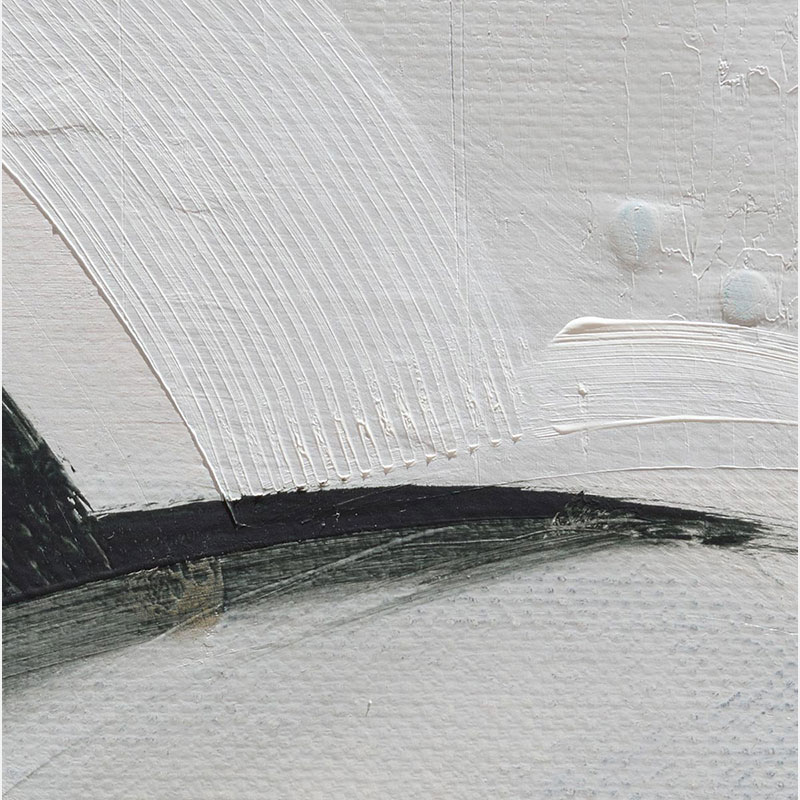
The black arrives with its speed still in it. The quarter-disc at the upper left is laid in one broad stroke and ends in a spike. The fan at the lower right radiates fine striations around a fixed point. A dry flick at the centre has barely touched the surface. Raised white ridges follow the black's edges and loop out across the pale ground, marking routes the black did not take.
Roberto Caracciolo's wedges arrive with their speed intact. The taper records where the brush rose and the striations where it travelled, so position and velocity share the surface. The title, Rushing past, names the condition, and nothing here has settled. Held against the Suprematist compositions of Kazimir Malevich, where geometric planes seem to float in the boundless space of a white ground, this ground reads differently. It receives forms still in passage.