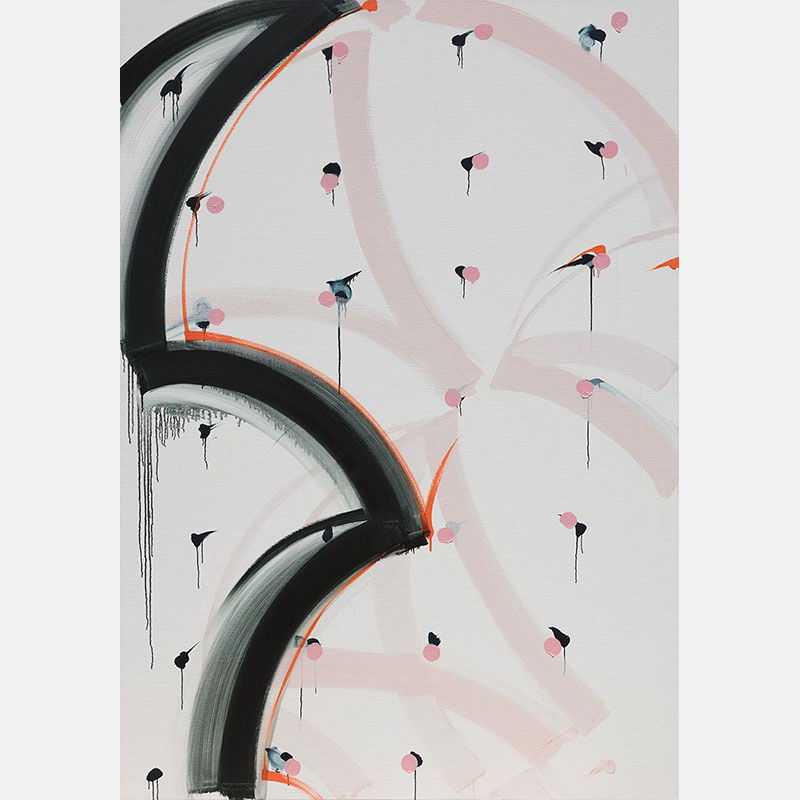
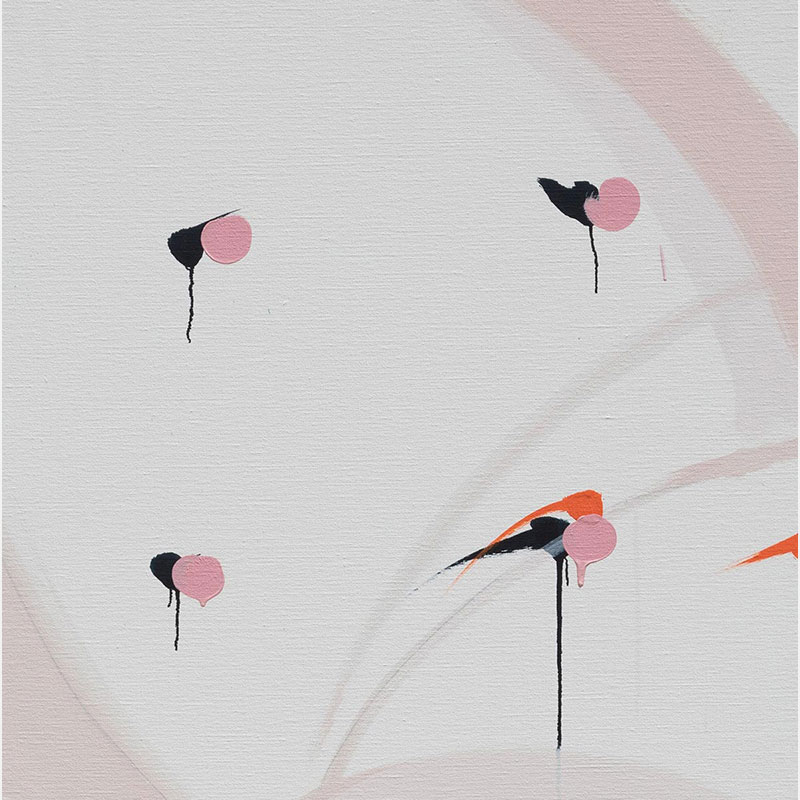
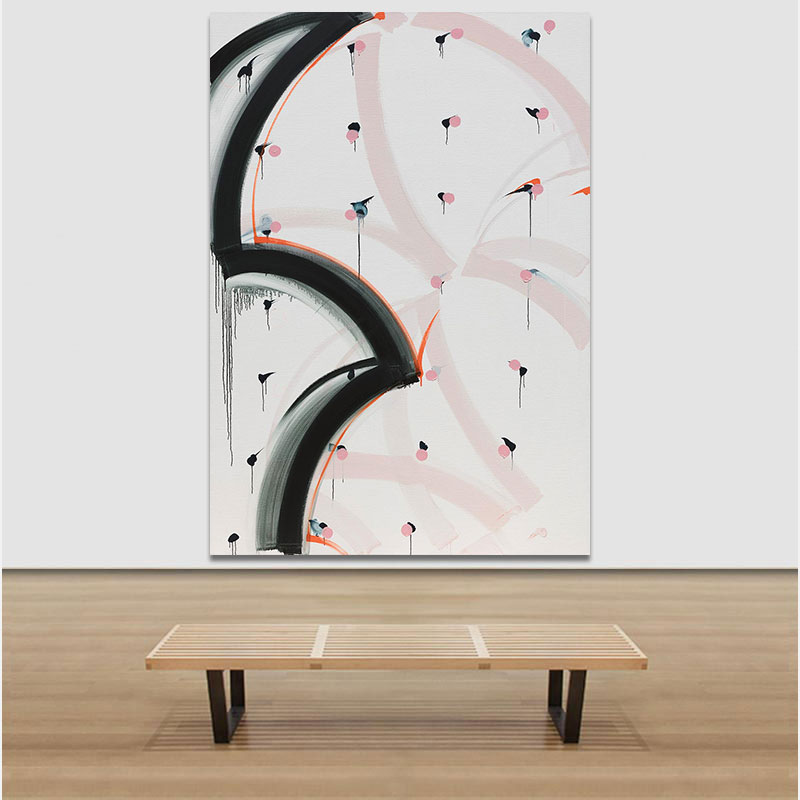
Three black arcs climb the left edge like the rim of something enormous, while pale pink ghosts of other arcs overlap one another across the white. Between them, small pairs lie scattered at random, a pink dot beside a black flick with a thread of drip. A thin orange line shadows the black's inner curve, bright as a wire. What remains is airy and faintly ominous, small stains left by a large movement that has already gone.
Three black arcs climb the left edge like the rim of something enormous, while pale pink ghosts of other arcs overlap one another across the white. Between them, small pairs lie scattered at random, a pink dot beside a black flick with a thread of drip. A thin orange line shadows the black's inner curve, bright as a wire. What remains is airy and faintly ominous, small stains left by a large movement that has already gone.
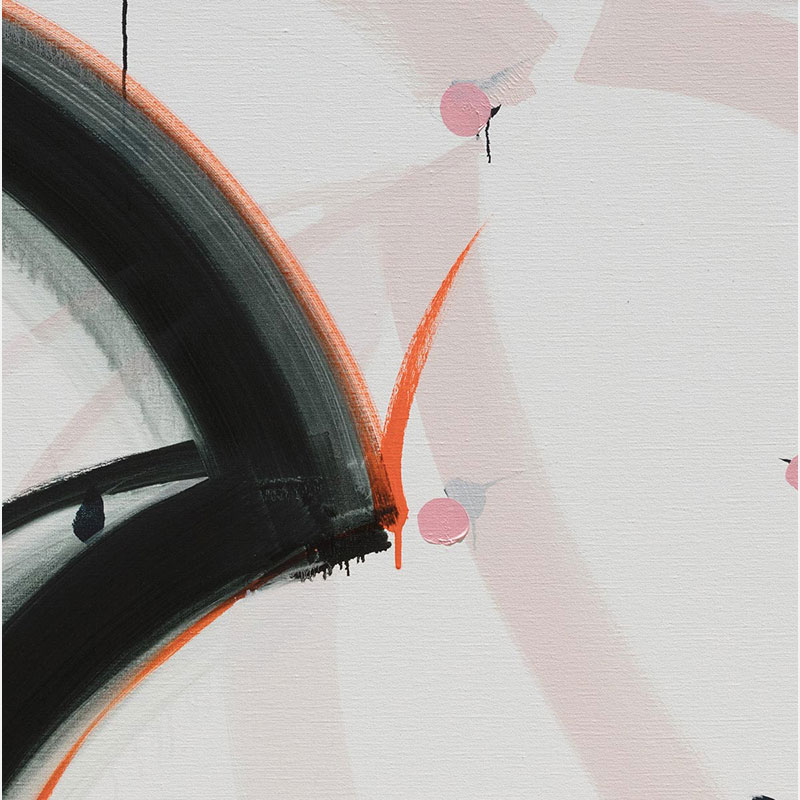
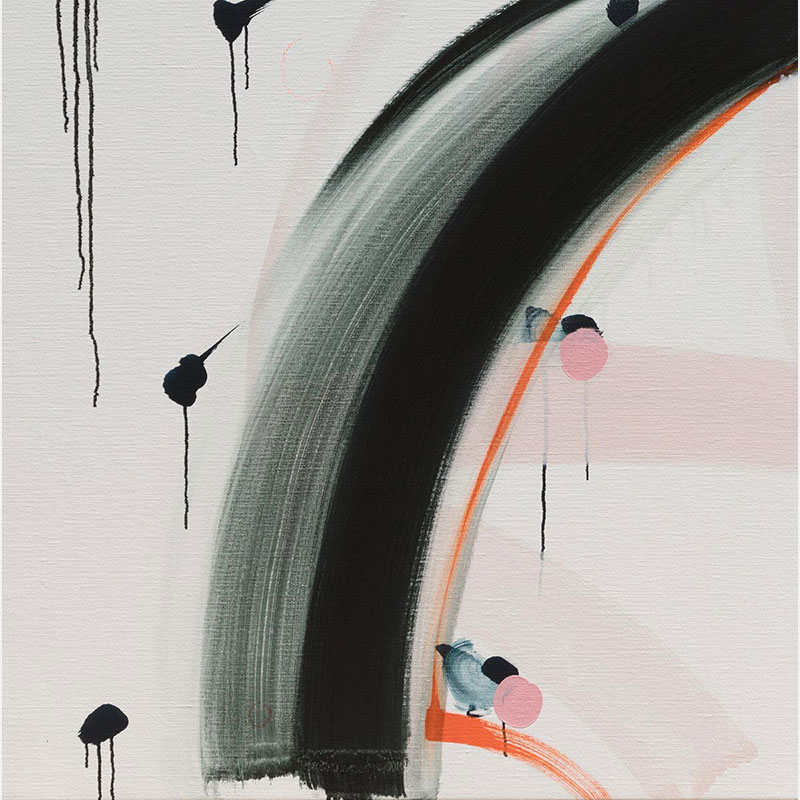
The black arcs are thick, even strokes, each ending in a ragged edge and shedding long grey drips from its lower lip. The orange line runs tight along the curve and turns at a right angle where one arc meets the next, a drawn guide laid over the paint. The pink arcs match the black in size but are nearly erased, so the same movement appears twice, once asserted and once remembered. Every small dot is answered by a flick.
The small marks never gather into rows or bands, and the arcs alone make the field. The two scales never merge. Set against the banded paintings of Juan Uslé, where rhythmic sequences of short, discontinuous brushstrokes build horizontal fields, these marks stay individual. Each is small and separate, facing a gesture that spans the canvas.