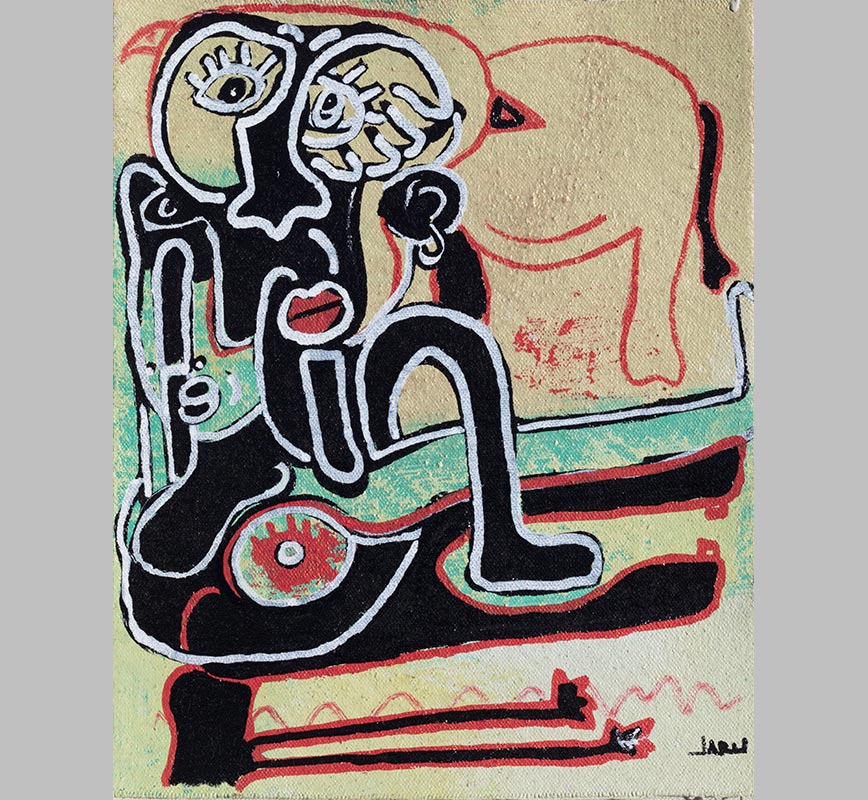
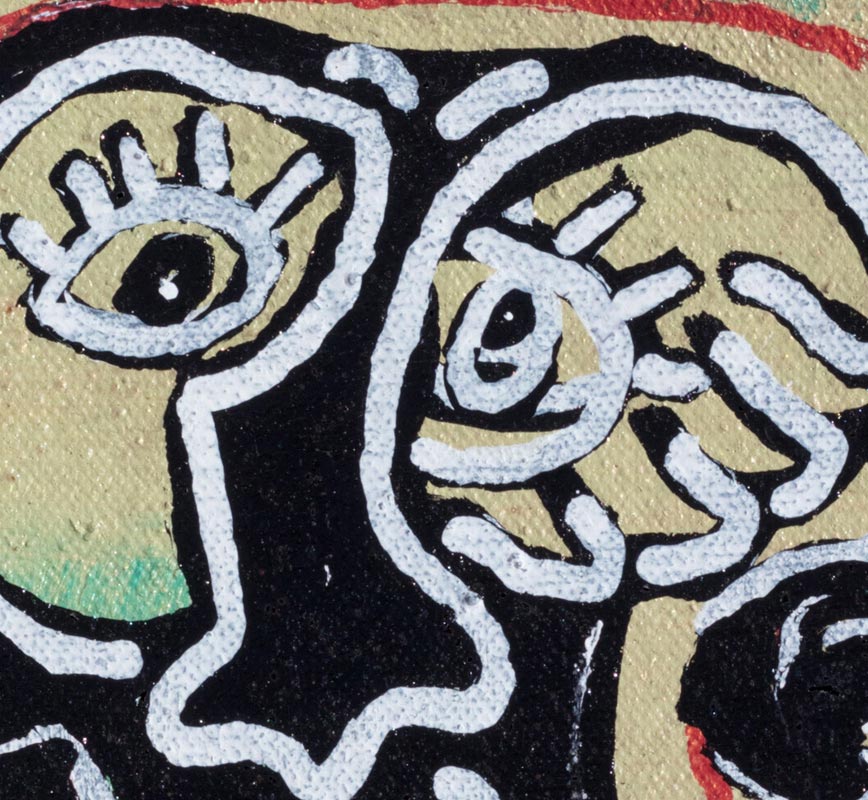
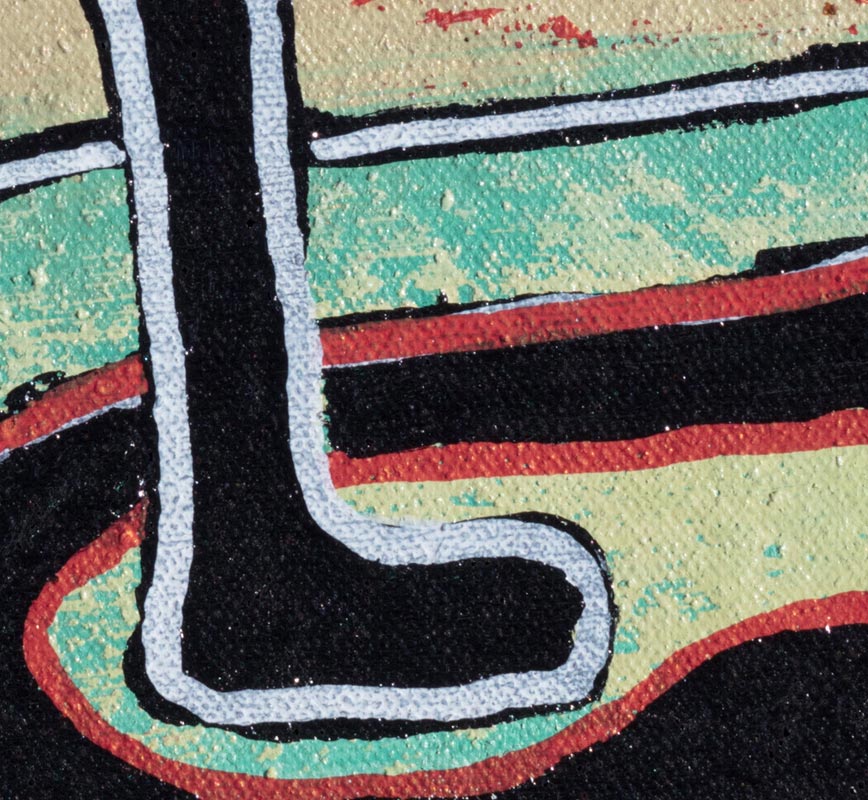
A creature with an elongated snout dominates A Place to Hide, its form outlined in bold strokes of pink, teal, and yellow over a warm sandy ground. Around it, smaller figures orbit or shelter, the arrangement suggesting a narrative of protection without specifying it. The layered background reads as landscape, wall, and pattern simultaneously, giving the image the quality of something ancient and playful in equal measure, as if a mythology had been compressed into a single moment.
A creature with an elongated snout dominates A Place to Hide, its form outlined in bold strokes of pink, teal, and yellow over a warm sandy ground. Around it, smaller figures orbit or shelter, the arrangement suggesting a narrative of protection without specifying it. The layered background reads as landscape, wall, and pattern simultaneously, giving the image the quality of something ancient and playful in equal measure, as if a mythology had been compressed into a single moment.
The figures in A Place to Hide exist at the threshold between the legible and the invented, between what can be named and what can only be sensed: a formal zone that Paul Klee understood better than almost anyone, populating his own canvases with creatures that carry emotional weight without requiring anatomical possibility. Jaru’s approach is rawer and more physically urgent, the lines looser and the pigments more bodied, but both painters share the conviction that the world contains more kinds of creatures than naturalism permits.
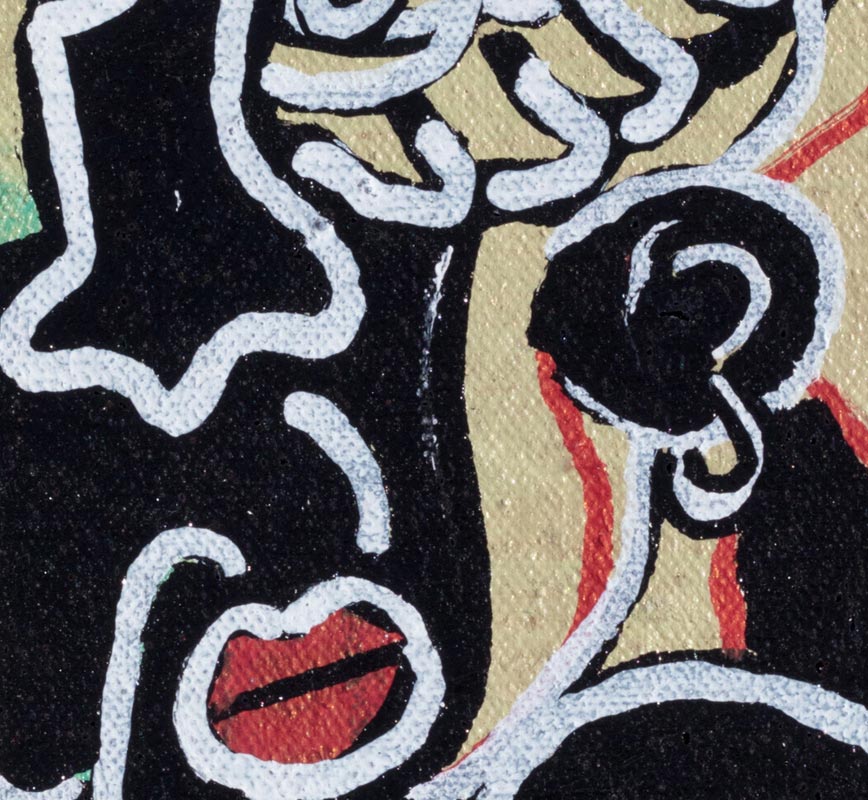
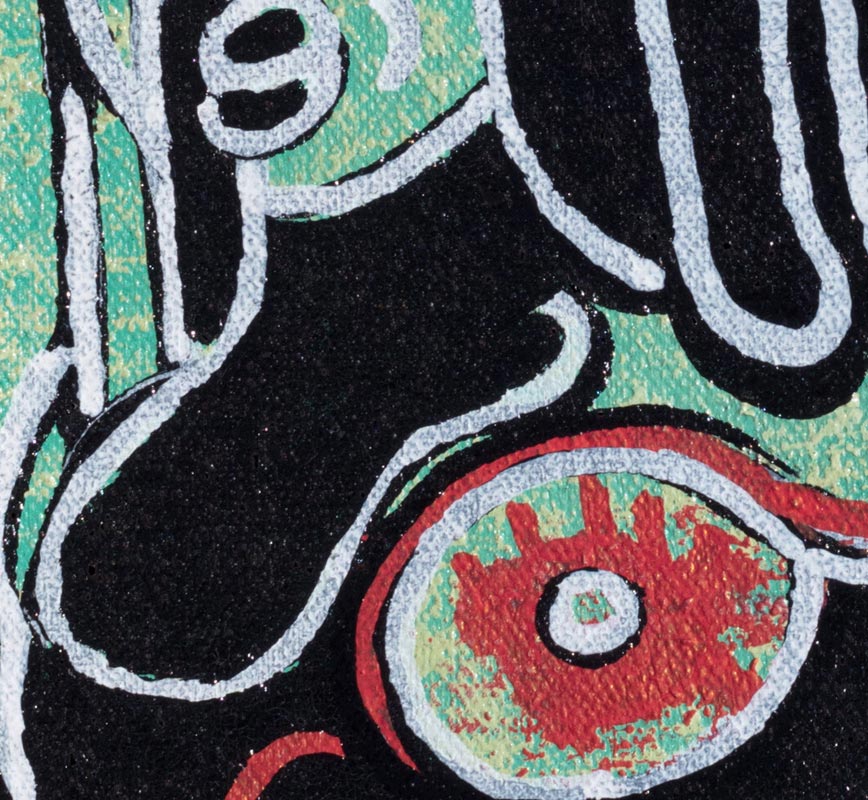
The title gives the image its emotional register. A place to hide is not an absence but a presence: a space defined by the body that occupies it. The enclosing shapes and interlocking lines enact this, the forms huddling and overlapping to create a visual warmth rather than confinement. The sandy ground, natural canvas texture showing through the pigment, roots the image in something archaeological, as if this hiding place has existed for a very long time.